
Dangerous mistake
Field mushroom or destroying angel? How to tell them apart
Field mushroom is an edible mushroom, while the destroying angel is a deadly poisonous mushroom. Compare the two mushrooms point by point.
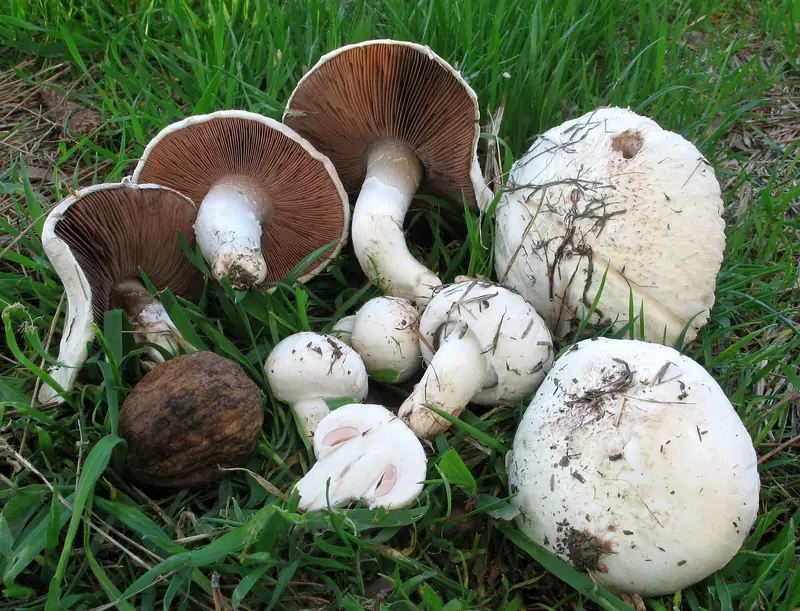
Very young field mushrooms have pale gills. Field mushroom gills soon turn pink, then brown; they have a chocolate-brown spore print and no volva. Do not pick closed “field mushrooms” in the forest.
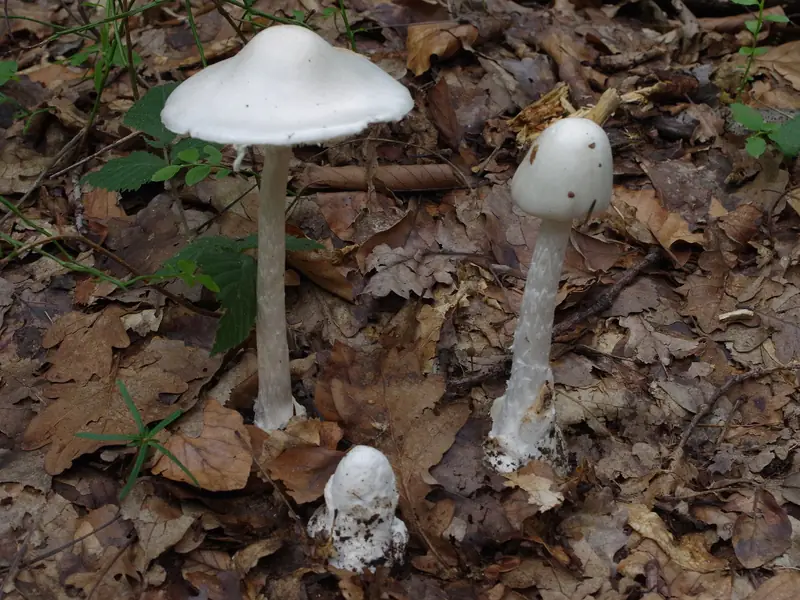
A deadly poisonous white amanita. It has gills that are always white, a white spore print and a volva at the bulbous stem base. The risk concerns mainly closed, young fruit bodies.
Feature by feature
| Feature | Field mushroom | Destroying angel |
|---|---|---|
| Edibility | Edible | Deadly poisonous |
| Cap | 5–12 cm, hemispherical when young, then flat; white, grey-ochre with age, smooth, silky or finely scaly; does not turn yellow when pressed, or only slightly. | 4–10 cm, egg-shaped at first, then conical-bell-shaped, often irregular; pure white, pale cream at the top, yellowing with age; smooth, silky. |
| Under the cap | Gills free, crowded; pink in young specimens, then chocolate-brown to blackish-brown. Spore print chocolate-brown. | Gills white, crowded, free, with floccose edges. |
| Stem | 4–8 cm, white, short, solid, easily broken off; a delicate, quickly vanishing ring; no bulb and no volva. | 7–15 cm, white, distinctly fibrillose-scaly; a delicate, quickly vanishing ring just below the gills; bulbous base with a membranous volva. |
| Flesh | White, turning slightly pink in places when cut; does not turn yellow. | White, does not change colour. All parts turn bright yellow immediately with KOH (a laboratory feature). |
| Smell and taste | Smell lightly mushroomy, without a note of carbolic or aniseed; taste pleasant. | Smell faint, unpleasant, stuffy. Never taste. |
| Habitat | Saprotrophic; meadows, pastures (especially those fertilised with manure, e.g. horse manure), fields, roadside ditches; less often parks and forest edges. | Mainly (mountain) coniferous forests under spruces and pines, less often broadleaf under beeches and birches, also bogs; on poor, moist, acidic, sandy soils. |
| Season | May, June, July, August, September, October | July, August, September, October |
How to recognise it: field mushroom
- Gills pink in young specimens, then chocolate-brown – never permanently white
- Dark brown spore print
- Grows in meadows and pastures, not deep in the forest
- Does not turn yellow when rubbed or cut, does not smell of carbolic
- No volva at the stem base
How to recognise it: destroying angel
- Whole fruit body white, cap often conical and irregular
- White gills throughout the life of the fruit body
- Scaly stem and a volva at the bulbous base
- Fragile ring, white spore print
Safety rule
Never eat a mushroom identified only from a website, a photo or an app. Show any doubtful specimen to a certified mushroom inspector at the sanepid (state sanitary inspection); in season the advice points are free. Do not give wild-picked mushrooms to children.
The golden rules of foraging →Frequently asked questions
Field mushroom or destroying angel: how can you tell them apart?
Very young field mushrooms have pale gills. Field mushroom gills soon turn pink, then brown; they have a chocolate-brown spore print and no volva. Do not pick closed “field mushrooms” in the forest. A deadly poisonous white amanita. It has gills that are always white, a white spore print and a volva at the bulbous stem base. The risk concerns mainly closed, young fruit bodies.
Destroying angel: what to do if you have eaten it?
Call 112 at once or go to A&E (SOR), and take any leftover mushrooms with you. Amatoxins (mainly α-amanitin) and phallotoxins – phalloides syndrome as with the death cap: gastrointestinal symptoms after approx. 5–12 h, an apparent improvement, then liver failure.
Sources
- Wikipedia (pl): Pieczarka łąkowa
- grzyby.pl (M. Snowarski): Agaricus campestris
- First Nature: Agaricus campestris, Field Mushroom
- Wikipedia (pl): Muchomor jadowity
- grzyby.pl (M. Snowarski): Amanita virosa
- First Nature: Amanita virosa, Destroying Angel
Last checked: 9 November 2026. Spotted a mistake? Write to us.