Boletes (pores under the cap)
Porcini
Boletus edulis · also known as: Penny bun, Cep, King bolete
EdibleApproved for sale
One of the most prized edible mushrooms. In everyday Polish the name “prawdziwek” covers several closely related species (including the summer cep and the pine bolete), all of them edible. The most frequent mistake involves the inedible, extremely bitter bitter bolete.
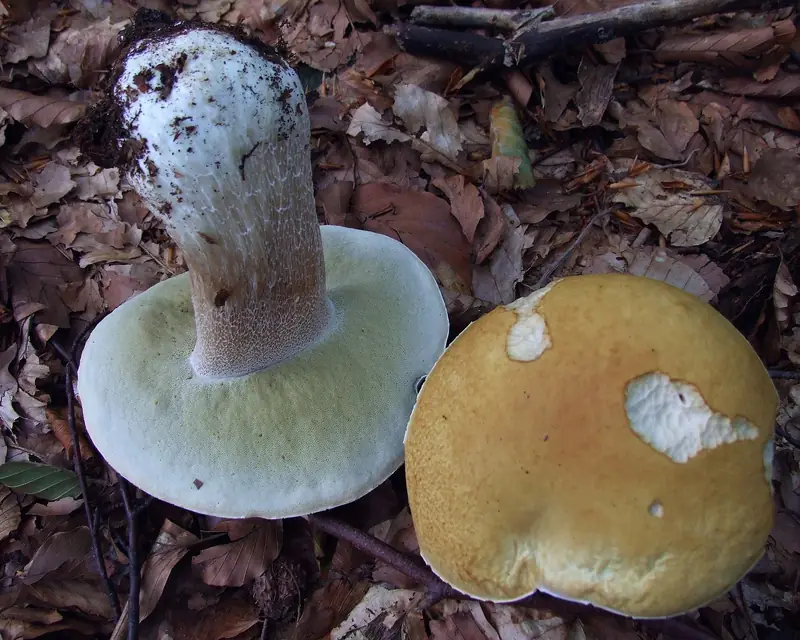
How to recognise it: porcini
- 1
Pale, fine network on the upper part of the stem (not dark)
- 2
Pores white, then yellow-green – never pink or red
- 3
Flesh white, does not turn blue when cut
- 4
Taste mild, not bitter
- 5
Cap smooth, not suede-like
Description
- Cap
- Usually 6–25 cm across; whitish or pale when young, later hazelnut-brown to dark brown, often with a paler margin. Surface smooth or wrinkled, not suede-like, slightly sticky when wet.
- Tubes and pores
- Tubes and pores white when young, then yellow, yellow-green to olive-green; pores fine, do not change colour when pressed. Spore print olive-brown.
- Stem
- Thick, barrel-shaped when young, later club-shaped, whitish to light brown; a delicate, pale (whitish) network in the upper part.
- Flesh
- White, firm, brownish under the cap cuticle; does not change colour when cut.
- Smell and taste
- Smell pleasant, intense when dried; taste mild, nutty.
Where and when it grows
Coniferous, broadleaf and mixed forests, preferring conifers; most abundant in mountain spruce forests. Acidic soils, avoids calcareous ones. Less common in the lowlands, rare near large cities.
Most often with: spruce, pine, beech, birch, oak, fir
Look-alikes: what it can be mistaken for
Bitter bolete Inedible medium risk
The bitter bolete (called “szatan”, “satan”, in Polish) is very similar, especially when young with white pores. Differences: the bitter bolete has a distinct, dark brown, wide-meshed network on the stem, pores that turn pink with age, a pink spore print and an extremely bitter taste (touch a tiny piece with your tongue and spit it out). It is not dangerously poisonous, but a single fruit body ruins the whole dish.
Summer cep Edible low risk
The summer cep has a suede-like, often cracked, paler cap and a more distinct network over the whole stem; it grows mainly under oaks and beeches. The mistake does not matter – both are edible.
Bay bolete Edible low risk
The bay bolete has no network on the stem (only lengthwise fibrils), and its pores and flesh turn slightly blue when pressed. Edible.
Devil's bolete Poisonous low risk
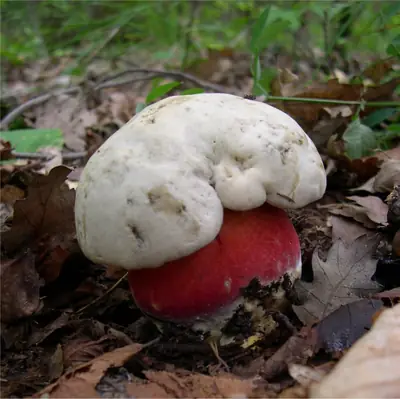
The devil's bolete (very rare, protected, poisonous) has a greyish-white cap, red pores, a carmine stem with a reddish network and flesh that turns blue – the porcini never has red pores.
Step-by-step comparison: Porcini or devil's bolete →
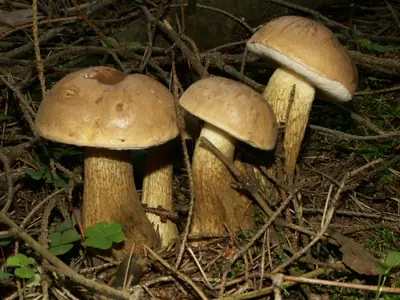
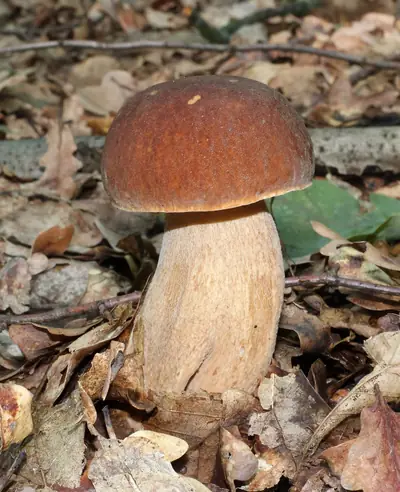
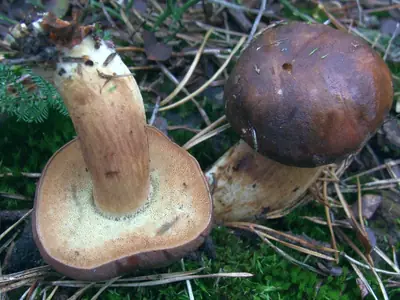
Foragers’ finds
All photosPhotos and identifications are added by users; we do not check them. Add your own find →
In the kitchen
Versatile: drying (the dried mushroom stays pale and very aromatic), soups (including the Christmas Eve soup), pierogi with cabbage and mushrooms, sauces, risotto, frying, pickling. Young, firm fruit bodies are best.
Protection and sale
- Species protection: the species is not protected.
- Sale: the species is on the list of mushrooms approved for sale (it may be sold only with a mushroom inspector’s certificate). On the Ministry of Health (MZ) list as “borowik szlachetny (prawdziwek – all varieties)”.
Porcini: common questions
Is the porcini edible?
Edible. One of the most prized edible mushrooms. In everyday Polish the name “prawdziwek” covers several closely related species (including the summer cep and the pine bolete), all of them edible. The most frequent mistake involves the inedible, extremely bitter bitter bolete.
When does the porcini grow?
In Poland the fruiting bodies usually appear in: May, June, July, August, September, October, November. Habitat: Coniferous, broadleaf and mixed forests, preferring conifers; most abundant in mountain spruce forests. Acidic soils, avoids calcareous ones. Less common in the lowlands, rare near large cities.
What can the porcini be mistaken for?
Bitter bolete (inedible): The bitter bolete (called “szatan”, “satan”, in Polish) is very similar, especially when young with white pores. Differences: the bitter bolete has a distinct, dark brown, wide-meshed network on the stem, pores that turn pink with age, a pink spore print and an extremely bitter taste (touch a tiny piece with your tongue and spit it out). It is not dangerously poisonous, but a single fruit body ruins the whole dish. Summer cep (edible): The summer cep has a suede-like, often cracked, paler cap and a more distinct network over the whole stem; it grows mainly under oaks and beeches. The mistake does not matter – both are edible. Bay bolete (edible): The bay bolete has no network on the stem (only lengthwise fibrils), and its pores and flesh turn slightly blue when pressed. Edible. Devil's bolete (poisonous): The devil's bolete (very rare, protected, poisonous) has a greyish-white cap, red pores, a carmine stem with a reddish network and flesh that turns blue – the porcini never has red pores.
Sources
- Wikipedia (pl): Borowik szlachetny
- Atlas grzybów Polski – grzyby.pl (M. Snowarski)
- First Nature – fungi
Last checked: 9 November 2026. Spotted a mistake? Write to us.