Boletes (pores under the cap)
Brown birch bolete
Leccinum scabrum · also known as: Birch bolete, Rough-stemmed bolete, Scaber stalk
EdibleApproved for sale
A good edible mushroom. Pick young, firm fruit bodies – old ones have a watery cap and a woody stem. The flesh turns black during cooking.
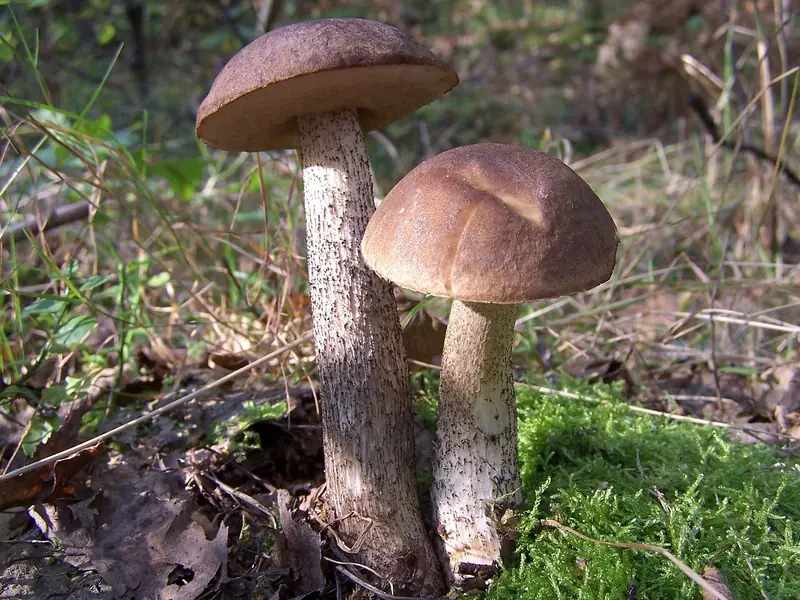
How to recognise it: brown birch bolete
- 1
White stem with black scales
- 2
Grows only with birches
- 3
Brown cap
- 4
Flesh does not change colour
Description
- Cap
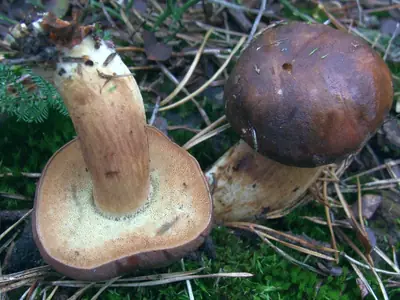
- 3–20 cm across, light to dark brown, hazelnut or grey-brown; slightly slimy when wet.
- Tubes and pores
- Tubes and pores whitish, then grey-brown; do not change colour when damaged.
- Stem
- Slender, whitish, densely covered with dark brown to black scales (scabers).
- Flesh
- White, firm in young specimens, watery in old ones; does not change colour when cut (at most slightly).
- Smell and taste
- Smell and taste pleasant, faint.
Where and when it grows
Always near birches (mycorrhizal) – in broadleaf and mixed forests, also outside forests; more often in dry or moderately moist places.
Most often with: birch
Look-alikes: what it can be mistaken for
Bitter bolete Inedible medium risk
The bitter bolete has no black scales on the stem, only a dark network; its pores turn pink with age and its taste is extremely bitter.
Hazel bolete Edible low risk
The hazel bolete grows under hornbeams/hazel, has a wrinkled cap that cracks in dry weather, and its flesh turns pink when cut, then black. Edible.
Red aspen bolete Edible low risk
The brown birch bolete has a brown cap and black scales on the stem, and grows under birch. Edible. Not in this atlas: Leccinum versipelle (orange birch bolete; under birches, scales black from youth) – edible.
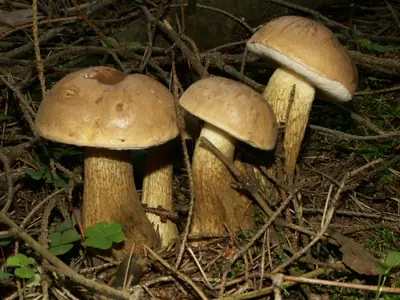
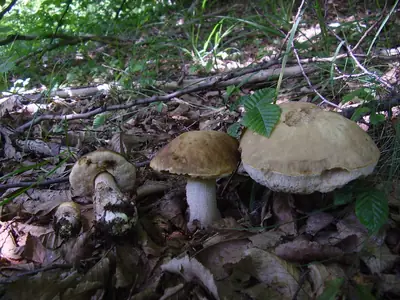
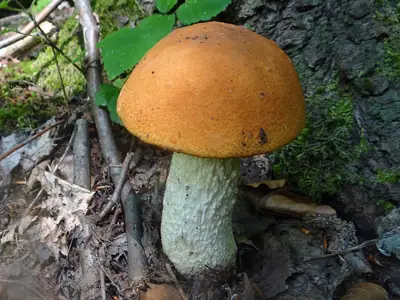
Foragers’ finds
All photosPhotos and identifications are added by users; we do not check them. Add your own find →
In the kitchen
Frying, stewing, soups, drying, preserving. Stems of older fruit bodies are tough – discard them. Darkens during cooking.
Protection and sale
- Species protection: the species is not protected.
- Sale: the species is on the list of mushrooms approved for sale (it may be sold only with a mushroom inspector’s certificate).
Brown birch bolete: common questions
Is the brown birch bolete edible?
Edible. A good edible mushroom. Pick young, firm fruit bodies – old ones have a watery cap and a woody stem. The flesh turns black during cooking.
When does the brown birch bolete grow?
In Poland the fruiting bodies usually appear in: June, July, August, September, October. Habitat: Always near birches (mycorrhizal) – in broadleaf and mixed forests, also outside forests; more often in dry or moderately moist places.
What can the brown birch bolete be mistaken for?
Bitter bolete (inedible): The bitter bolete has no black scales on the stem, only a dark network; its pores turn pink with age and its taste is extremely bitter. Hazel bolete (edible): The hazel bolete grows under hornbeams/hazel, has a wrinkled cap that cracks in dry weather, and its flesh turns pink when cut, then black. Edible. Red aspen bolete (edible): The brown birch bolete has a brown cap and black scales on the stem, and grows under birch. Edible. Not in this atlas: Leccinum versipelle (orange birch bolete; under birches, scales black from youth) – edible.
Sources
Last checked: 9 November 2026. Spotted a mistake? Write to us.