
Species protection
Protected mushrooms: what not to pick
Species in the atlas that are protected under the Regulation of the Minister of the Environment of 9 October 2014 (Dz.U. 2014 poz. 1408). The list also covers many rarer fungi that are not in the atlas.
What the law says
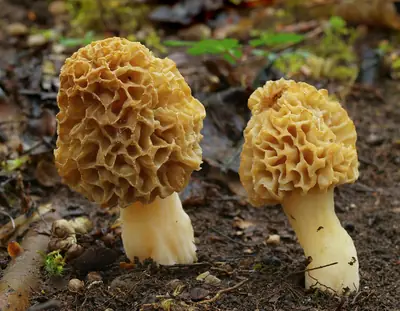
Annex 1 lists strictly protected species, Annex 2 partially protected species, Annex 3 partially protected species that may be harvested (with the method of harvesting) and Annex 4 protection zones (lichens only). For wild protected fungi (strictly and partially) it is forbidden, among other things, to deliberately destroy, pick or damage them, to destroy their habitats and to harvest or collect them (§ 6); strict protection also bans keeping, possessing, selling, offering for sale, exchanging, giving away, importing and exporting them. The regulation does NOT make a general exception for picking partially protected species for your own use: the species in Annex 3 (morels: common, conical, thick-footed, half-free and tall; hen of the woods; umbrella polypore; chicken of the woods; chaga) may be harvested only “by picking the fruiting bodies by hand”, by those holding a permit from the regional director for environmental protection or the General Directorate for Environmental Protection (GDOŚ) (§ 7(2)(a)). Morels are protected only as “specimens growing outside gardens, horticultural crops, forest nurseries and green spaces”: morels from a garden, a nursery or a green space are not protected.
Other protected species that foragers know (not in the atlas): royal bolete and rooting bolete, Suillus tridentinus and lion’s mane (strict protection); coral tooth fungus and Hericium alpestre, old man of the woods, parasitic bolete, orange knight, Suillus flavidus and Suillus sibiricus, and siedzuń dębowy (partial protection).
Legal basis
- Rozporządzenie Ministra Środowiska z dnia 9 października 2014 r. w sprawie ochrony gatunkowej grzybów (Dz.U. 2014 poz. 1408)
- Ustawa z dnia 16 kwietnia 2004 r. o ochronie przyrody (art. 131)
Last checked: 9 November 2026. Spotted a mistake? Write to us.
Species
At a glance
| Species | Protection | Season |
|---|---|---|
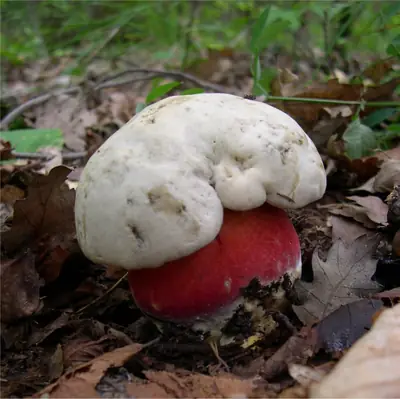
| Devil's bolete Rubroboletus satanas | Strictly protected Strict protection (Annex 1, item 8 of the 2014 regulation, as Boletus satanas), with no exemption for agriculture and forestry. Protected since 2004. On the Polish Red List with status E (endangered). | July–September |
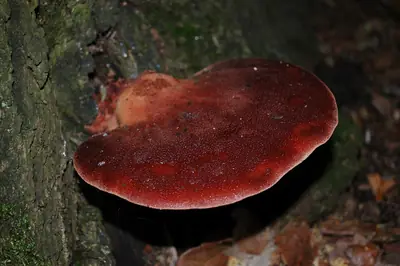
| Beefsteak fungus Fistulina hepatica | Partially protected Partial protection (Annex 2, item 38); it is not in Annex 3, so harvesting it is prohibited. Previously: 1995–2004 partial protection, 2004–2014 strict. | July–October |
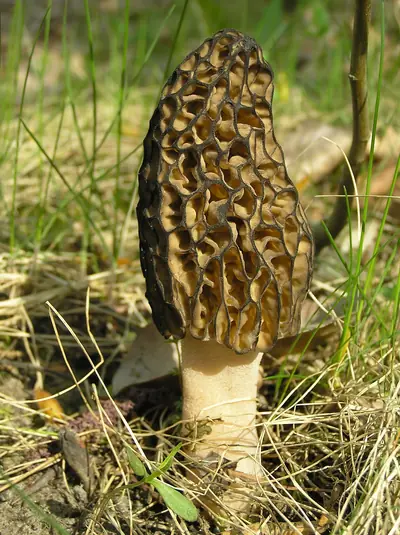
| Black morel Morchella conica | Partially protected Partial protection applies to specimens growing outside gardens, horticultural crops, forest nurseries and outside green areas (previously, in 1983–2014, strict protection). The species is in Annex 3 (harvesting by hand-picking of fruit bodies), but only on the basis of a permit from the regional or general directorate for environmental protection (RDOŚ/GDOŚ) – there is no general exemption for picking for your own use. Specimens from gardens, crops, nurseries and green areas are not protected. | March–May |
| Common morel Morchella esculenta | Partially protected Partial protection applies to specimens growing outside gardens, horticultural crops, forest nurseries and outside green areas (previously, in 1983–2014, strict protection). The species is in Annex 3 (harvesting by hand-picking of fruit bodies), but only on the basis of a permit from the regional or general directorate for environmental protection (RDOŚ/GDOŚ) – there is no general exemption for picking for your own use. Specimens from gardens, crops, nurseries and green areas are not protected. | April–May |
Safety rule
Never eat a mushroom identified only from a website, a photo or an app. Show any doubtful specimen to a certified mushroom inspector at the sanepid (state sanitary inspection); in season the advice points are free. Do not give wild-picked mushrooms to children.
The golden rules of foraging →Frequently asked questions
Are morels protected?
Yes. The common morel and the conical (black) morel are partially protected when they grow outside gardens, horticultural crops, forest nurseries and green spaces. They may be picked only with a permit from the regional director for environmental protection; the regulation makes no exception for picking for your own use.
Is the cauliflower fungus (siedzuń sosnowy, “goat’s beard”) protected?
No. The cauliflower fungus was protected until 2014. The current regulation protects only its oak-loving relative, siedzuń dębowy (partial protection).
What is the penalty for picking a protected mushroom?
Picking, destroying or damaging protected fungi without a permit is a petty offence under the Nature Conservation Act (ustawa o ochronie przyrody), art. 131, punishable by detention or a fine.
Is the Satan’s bolete protected?
Yes, Satan’s bolete is strictly protected. It is also poisonous, so there is no reason at all to pick it.