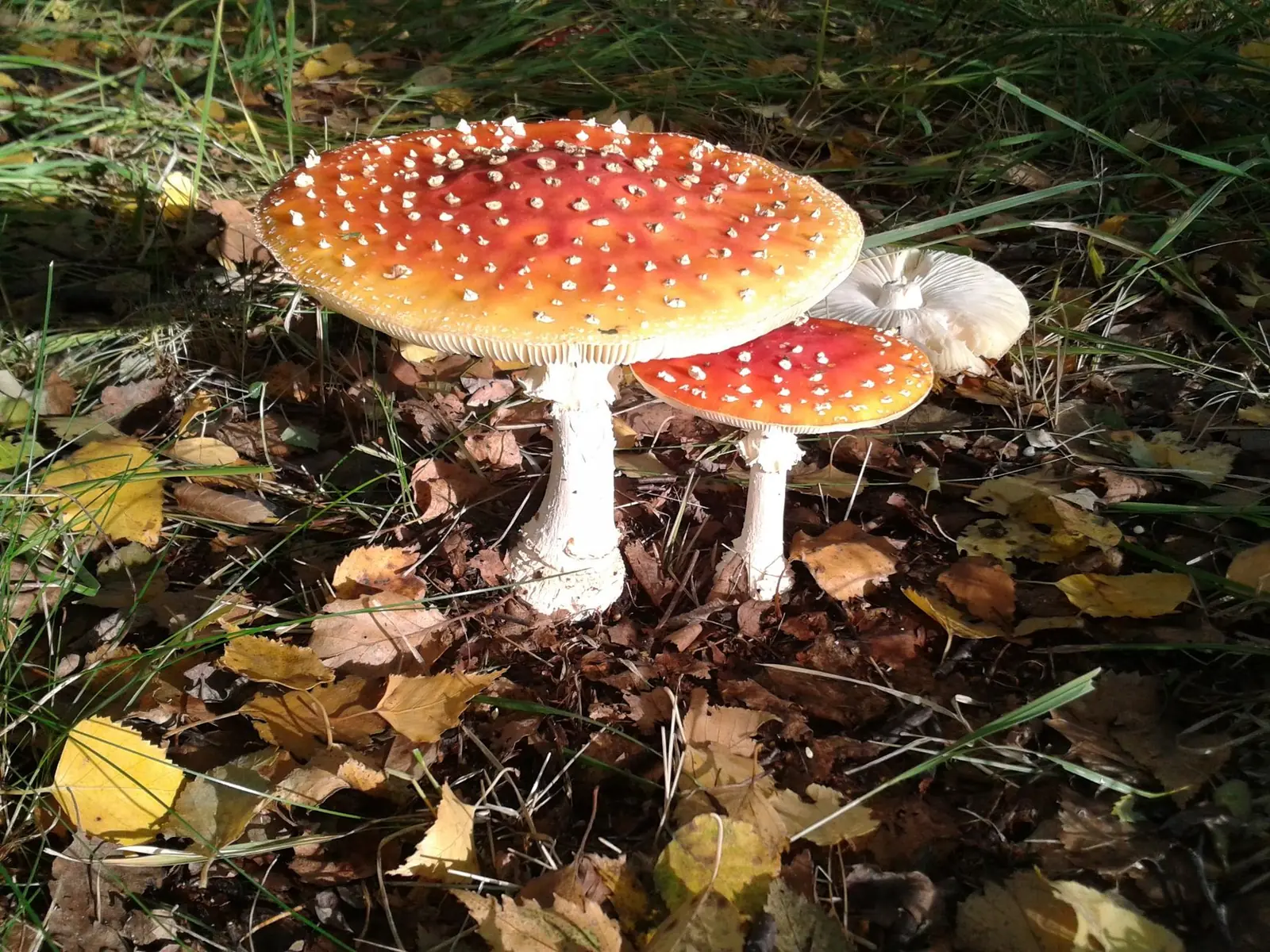
The numbers to call, poisoning symptoms by species, free mushroom checks at sanepid (the state sanitary inspection) and the rules that protect you from a mistake.
Do not wait for the symptoms to pass. In death cap poisoning, the first symptoms are followed by an apparent recovery.
Everyone who ate the dish should see a doctor, including people without symptoms.
Take any leftovers of the meal, mushroom peelings and vomit with you. They help to identify the species.
Do not give milk or alcohol, and do not treat yourself at home.
112 – the European emergency number, free of charge; calls are answered by an operator at the Centrum Powiadamiania Ratunkowego (CPR, Emergency Notification Centre), who passes the report on to the relevant services; it is the number for situations where you do not know which of the ‘9xx’ services to call, or when several are needed at once. 999 – Państwowe Ratownictwo Medyczne (State Medical Rescue, the ambulance service): still in operation; calls are taken by a medical dispatcher; call when there is a direct threat to life or health.
Poison information centres
Telephone advice for doctors and patients. In an emergency, call 112 or 999 first. We checked these numbers on 9 November 2026.
Szpital Uniwersytecki w Krakowie (University Hospital in Kraków)
Oddział Toksykologii i Chorób Wewnętrznych (Department of Toxicology and Internal Medicine) (Oddział Kliniczny Gastroenterologii, Hepatologii, Toksykologii i Chorób Wewnętrznych – Clinical Department of Gastroenterology, Hepatology, Toxicology and Internal Medicine), 24-hour Ośrodek Informacji Toksykologicznej (Toxicology Information Centre)
Szpital Miejski im. Franciszka Raszei (Franciszek Raszeja City Hospital)
Oddział Toksykologii (Toxicology Department) (Ośrodek Informacji Toksykologicznej im. dr Wandy Błeńskiej – Dr Wanda Błeńska Toxicology Information Centre)
The time between the meal and the first symptoms helps doctors recognise the type of poisoning. The later they start, the more dangerous it usually is.
Phalloides (amatoxin) syndrome – poisoning by the death cap (muchomor zielonawy/sromotnikowy) and related species
Symptoms after: 6–24 h (usually 8–16 h without symptoms), then an acute gastrointestinal phase; apparent improvement on day 2–3; liver and kidney damage on day 3–5 (according to mp.pl); according to another mp.pl article, symptoms of liver and kidney damage after 2–6 days
The most dangerous kind of mushroom poisoning. The toxins are not destroyed by cooking, pickling or drying. A period of apparent improvement does not mean recovery. Gut symptoms that begin later than about 6 h after a meal of mushrooms are treated as possible amatoxin poisoning. The death cap is sometimes mistaken for the parasol mushroom, the yellow knight, the green brittlegill and field mushrooms (pieczarki) (GIS, State Forests – Lasy Państwowe).
Orellanus syndrome – poisoning by webcaps (Cortinarius)
Symptoms after: several days to about 3 weeks: kidney-toxic symptoms (little or no urine) usually after 7–14 days (mp.pl); NAMA: from 36 h to 3 weeks, on average about 8 days
Causes kidney damage, which may be permanent. There is no specific antidote. Because of the long latency, patients often do not connect the symptoms with a meal eaten many days earlier.
In spring it is mistaken for morels. Gyromitrin breaks down into monomethylhydrazine; gastrointestinal and neurological symptoms (seizures), liver damage. Poisoning can also occur by breathing in the fumes during cooking (mp.pl). State Forests (Lasy Państwowe): ‘Deadly poisonous!’.
Muscarine syndrome – poisoning by fibrecaps and funnels
Symptoms after: 15–30 min (NAMA); WikEM: early-onset syndromes up to 2 h
Cholinergic symptoms: sweating, drooling, watering eyes, constricted pupils, slowed heart rate, bronchospasm. Usually passes within 4–12 h (WikEM). The specific antidote (atropine) is given only by a doctor.
Panther cap (pantherine) / isoxazole syndrome – ibotenic acid and muscimol
Mainly neurological symptoms: confusion, loss of coordination, agitation, then drowsiness. The panther cap is sometimes mistaken for the parasol mushroom (State Forests – Lasy Państwowe).
Gastrointestinal syndrome
Symptoms after: usually up to 2 h; passes within about 24 h (WikEM)
The most common type of poisoning. Edible mushrooms can also cause these symptoms if they are overripe or badly stored (sanepid – the state sanitary inspection, mp.pl). Note: if the meal included several different species, early vomiting does not rule out that a mushroom containing amatoxin was among them.
Coprine (Antabuse-like) syndrome – ink cap + alcohol
Symptoms after: reaction a few minutes after drinking alcohol; alcohol can trigger it up to 3 days after eating the mushroom (mp.pl), according to NAMA even up to 5 days
The mushroom itself is not poisonous; coprine blocks the breakdown of alcohol (facial flushing, palpitations, a drop in blood pressure). This applies to the COMMON ink cap. The shaggy ink cap is on the list of mushrooms approved for sale (Ministry of Health regulation); the sources we checked say nothing about its interaction with alcohol.
State Forests (Lasy Państwowe): ‘Formerly considered edible. Poisonous!’. It is sometimes mistaken for the saffron milkcap – the brown roll-rim does not give off milk.
Rhabdomyolysis after eating yellow knight (Tricholoma equestre)
Symptoms after: symptoms after several consecutive meals containing a large amount of the mushroom; in the French case series all patients had eaten at least 3 meals of yellow knight
Described in France (from 1992; Bedry et al., NEJM 2001) and in Poland: muscle breakdown (pain, weakness, dark urine); there have been deaths. The yellow knight is still on the list of mushrooms approved for sale (Ministry of Health regulation, consolidated text Dz.U. 2026 poz. 258, item 11). Some studies question its toxicity (Toxins 2018), so caution is the safe course: do not eat it several days in a row or in large amounts.
Free mushroom checks at sanepid
During the season, district and provincial sanitary-epidemiological stations (PSSE/WSSE – sanepid, the state sanitary inspection) offer free mushroom checks by certified mushroom inspectors (grzyboznawcy) or mushroom classifiers (klasyfikatorzy grzybów): ‘A specialist will assess free of charge whether the mushrooms are edible, inedible or poisonous’ (GIS – Chief Sanitary Inspectorate).
A certified mushroom inspector (grzyboznawca) is qualified to assess fresh and dried mushrooms; a mushroom classifier (klasyfikator grzybów) – fresh mushrooms only (GIS; also the Ministry of Health regulation of 17 May 2011).
Each station sets its own hours and dates – e.g. WSSE Bydgoszcz and the PSSEs of the Kuyavian-Pomeranian province: Mon–Fri 8:00–13:00 (announcement of 06.08.2025); PSSE Turek: Mon–Fri 8:00–14:00; PSSE Drawsko Pomorskie: duty hours 1.09–15.10.2025. Before your visit, check your PSSE's page on gov.pl.
How to bring mushrooms (WSSE Bydgoszcz, PSSE Chorzów): fresh mushrooms only, twisted out of the ground whole. Mushrooms that are old and overripe, too young (with features not yet developed), cleaned or cut up, mouldy, cooked, frozen, fried, washed or pickled are not assessed.
Editorial practice (not from sanepid announcements): do not mix doubtful specimens with ones you are sure of – bring them separately, so that any poisonous fragment does not end up in the rest of your haul.
Golden rules for mushroom pickers
1
Pick only mushrooms you are completely certain about. If you have any doubt – do not take the risk; take them to a certified mushroom inspector (grzyboznawca) at sanepid (the state sanitary inspection).
Based on: GIS; PSSE Chorzów
2
Do not pick fruiting bodies that are too young – they do not yet show the features of their species, and they are the most common cause of tragic mistakes.
Based on: PSSE Szczecin; PSSE Chorzów; State Forests (Lasy Państwowe)
3
Do not pick old and overripe mushrooms – they can cause food poisoning.
Based on: PSSE Chorzów; WSSE Bydgoszcz
4
Twist mushrooms out of the ground whole (with the base of the stem – that is where an amanita's sack, the volva, may be), and cover the spot where they grew with forest litter.
Based on: GIS; State Forests (Lasy Państwowe); WSSE Bydgoszcz (only whole specimens are assessed)
5
Do not judge mushrooms by their taste or by folk beliefs. Deadly poisonous species usually have a pleasant, sweetish taste.
Based on: WSSE Bydgoszcz; State Forests (Lasy Państwowe)
6
Most poisonous species are among the gilled mushrooms. Beginners should stick to boletes (mushrooms with pores) and show gilled mushrooms to a specialist.
Based on: State Forests (Lasy Państwowe); PSSE (gov.pl)
7
Pick into an airy basket, never into a plastic bag.
Based on: GIS; PSSE Szczecin
8
Do not pick beside roads, in ditches, at the edge of the forest or near rubbish – mushrooms accumulate heavy metals.
Based on: PSSE Szczecin; PSSE Chorzów
9
Do not give mushroom dishes to children, pregnant or breastfeeding women, older people or people with diseases of the digestive tract.
Based on: GIS
10
An app, a photo or a website (including Grzybolog) is only an aid. They must not be the only basis for deciding to eat a mushroom.
Based on: GIS lists apps and atlases as aids to identification; the rule against relying on them alone is an editorial rule
11
If you suspect poisoning: 112/999 or the hospital emergency department (SOR) immediately. Keep the mushroom peelings, leftovers of the dish and vomit – they are the material for identifying the species and choosing the treatment. Everyone who ate the dish should see a doctor. Do not give milk or alcohol.
Based on: GIS; PSSE Bartoszyce (2017); mp.pl
12
Do not keep picked mushrooms or dishes made from them for longer than one day – they spoil quickly and toxic substances form in them.
Based on: PSSE Bartoszyce (2017)
13
Home ‘tests’ (an onion turning dark, a silver spoon, a bitter taste) do not tell poisonous mushrooms from edible ones.
Based on: PSSE Bartoszyce (2017); State Forests (Lasy Państwowe)
14
Do not destroy inedible and poisonous mushrooms, and do not pick protected species (e.g. morels).
Based on: PSSE Szczecin; PSSE Chorzów; Dz.U. 2014 poz. 1408
Frequently asked questions
How long after eating do the symptoms of mushroom poisoning appear?
It depends on the species. “Early” poisonings (up to about 2–6 hours) usually mean stomach upsets or neurological symptoms. The most dangerous are “late” poisonings: the death cap causes symptoms after 6–24 hours, and webcaps (Cortinarius) even after several days or weeks. Diarrhoea and vomiting that start more than about 6 hours after a mushroom meal need urgent medical help.
Does cooking or drying remove the toxins from mushrooms?
No. The amatoxins of the death cap survive boiling, frying, pickling and drying. Only some mushrooms that are edible with care need to be parboiled first, as we describe on their pages in the atlas.
Where can I have mushrooms checked for free?
During the season, many district and regional sanitary-epidemiological stations (sanepid, the state sanitary inspection) have certified mushroom inspectors on duty who check the mushrooms you bring in free of charge. Each station sets its own hours: check the page of your local PSSE on gov.pl.