Gilled mushrooms
Sickener
Russula emetica · also known as: The sickener, Emetic russula
Poisonous
Poisonous – even a small amount causes abdominal pain, nausea and vomiting (hence the name). It is not among the most dangerous, but it must not be picked. There are very many red brittlegills and they can be impossible to tell apart without a microscope – beginners should not pick any red brittlegills with a hot taste.
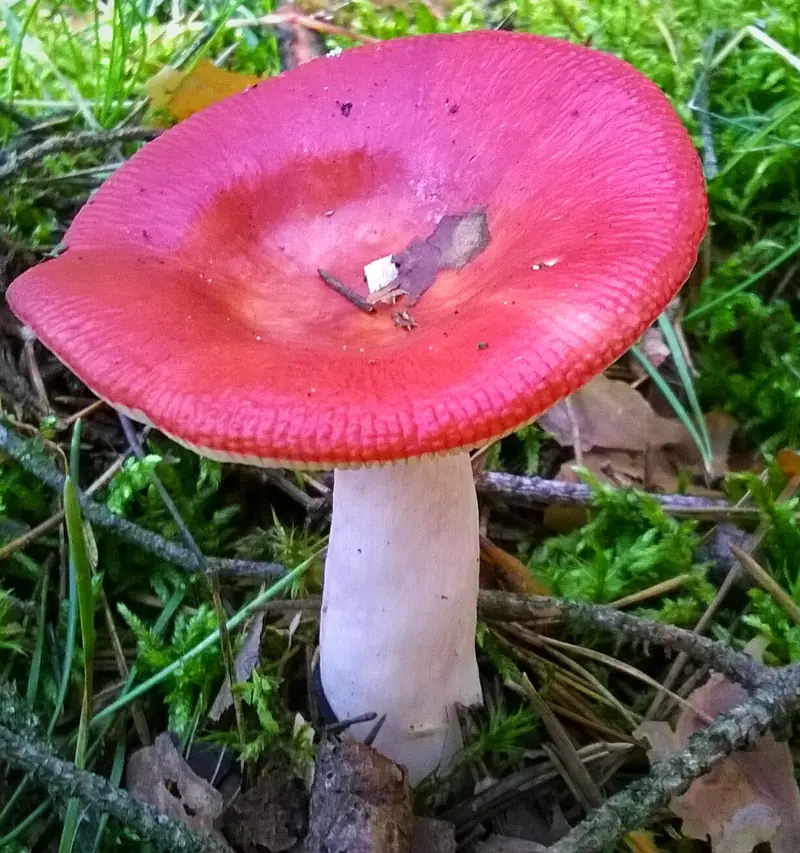
How to recognise it: sickener
- 1
Bright red cap with a peelable cuticle
- 2
White gills and white stem
- 3
Very brittle flesh (a brittlegill)
- 4
Burning taste
- 5
Moist coniferous forests, mosses, bogs
Description
- Cap
- 4–11 cm, bright cinnabar-, blood- or cherry-red, fading to pink with age; smooth, sticky and shiny when wet; the cuticle peels off almost completely.
- Gills
- Gills pure white to pale cream, crowded, brittle.
- Stem
- 3–8 cm, pure white, cylindrical, brittle, cottony with age.
- Flesh
- White, pink under the cap cuticle, very brittle; does not change colour.
- Smell and taste
- Smell faint, fruity; taste very hot, burning and long-lasting (do not swallow).
Where and when it grows
Moist coniferous forests (pine, spruce), on acidic, mossy ground, also on bogs; rare in broadleaf forests. A mycorrhizal fungus.
Most often with: pine, spruce
Look-alikes: what it can be mistaken for
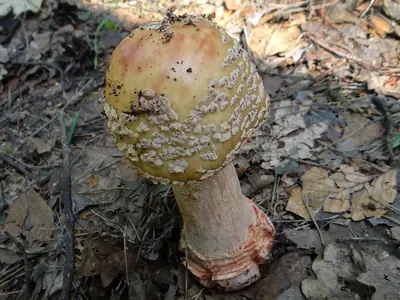
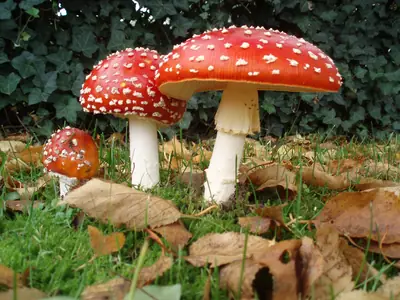
Fly agaric Poisonous low risk
The fly agaric has white flecks on the cap, a ring and a bulb at the stem base; the brittlegill has neither a ring nor a bulb, and its flesh is brittle like chalk.
Foragers’ finds
All photosPhotos and identifications are added by users; we do not check them. Add your own find →
Protection and sale
- Species protection: the species is not protected.
- Sale: the species is not on the list of mushrooms approved for sale.
Sickener: common questions
Is the sickener edible?
Poisonous. Poisonous – even a small amount causes abdominal pain, nausea and vomiting (hence the name). It is not among the most dangerous, but it must not be picked. There are very many red brittlegills and they can be impossible to tell apart without a microscope – beginners should not pick any red brittlegills with a hot taste.
When does the sickener grow?
In Poland the fruiting bodies usually appear in: June, July, August, September, October, November. Habitat: Moist coniferous forests (pine, spruce), on acidic, mossy ground, also on bogs; rare in broadleaf forests. A mycorrhizal fungus.
What can the sickener be mistaken for?
Fly agaric (poisonous): The fly agaric has white flecks on the cap, a ring and a bulb at the stem base; the brittlegill has neither a ring nor a bulb, and its flesh is brittle like chalk.
Sources
- Gołąbek wymiotny – Wikipedia (PL)
- Russula emetica – Atlas grzybów Polski (grzyby.pl, M. Snowarski)
- Russula emetica – First Nature
- Bezpieczne grzybobranie – ulotka WSSE w Warszawie (publikacja Nadleśnictwa Nowa Dęba, Lasy Państwowe)
Last checked: 9 November 2026. Spotted a mistake? Write to us.