Gilled mushrooms
Fly agaric
Amanita muscaria · also known as: Fly amanita
Poisonous
Poisonous, psychoactive. Poisonings rarely end in death, but they are violent and dangerous (agitation, seizures, hallucinations, then deep sleep); they most often involve children and people using it as an intoxicant. Drying does not make it safe. It should not be confused with the edible Caesar's mushroom (Amanita caesarea), which does not grow in Poland.
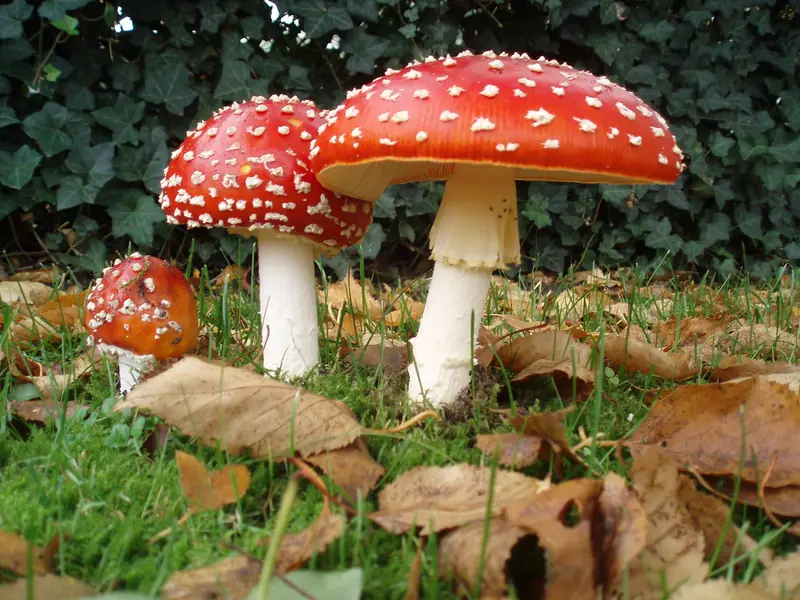
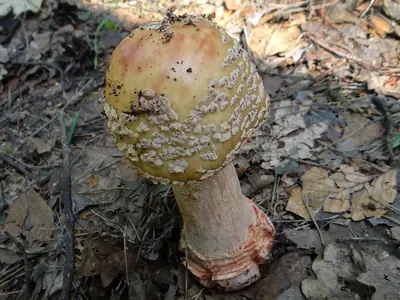
How to recognise it: fly agaric
- 1
Red cap with white patches (the patches may disappear after rain)
- 2
White gills and white spore print
- 3
Hanging ring and a bulb with rolls of warts
- 4
Yellow-orange flesh under the cap cuticle
Description
- Cap
- 5–15(20) cm, globose when young, then flat; bright red to orange, with white patches that are easily washed off by rain; margin striate in older specimens.
- Gills
- Gills white to cream, crowded, free.
- Stem
- White or yellowish, 6–20 cm, with a white, hanging ring; bulbous base with several rows of roll-like warts (reduced volva).
- Flesh
- White, yellow to orange under the cap cuticle; does not change colour, brittle.
- Smell and taste
- No distinct smell; taste mild. Do not taste.
Where and when it grows
Very common in coniferous, broadleaf and mixed forests, most often under birches and spruces, usually on acidic soils; a mycorrhizal fungus.
Most often with: birch, spruce, pine, fir, aspen, oak
Look-alikes: what it can be mistaken for
Sickener Poisonous low risk
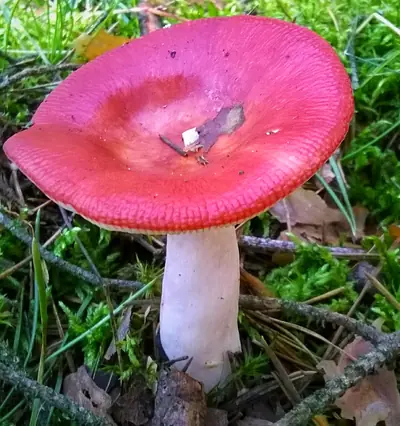
The fly agaric has white flecks on the cap, a ring and a bulb at the stem base; the brittlegill has neither a ring nor a bulb, and its flesh is brittle like chalk.
Foragers’ finds
All photosPhotos and identifications are added by users; we do not check them. Add your own find →
Protection and sale
- Species protection: the species is not protected.
- Sale: the species is not on the list of mushrooms approved for sale.
Fly agaric: common questions
Is the fly agaric edible?
Poisonous. Poisonous, psychoactive. Poisonings rarely end in death, but they are violent and dangerous (agitation, seizures, hallucinations, then deep sleep); they most often involve children and people using it as an intoxicant. Drying does not make it safe. It should not be confused with the edible Caesar's mushroom (Amanita caesarea), which does not grow in Poland.
When does the fly agaric grow?
In Poland the fruiting bodies usually appear in: June, July, August, September, October, November. Habitat: Very common in coniferous, broadleaf and mixed forests, most often under birches and spruces, usually on acidic soils; a mycorrhizal fungus.
What can the fly agaric be mistaken for?
Sickener (poisonous): The fly agaric has white flecks on the cap, a ring and a bulb at the stem base; the brittlegill has neither a ring nor a bulb, and its flesh is brittle like chalk.
Sources
- Wikipedia (pl): Muchomor czerwony
- grzyby.pl (M. Snowarski): Amanita muscaria
- First Nature: Amanita muscaria, Fly Agaric
Last checked: 9 November 2026. Spotted a mistake? Write to us.