Gilled mushrooms
Blusher
Amanita rubescens · also known as: The blusher, Blushing amanita
Edible with care
Edible only after thorough cooking – raw it contains a haemolysin (causes anaemia), which is destroyed by cooking. Many authors advise against picking it because it is easily confused with the deadly dangerous panther cap; only for very experienced foragers. There is no tradition of collecting it in Poland.
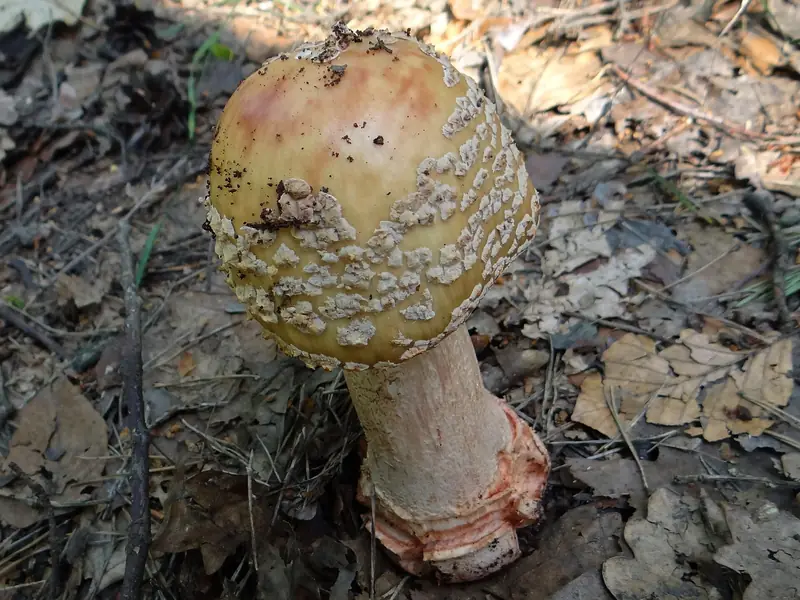
How to recognise it: blusher
- 1
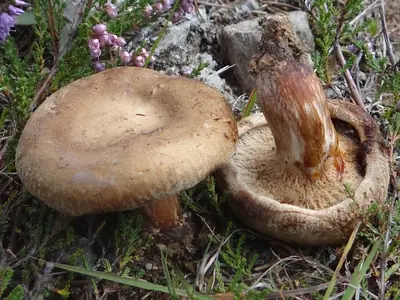
Flesh and stem turn red when damaged
- 2
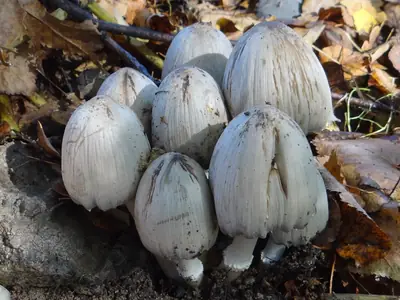
Upper side of the ring distinctly striate
- 3
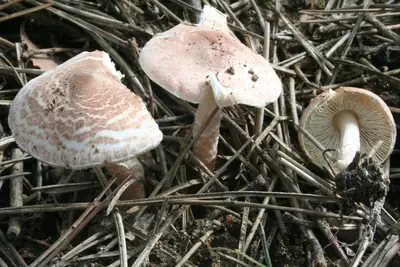
Cap margin not striate
- 4
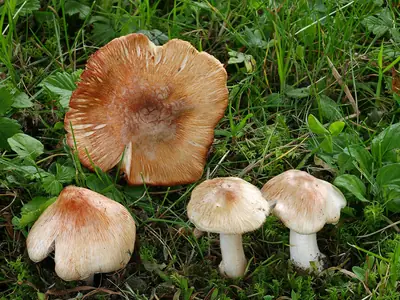
Reddish tinge to the cap and pinkish patches
Description
- Cap
- 5–15(25) cm, hemispherical, then flat; flesh-reddish to brownish-red, with numerous small, brownish-pink or greyish patches; margin not striate.
- Gills
- Gills white, with a pinkish tinge with age and reddish spots where damaged.
- Stem
- 10–15 cm, whitish, brownish-red towards the base; a persistent ring with striations on the upper side; base an elongated small bulb with a few rolls of veil, or bare.
- Flesh
- White, slowly turning red when damaged (and where eaten by larvae).
- Smell and taste
- No distinct smell; taste mild.
Where and when it grows
Very common in coniferous, broadleaf and mixed forests, among mosses, under various trees; appears as early as June, also in drier periods.
Most often with: birch, beech, pine, oak
Look-alikes: what it can be mistaken for
Panther cap Deadly poisonous high risk of confusion
The panther cap has unchanging white flesh, a smooth (non-striate) ring, a striate cap margin, pure white patches and a small bulb with distinct rolls of veil. If any feature raises doubt – do not pick.
Step-by-step comparison: Blusher or panther cap →
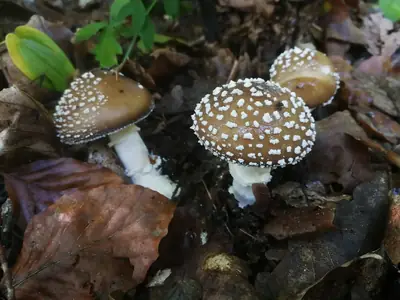
Foragers’ finds
All photosPhotos and identifications are added by users; we do not check them. Add your own find →
In the kitchen
Only after thorough boiling or frying; never raw. Often infested with larvae.
Watch out for toxins
Raw it contains a haemolytic toxin (destruction of red blood cells, anaemia), broken down by thorough cooking.
Protection and sale
- Species protection: the species is not protected.
- Sale: the species is not on the list of mushrooms approved for sale. Not on the list of mushrooms permitted for sale.
Blusher: common questions
Is the blusher edible?
Edible with care. Edible only after thorough cooking – raw it contains a haemolysin (causes anaemia), which is destroyed by cooking. Many authors advise against picking it because it is easily confused with the deadly dangerous panther cap; only for very experienced foragers. There is no tradition of collecting it in Poland.
When does the blusher grow?
In Poland the fruiting bodies usually appear in: June, July, August, September, October, November. Habitat: Very common in coniferous, broadleaf and mixed forests, among mosses, under various trees; appears as early as June, also in drier periods.
What can the blusher be mistaken for?
Panther cap (deadly poisonous): The panther cap has unchanging white flesh, a smooth (non-striate) ring, a striate cap margin, pure white patches and a small bulb with distinct rolls of veil. If any feature raises doubt – do not pick.
Sources
- Wikipedia (pl): Muchomor czerwieniejący
- grzyby.pl (M. Snowarski): Amanita rubescens
- First Nature: Amanita rubescens, Blusher
Last checked: 9 November 2026. Spotted a mistake? Write to us.