
9 deadly poisonous
Poisonous mushrooms: how to recognise them
The most dangerous mushrooms of Polish forests, their toxins and their edible look-alikes. Most fatal poisonings come from a mistake, not from picking an unknown mushroom.
Species
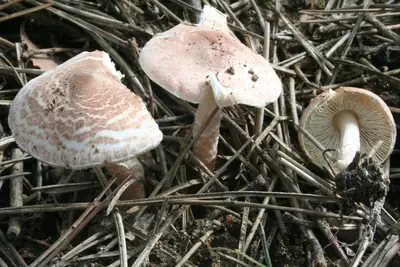 Deadly dapperlingLepiota brunneoincarnataDeadly poisonous
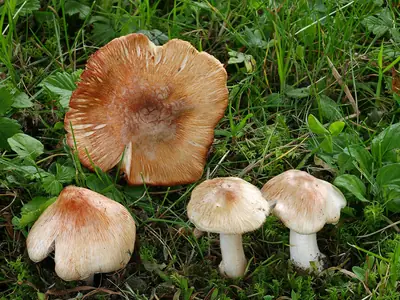 Deadly fibrecapInosperma erubescensDeadly poisonous
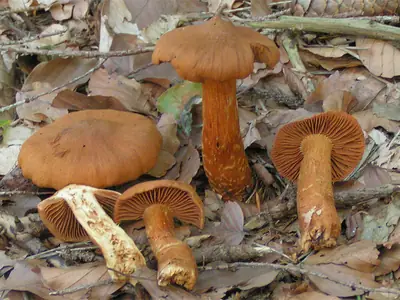 Deadly webcapCortinarius rubellusDeadly poisonous
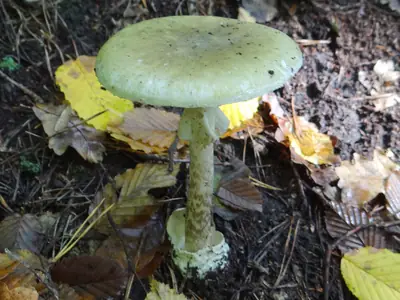 Death capAmanita phalloidesDeadly poisonous
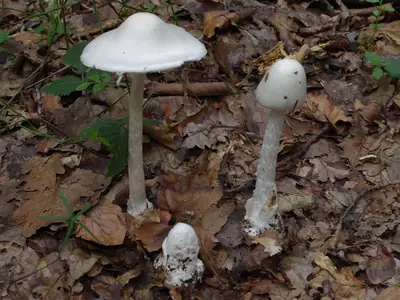 Destroying angelAmanita virosaDeadly poisonous
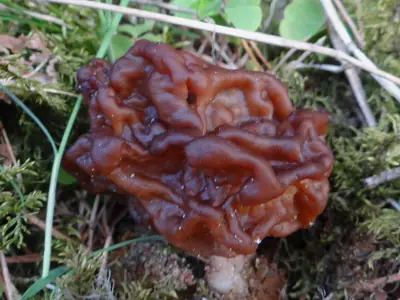 False morelGyromitra esculentaDeadly poisonous
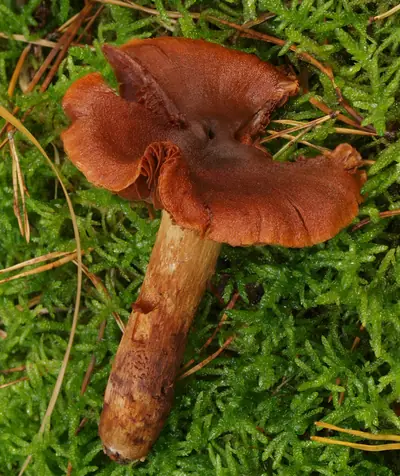 Fool's webcapCortinarius orellanusDeadly poisonous
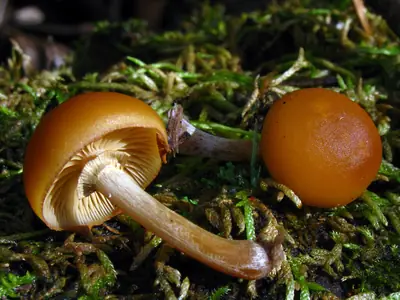 Funeral bellGalerina marginataDeadly poisonous
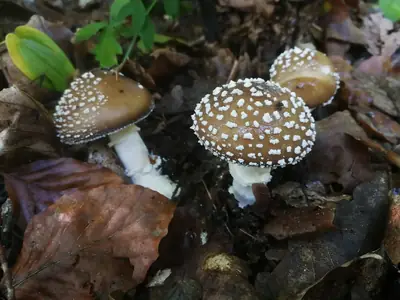 Panther capAmanita pantherinaDeadly poisonous
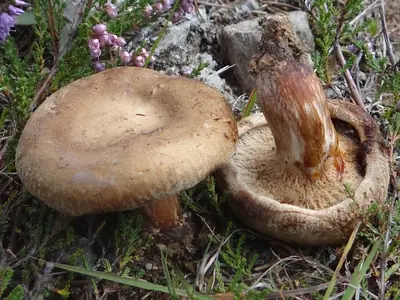 Brown roll-rimPaxillus involutusPoisonous
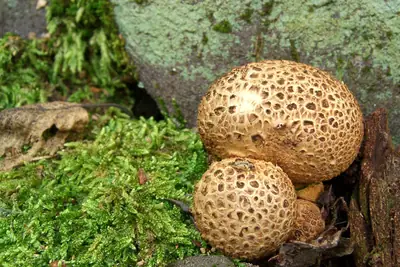 Common earthballScleroderma citrinumPoisonous
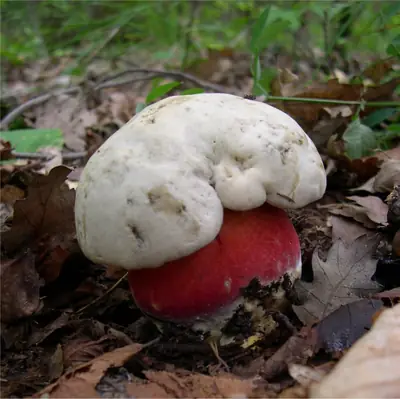 Devil's boleteRubroboletus satanasPoisonousStrictly protected
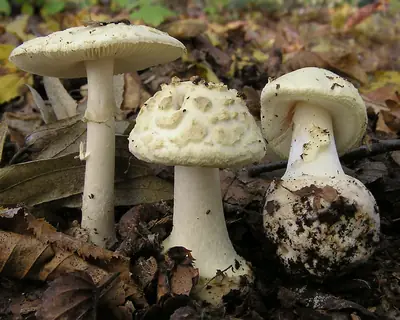 False death capAmanita citrinaPoisonous
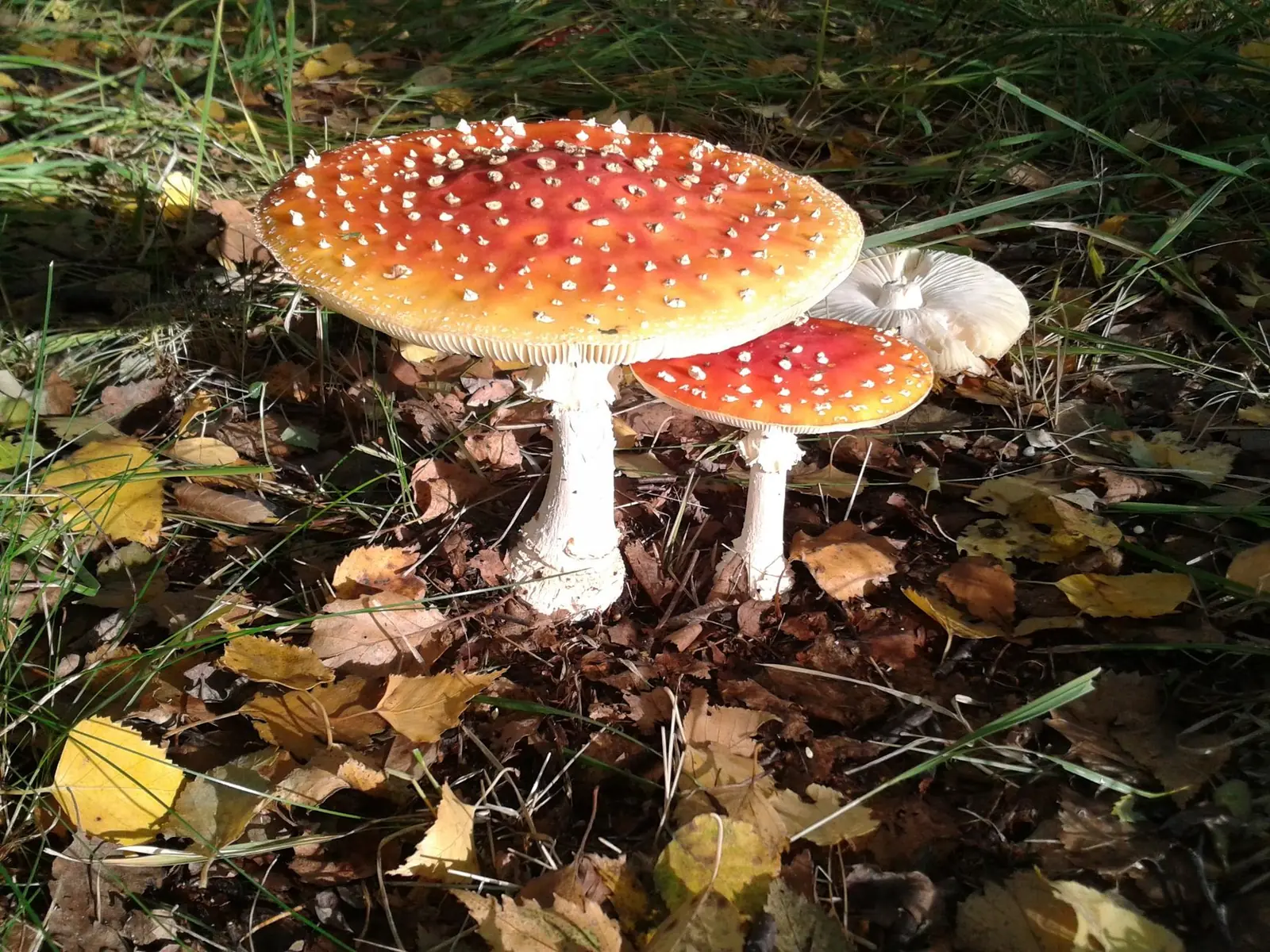
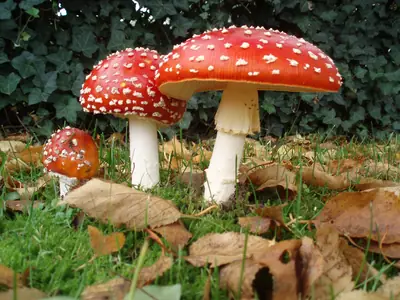 Fly agaricAmanita muscariaPoisonous
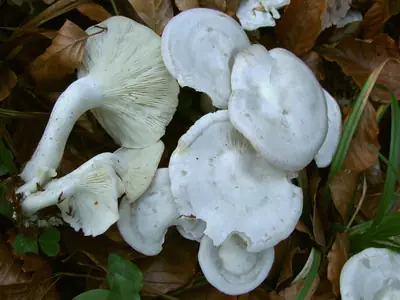 Fool's funnelCollybia rivulosaPoisonous
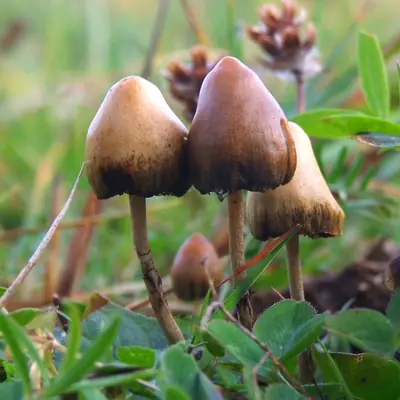 Liberty capPsilocybe semilanceataPoisonous
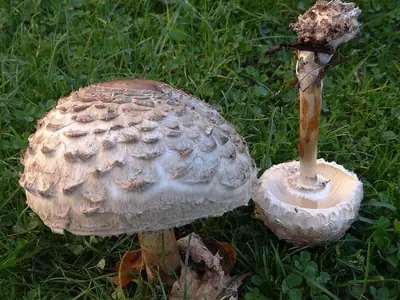 Shaggy parasolChlorophyllum rhacodesPoisonous
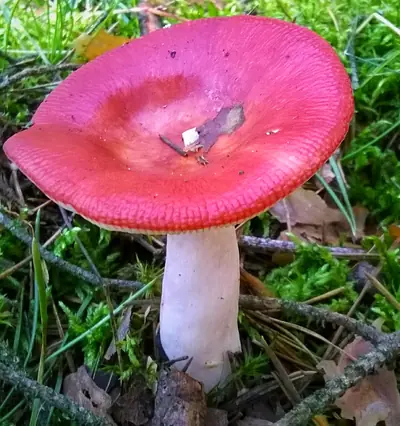 SickenerRussula emeticaPoisonous
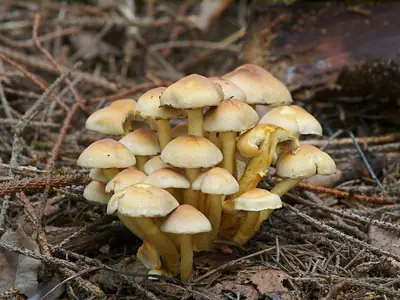 Sulphur tuftHypholoma fascicularePoisonous
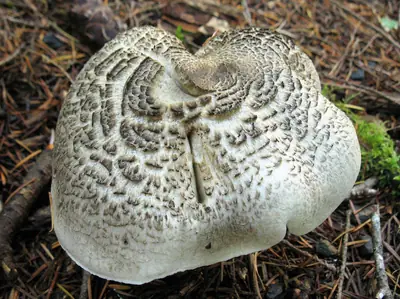 Tiger tricholomaTricholoma pardinumPoisonous
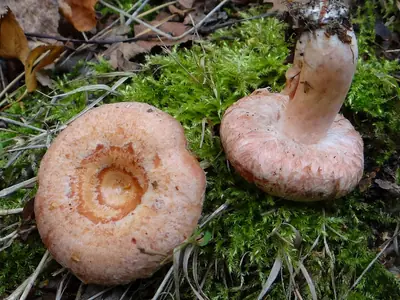 Woolly milkcapLactarius torminosusPoisonous
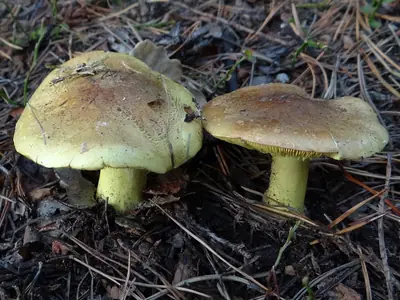 Yellow knightTricholoma equestrePoisonous
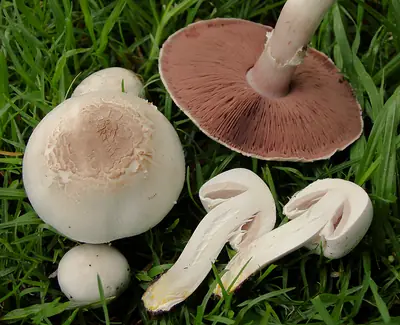 Yellow stainerAgaricus xanthodermusPoisonous
At a glance
Time to symptoms and the poisoning syndromes are described on the mushroom poisoning page.
| Species | Edibility | Toxins / syndrome |
|---|---|---|
| Deadly dapperling Lepiota brunneoincarnata | Deadly poisonous | Amatoxins (as in the death cap) – phalloides (cytotoxic) syndrome: gastrointestinal symptoms only after many hours, then an apparent improvement and damage to the liver and kidneys; severe to fatal poisonings. |
| Deadly fibrecap Inosperma erubescens | Deadly poisonous | Muscarine – muscarinic syndrome: sweating, salivation, tearing, constricted pupils, visual disturbances, vomiting, colic, slowed heart rate; rapid onset, from approx. 15 min to a few hours. Antidote: atropine. Death is possible (especially in people with heart and respiratory diseases). |
| Deadly webcap Cortinarius rubellus | Deadly poisonous | Orellanine – orellanus syndrome (kidney damage), symptoms from several days to approx. 2–3 weeks after eating; no antidote. |
| Death cap Amanita phalloides | Deadly poisonous | Amatoxins (mainly α-amanitin) and phallotoxins – phalloides (cytotoxic) syndrome. First symptoms (vomiting, diarrhoea, abdominal pain) only after approx. 8–16 h (on average approx. 12 h), earlier in children; then a deceptive improvement, and after 2–6 days damage to the liver and kidneys; death usually after several days. Hospital treatment, sometimes a liver transplant. At any suspicion go to hospital immediately and keep the mushroom remains. |
| Destroying angel Amanita virosa | Deadly poisonous | Amatoxins (mainly α-amanitin) and phallotoxins – phalloides syndrome as with the death cap: gastrointestinal symptoms after approx. 5–12 h, an apparent improvement, then liver failure. |
| False morel Gyromitra esculenta | Deadly poisonous | Gyromitrin, metabolised to monomethylhydrazine (MMH); damages the liver, kidneys, nervous system and red blood cells (haemolysis). First symptoms usually after several to a dozen or so hours: nausea, vomiting, diarrhoea, dizziness, loss of coordination, seizures, coma, liver failure. The antidote is intravenous vitamin B6. Poisoning by inhalation during heat treatment is possible. |
| Fool's webcap Cortinarius orellanus | Deadly poisonous | Orellanine – orellanus (nephrotoxic) syndrome: damage to the renal tubules and acute kidney failure. Latency from approx. 2–3 to a dozen or more days (fully developed symptoms even after ~2 weeks). No antidote – dialysis or kidney transplant. |
| Funeral bell Galerina marginata | Deadly poisonous | Amatoxins (amanitins) – phalloides (cyclopeptide) syndrome, as after the death cap: gastrointestinal symptoms after several to a dozen or so hours, then an apparent improvement and damage to the liver and kidneys after 2–6 days. |
| Panther cap Amanita pantherina | Deadly poisonous | Ibotenic acid and muscimol – the pantherina (neurotoxic) syndrome, as with the fly agaric. Rapid onset of symptoms: vomiting, diarrhoea, agitation as if after alcohol, hallucinations, seizures and visual disturbances, then drowsiness and loss of consciousness; deaths have been described. |
| Brown roll-rim Paxillus involutus | Poisonous | Paxillus (immunohaemolytic) syndrome: in sensitised people an antigen of the mushroom triggers the production of antibodies that destroy their own red blood cells – haemolysis, kidney failure, possible death; it can occur after many previous symptom-free meals. In addition, raw or undercooked it causes gastrointestinal poisoning of varying severity. |
| Common earthball Scleroderma citrinum | Poisonous | Gastrointestinal syndrome after eating larger amounts (nausea, vomiting, abdominal pain); the toxins are not named in the sources. |
| Devil's bolete Rubroboletus satanas | Poisonous | Gastrointestinal syndrome (vomiting, diarrhoea, abdominal pain). Toxicity is attributed to the glycoprotein bolesatine; muscarine is present in amounts presumably too small to explain the poisoning. Most potent when raw or undercooked. |
| False death cap Amanita citrina | Poisonous | Bufotenine (according to Polish sources partly broken down by cooking); according to First Nature also trace amounts of α-amanitin. Mildly toxic. |
| Fly agaric Amanita muscaria | Poisonous | Ibotenic acid and muscimol (muscarine only in trace amounts) – the pantherina (neurotoxic) syndrome. Symptoms after 30 min–2 h: agitation resembling drunkenness, hallucinations, seizures, then drowsiness; usually resolve after several to a dozen or so hours. Poisonings are rarely fatal. |
| Fool's funnel Collybia rivulosa | Poisonous | Muscarine – muscarinic syndrome: profuse sweating, tearing, salivation, visual disturbances, vomiting, colic; symptoms after approx. 15 min to 4 h, often pass after a few hours. Antidote: atropine. |
| Liberty cap Psilocybe semilanceata | Poisonous | Psilocybin – a hallucinogenic mushroom (psilocybin syndrome): disturbances of perception, a drop in arterial blood pressure; vomiting, abdominal pain and anxiety attacks can occur, some people required hospital treatment. Psilocybin is a group I-P psychotropic substance under the Polish Act on Counteracting Drug Addiction – possessing it is punishable. |
| Shaggy parasol Chlorophyllum rhacodes | Poisonous | The responsible substance is not identified in the sources; in some people a gastrointestinal syndrome (nausea, vomiting, diarrhoea). |
| Sickener Russula emetica | Poisonous | Irritant substances with a hot taste – gastrointestinal syndrome (abdominal pain, nausea, vomiting), symptoms usually soon after eating. |
| Sulphur tuft Hypholoma fasciculare | Poisonous | Fasciculols (triterpenes) – gastrointestinal syndrome (abdominal pain, nausea, vomiting, diarrhoea). Latency according to Wikipedia up to 3 hours, according to First Nature usually 5–10 hours; rarely a severe course. |
| Tiger tricholoma Tricholoma pardinum | Poisonous | No substance named in the sources; gastrointestinal syndrome: colicky abdominal pain, vomiting, diarrhoea, 0.5–3 h after eating; in extreme cases collapse. |
| Woolly milkcap Lactarius torminosus | Poisonous | Irritant resinous substances (the acrid compounds of the milk) – gastrointestinal syndrome: nausea, vomiting, diarrhoea, usually within a few hours. Not fatal. |
| Yellow knight Tricholoma equestre | Poisonous | Toxic substance unidentified. Rhabdomyolysis (breakdown of skeletal muscle) after eating large amounts on several consecutive days: muscle weakness and pain, dark brown urine (myoglobinuria), in severe cases cardiac and renal complications, deaths. |
| Yellow stainer Agaricus xanthodermus | Poisonous | Compounds irritating the digestive tract (no specific substance named in the sources) – gastrointestinal syndrome: nausea, vomiting, diarrhoea. |
Safety rule
Never eat a mushroom identified only from a website, a photo or an app. Show any doubtful specimen to a certified mushroom inspector at the sanepid (state sanitary inspection); in season the advice points are free. Do not give wild-picked mushrooms to children.
The golden rules of foraging →Frequently asked questions
Which is the most poisonous mushroom in Poland?
The death cap. Its amatoxins destroy the liver, and the first symptoms usually appear only after 6–24 hours, when the toxins have already been absorbed. It is responsible for most fatal mushroom poisonings in Poland.
What should I do if I suspect mushroom poisoning?
Call 112 or go to A&E (SOR), even if the symptoms are mild or have passed. Take any leftover mushrooms, peelings and vomit with you for testing. Do not treat yourself and do not wait for it to pass. Poison centres and phone numbers.
Can a poisonous mushroom be recognised by its taste, smell or a silver spoon?
No. Folk tests (an onion or silver turning black, slug bites, taste) do not work. The death cap has a mild taste and smell. The only reliable method is knowing the features of the species and having it checked by a certified mushroom inspector.