Gilled mushrooms
Yellow stainer
Agaricus xanthodermus · also known as: Yellow-staining mushroom
Poisonous
Poisonous – causes (not in everyone) severe gastrointestinal upset with nausea and vomiting; alcohol can intensify the symptoms. Most similar to the edible horse mushroom, wood mushroom and blushing wood mushroom (Polish: pieczarka biaława, zaroślowa and leśna).
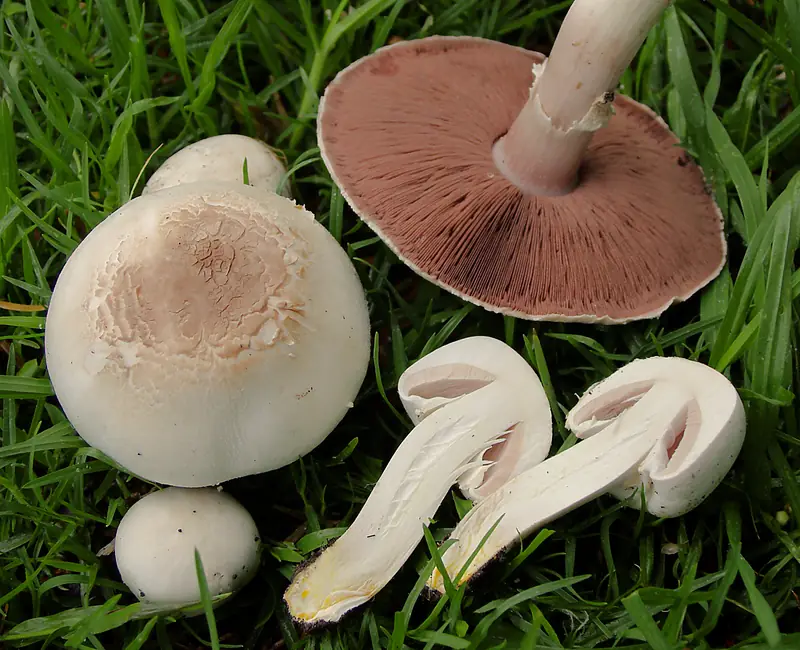
How to recognise it: yellow stainer
- 1
Stem base turns bright yellow immediately when rubbed or cut
- 2
Smell of carbolic/ink, intensifying during cooking
- 3
White cap that turns yellow when scratched
- 4
Chocolate-brown gills and spore print as in other Agaricus species
Description
- Cap
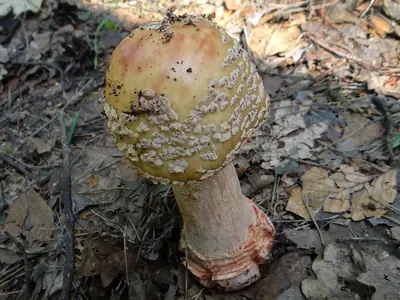
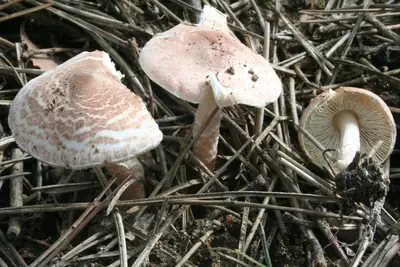
- 4–15 cm, at first hemispherical with a flattened (“trapezoid”) top, then convex; white to cream, sometimes darker in the centre; light yellow when scratched.
- Gills
- Gills pinkish-whitish at first, then chocolate-brown; spore print chocolate-brown.
- Stem
- 6–12 cm, white, slender, bulbous at the base; when rubbed the base immediately turns intensely chrome-yellow; ring high on the stem, with a thick rim on its underside.
- Flesh
- White; when cut – especially in the stem base – quickly chrome-yellow, then turning brown.
- Smell and taste
- Unpleasant smell of carbolic, ink or iodine, strongest at the stem base and during cooking.
Where and when it grows
Saprotrophic; broadleaf and coniferous forests, parks, gardens, roadsides, scrub and grassy areas, in fertile places rich in organic debris.
Look-alikes: what it can be mistaken for
Field mushroom Edible medium risk
The field mushroom does not turn yellow (or only slightly) and does not smell of carbolic; it has a shorter stem without a bulb and a delicate, vanishing ring.
Step-by-step comparison: Field mushroom or yellow stainer →
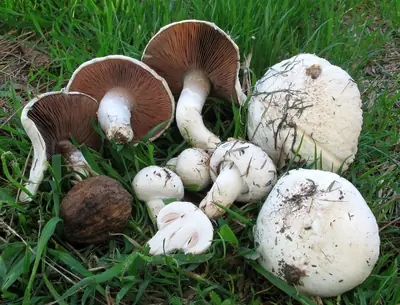
Foragers’ finds
All photosPhotos and identifications are added by users; we do not check them. Add your own find →
Protection and sale
- Species protection: the species is not protected.
- Sale: the species is not on the list of mushrooms approved for sale.
Yellow stainer: common questions
Is the yellow stainer edible?
Poisonous. Poisonous – causes (not in everyone) severe gastrointestinal upset with nausea and vomiting; alcohol can intensify the symptoms. Most similar to the edible horse mushroom, wood mushroom and blushing wood mushroom (Polish: pieczarka biaława, zaroślowa and leśna).
When does the yellow stainer grow?
In Poland the fruiting bodies usually appear in: May, June, July, August, September, October. Habitat: Saprotrophic; broadleaf and coniferous forests, parks, gardens, roadsides, scrub and grassy areas, in fertile places rich in organic debris.
What can the yellow stainer be mistaken for?
Field mushroom (edible): The field mushroom does not turn yellow (or only slightly) and does not smell of carbolic; it has a shorter stem without a bulb and a delicate, vanishing ring.
Sources
- Wikipedia (pl): Pieczarka karbolowa
- grzyby.pl (M. Snowarski): Agaricus xanthodermus
- First Nature: Agaricus xanthodermus, Yellow Stainer
Last checked: 9 November 2026. Spotted a mistake? Write to us.