Boletes (pores under the cap)
Bay bolete
Imleria badia
EdibleApproved for sale
Edible and valued; like most mushrooms it is not suitable for eating raw. The cap-skin pigment binds caesium, so it accumulates more of it (including radioactive caesium) than other species – at typical consumption this has no practical significance (grzyby.pl).
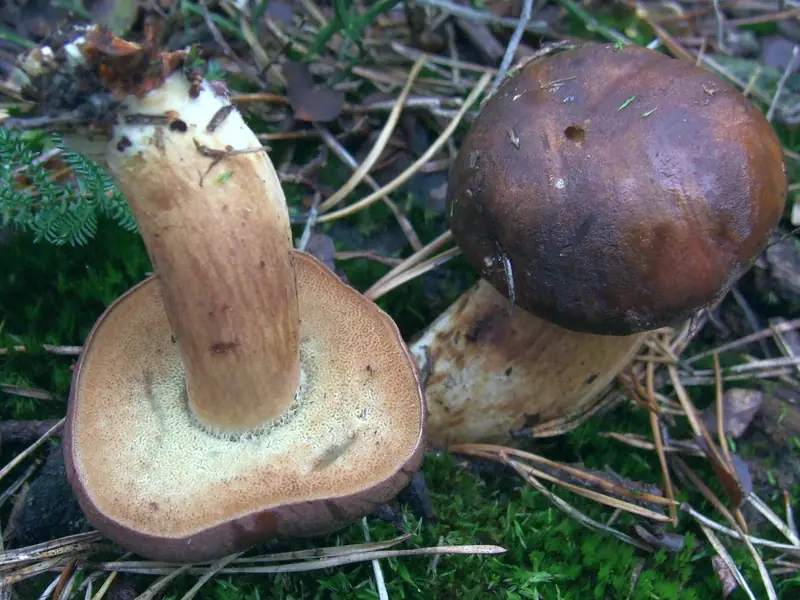
How to recognise it: bay bolete
- 1
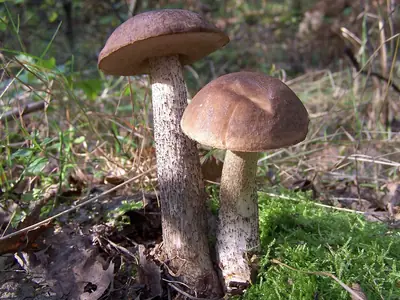
Chestnut-brown cap, sticky when wet
- 2
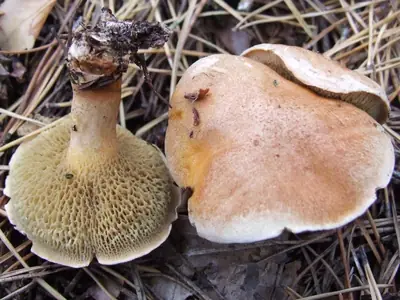
Yellowish pores that turn blue when pressed
- 3
Stem with lengthwise fibrils, no network
- 4
Flesh turns slightly blue
Description
- Cap
- 3–15 cm across, chestnut-brown to dark brown, paler with age; slimy when wet, matt and suede-like when dry.
- Tubes and pores
- Tubes and pores whitish when young, then yellow to yellow-green; turn blue (blue-green) when pressed.
- Stem
- Light brown with darker, lengthwise fibrils – no network; dark blue where pressed.
- Flesh
- Whitish to yellowish, firm; turns slightly blue when cut.
- Smell and taste
- Smell and taste pleasant, distinctive.
Where and when it grows
Coniferous and mixed forests, less often broadleaf; often in moss, on acidic, sandy soils, sometimes next to stumps.
Most often with: pine, spruce, beech
Look-alikes: what it can be mistaken for
Bitter bolete Inedible medium risk
The bitter bolete (called “szatan”, “satan”, in Polish) is very similar, especially when young with white pores. Differences: the bitter bolete has a distinct, dark brown, wide-meshed network on the stem, pores that turn pink with age, a pink spore print and an extremely bitter taste (touch a tiny piece with your tongue and spit it out). It is not dangerously poisonous, but a single fruit body ruins the whole dish.
Porcini Edible low risk
The porcini (especially the dark pine bolete) has a network on the stem and flesh that does not turn blue. Both are edible. Not in this atlas: Cyanoboletus pulverulentus (inkstain bolete) – all parts turn deep navy blue instantly.
Scarletina bolete Edible with care low risk
The bay bolete has a similarly dark cap and also turns blue, but it has yellow (not red) pores and a stem without red dots.
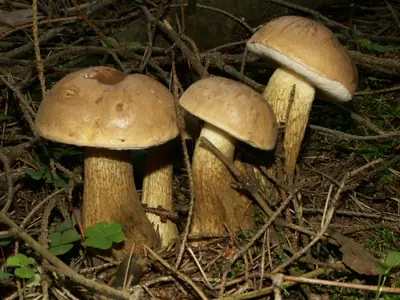
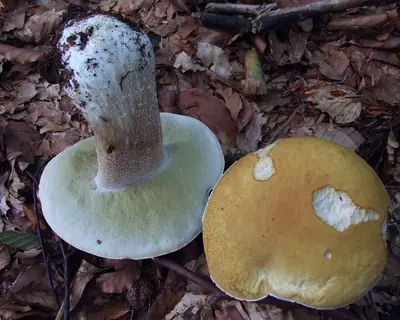
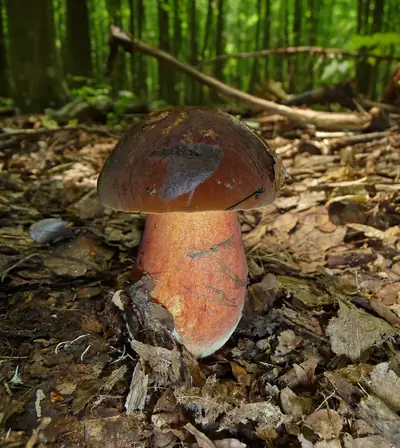
Foragers’ finds
All photosPhotos and identifications are added by users; we do not check them. Add your own find →
In the kitchen
Drying, pickling (very good), frying, soups and sauces; can replace porcini in recipes.
Protection and sale
- Species protection: the species is not protected.
- Sale: the species is on the list of mushrooms approved for sale (it may be sold only with a mushroom inspector’s certificate).
Bay bolete: common questions
Is the bay bolete edible?
Edible. Edible and valued; like most mushrooms it is not suitable for eating raw. The cap-skin pigment binds caesium, so it accumulates more of it (including radioactive caesium) than other species – at typical consumption this has no practical significance (grzyby.pl).
When does the bay bolete grow?
In Poland the fruiting bodies usually appear in: July, August, September, October, November. Habitat: Coniferous and mixed forests, less often broadleaf; often in moss, on acidic, sandy soils, sometimes next to stumps.
What can the bay bolete be mistaken for?
Bitter bolete (inedible): The bitter bolete (called “szatan”, “satan”, in Polish) is very similar, especially when young with white pores. Differences: the bitter bolete has a distinct, dark brown, wide-meshed network on the stem, pores that turn pink with age, a pink spore print and an extremely bitter taste (touch a tiny piece with your tongue and spit it out). It is not dangerously poisonous, but a single fruit body ruins the whole dish. Porcini (edible): The porcini (especially the dark pine bolete) has a network on the stem and flesh that does not turn blue. Both are edible. Not in this atlas: Cyanoboletus pulverulentus (inkstain bolete) – all parts turn deep navy blue instantly. Scarletina bolete (edible with care): The bay bolete has a similarly dark cap and also turns blue, but it has yellow (not red) pores and a stem without red dots.
Sources
- Wikipedia (pl): Podgrzyb brunatny
- Atlas grzybów Polski – grzyby.pl (M. Snowarski)
- First Nature – fungi
Last checked: 9 November 2026. Spotted a mistake? Write to us.