Gilled mushrooms
Parasol mushroom
Macrolepiota procera · also known as: Parasol
EdibleApproved for sale
A very tasty edible mushroom; the caps are eaten (the stem is fibrous). Pick only large, fully developed fruit bodies (cap over approx. 10 cm) – small “parasols” are easily confused with poisonous dapperlings (Lepiota), and inexperienced foragers also confuse them with the panther cap and the death cap.
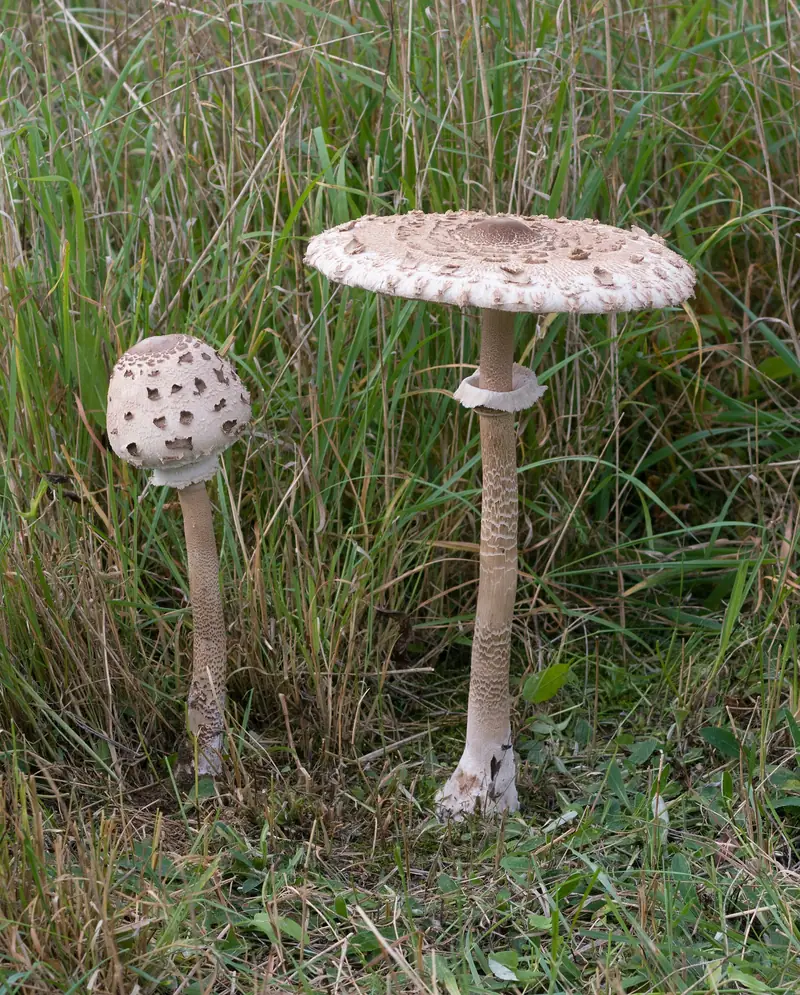
How to recognise it: parasol mushroom
- 1
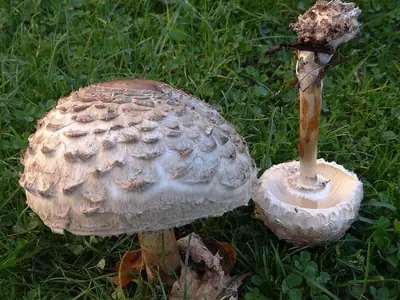
Cap usually over 10 cm, with brown scales on a pale background and a dark umbo
- 2
Stem with a brown zigzag pattern and a bulb, but no volva
- 3
Ring thick, double, movable – it can be slid along the stem
- 4
Flesh does not turn red when cut
- 5
Spore print white
Description
- Cap
- Large, 10–30 cm across, egg-shaped when young (a “drumstick”), then parasol-shaped with a central umbo; whitish with large, brown, raised scales, the centre uniformly brown.
- Gills
- Gills white or cream, crowded, broad, free – clearly separated from the stem.
- Stem
- Tall (15–40 cm), slender, with a bulb at the base; covered with a brown zigzag (“snakeskin”) pattern; a thick, double ring that can be slid along the stem. No volva.
- Flesh
- White, soft in the cap, fibrous in the stem; does not change colour when cut.
- Smell and taste
- Smell pleasant, sweetish-aromatic, nutty; taste mild.
Where and when it grows
Saprotrophic; edges of broadleaf and coniferous forests, glades, clearings, meadows, parks, roadsides. Avoids acidic and waterlogged soils, likes calcium-rich clay soils.
Look-alikes: what it can be mistaken for
Death cap Deadly poisonous high risk of confusion
Deadly poisonous; pale or white forms of the death cap in particular are sometimes mistaken for the parasol. The amanita has a smooth cap without scales, an attached (immovable), hanging ring and a sac-like volva at the stem base – always dig out the whole stem.
Step-by-step comparison: Parasol mushroom or death cap →Panther cap Deadly poisonous high risk of confusion
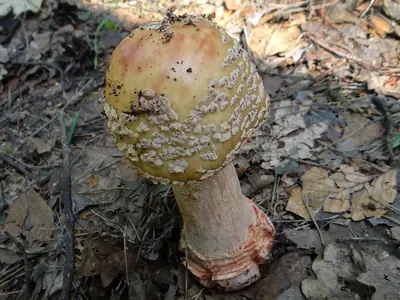
Severe poisonings have been recorded from panther caps taken for parasols. The panther cap has white patches (not scales) on a brown cap, a striate cap margin, a smooth stem without a snakeskin pattern, an immovable ring and a bulb with rolls of veil remnants.
Step-by-step comparison: Parasol mushroom or panther cap →Deadly dapperling Deadly poisonous high risk of confusion
Small dapperlings (cap 2–6 cm) contain the same amatoxins as the death cap. Do not pick “parasols” with a cap smaller than approx. 10 cm; dapperlings have a slender stem and a faint, quickly vanishing ring.
Step-by-step comparison: Parasol mushroom or deadly dapperling →Shaggy parasol Poisonous medium risk
The shaggy parasol has flesh that turns red/brown when cut (especially in the stem), a smooth stem without a zigzag pattern and coarser, raised scales; it does not smell like the parasol. In some people it causes gastrointestinal illness.
Step-by-step comparison: Parasol mushroom or shaggy parasol →
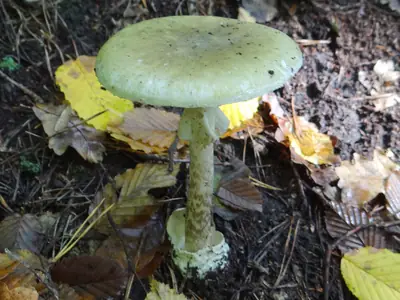
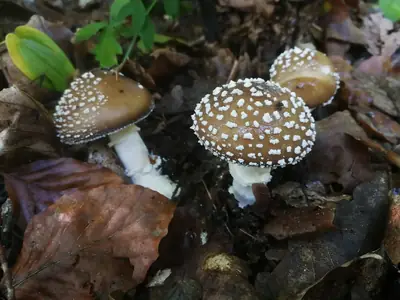
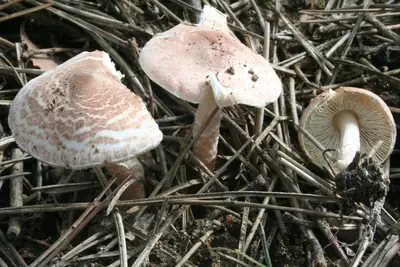
Foragers’ finds
All photosPhotos and identifications are added by users; we do not check them. Add your own find →
In the kitchen
Most often breaded and fried caps (a Polish “kania cutlet”); fried caps with bread; young, closed fruit bodies can be pickled. Also used as a seasoning mushroom. The stems are fibrous and are usually discarded.
Protection and sale
- Species protection: the species is not protected.
- Sale: the species is on the list of mushrooms approved for sale (it may be sold only with a mushroom inspector’s certificate).
Parasol mushroom: common questions
Is the parasol mushroom edible?
Edible. A very tasty edible mushroom; the caps are eaten (the stem is fibrous). Pick only large, fully developed fruit bodies (cap over approx. 10 cm) – small “parasols” are easily confused with poisonous dapperlings (Lepiota), and inexperienced foragers also confuse them with the panther cap and the death cap.
When does the parasol mushroom grow?
In Poland the fruiting bodies usually appear in: July, August, September, October. Habitat: Saprotrophic; edges of broadleaf and coniferous forests, glades, clearings, meadows, parks, roadsides. Avoids acidic and waterlogged soils, likes calcium-rich clay soils.
What can the parasol mushroom be mistaken for?
Death cap (deadly poisonous): Deadly poisonous; pale or white forms of the death cap in particular are sometimes mistaken for the parasol. The amanita has a smooth cap without scales, an attached (immovable), hanging ring and a sac-like volva at the stem base – always dig out the whole stem. Panther cap (deadly poisonous): Severe poisonings have been recorded from panther caps taken for parasols. The panther cap has white patches (not scales) on a brown cap, a striate cap margin, a smooth stem without a snakeskin pattern, an immovable ring and a bulb with rolls of veil remnants. Deadly dapperling (deadly poisonous): Small dapperlings (cap 2–6 cm) contain the same amatoxins as the death cap. Do not pick “parasols” with a cap smaller than approx. 10 cm; dapperlings have a slender stem and a faint, quickly vanishing ring. Shaggy parasol (poisonous): The shaggy parasol has flesh that turns red/brown when cut (especially in the stem), a smooth stem without a zigzag pattern and coarser, raised scales; it does not smell like the parasol. In some people it causes gastrointestinal illness.
Sources
- Wikipedia (pl): Czubajka kania
- grzyby.pl (M. Snowarski): Macrolepiota procera
- First Nature: Macrolepiota procera, Parasol
- Medycyna Praktyczna (mp.pl): Zatrucie grzybami
Last checked: 9 November 2026. Spotted a mistake? Write to us.