Gilled mushrooms
Saffron milkcap
Lactarius deliciosus · also known as: Red pine mushroom, Delicious milk cap
EdibleApproved for sale
An excellent edible mushroom. Foragers usually do not distinguish it from other edible “rydze” (false saffron milkcap, fir milkcap) – all have orange milk. Beware of poisonous look-alikes with white milk (woolly milkcap) and of the brown roll-rim.
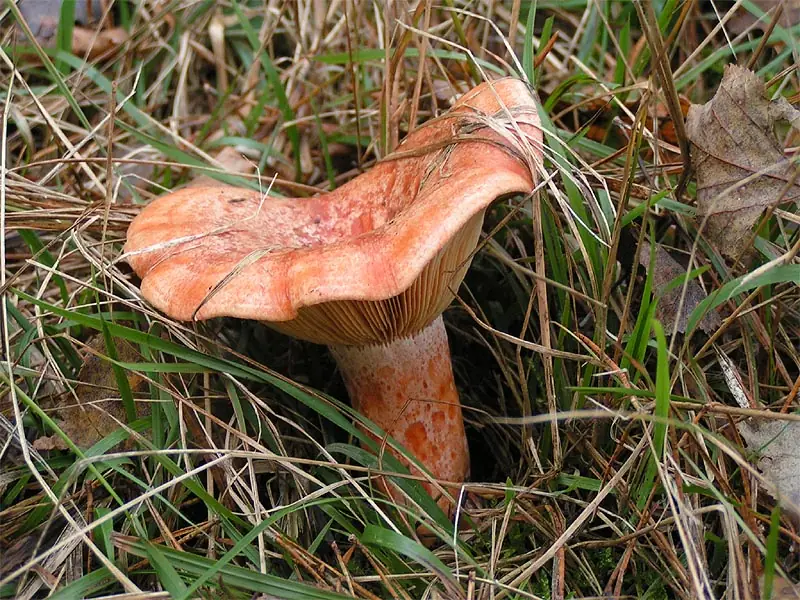
How to recognise it: saffron milkcap
- 1
Orange (carrot-coloured) milk – never white
- 2
Distinct concentric bands on the cap
- 3
Damaged gills and flesh turn green
- 4
Pits (dimples) on the stem
- 5
Grows under pines
Description
- Cap
- 4–12(15) cm, flesh-red to orange, with distinct, darker concentric bands; old specimens fade and turn green. Margin long inrolled, the cap becomes funnel-shaped with age.
- Gills
- Gills orange, crowded, brittle, slightly decurrent; turn green when damaged.
- Stem
- 3–7 cm, the colour of the cap or paler, with shallow orange pits (spots), soon hollow, brittle.
- Flesh
- Cream to pale orange, brittle (breaks unevenly, like chalk). Exudes bright orange (carrot-coloured) milk which slowly turns green in the air; damaged areas turn green.
- Smell and taste
- Smell pleasant, fruity; taste mild, after a moment slightly bitterish (the aftertaste disappears after cooking).
Where and when it grows
Pine forests and young pine plantations on sandy soils, also forest margins and grassy places; mycorrhizal with pine. Grows gregariously.
Most often with: pine
Look-alikes: what it can be mistaken for
Woolly milkcap Poisonous high risk of confusion
Similar in cap colour, but it has a woolly, hairy cap margin, grows under birch and exudes WHITE, burning-hot milk. The saffron milkcap has orange milk.
Step-by-step comparison: Saffron milkcap or woolly milkcap →Brown roll-rim Poisonous high risk of confusion
The brown roll-rim is sometimes confused with the saffron milkcap; unlike it, it exudes no milk, and its gills are yellowish and turn brown when pressed.
Step-by-step comparison: Saffron milkcap or brown roll-rim →False saffron milkcap Edible low risk
Edible, grows only under spruces, less zoned, without pits on the stem; its orange milk turns wine-red after approx. 15–30 min. The mistake is harmless.
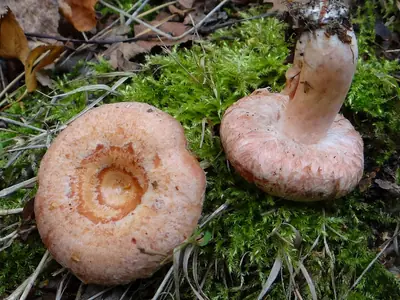
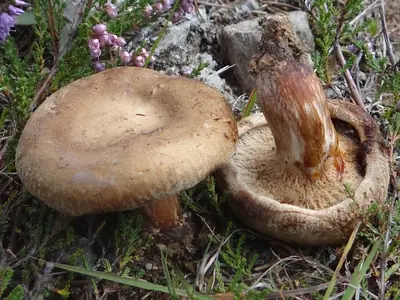
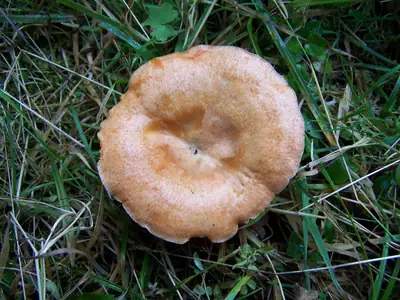
Foragers’ finds
All photosPhotos and identifications are added by users; we do not check them. Add your own find →
In the kitchen
Best fried in butter; also pickled in vinegar, salted, lacto-fermented, in soups and breaded. Sources are divided on drying (the flesh becomes tough). Often maggoty and crumbles easily in transport.
Protection and sale
- Species protection: the species is not protected.
- Sale: the species is on the list of mushrooms approved for sale (it may be sold only with a mushroom inspector’s certificate). Listed in Annex 1 as “mleczaj rydz – Lactarius deliciosus”.
Saffron milkcap: common questions
Is the saffron milkcap edible?
Edible. An excellent edible mushroom. Foragers usually do not distinguish it from other edible “rydze” (false saffron milkcap, fir milkcap) – all have orange milk. Beware of poisonous look-alikes with white milk (woolly milkcap) and of the brown roll-rim.
When does the saffron milkcap grow?
In Poland the fruiting bodies usually appear in: August, September, October, November. Habitat: Pine forests and young pine plantations on sandy soils, also forest margins and grassy places; mycorrhizal with pine. Grows gregariously.
What can the saffron milkcap be mistaken for?
Woolly milkcap (poisonous): Similar in cap colour, but it has a woolly, hairy cap margin, grows under birch and exudes WHITE, burning-hot milk. The saffron milkcap has orange milk. Brown roll-rim (poisonous): The brown roll-rim is sometimes confused with the saffron milkcap; unlike it, it exudes no milk, and its gills are yellowish and turn brown when pressed. False saffron milkcap (edible): Edible, grows only under spruces, less zoned, without pits on the stem; its orange milk turns wine-red after approx. 15–30 min. The mistake is harmless.
Sources
- Mleczaj rydz – Wikipedia (PL)
- Lactarius deliciosus – Atlas grzybów Polski (grzyby.pl, M. Snowarski)
- Lactarius deliciosus – First Nature
- Bezpieczne grzybobranie – ulotka WSSE w Warszawie (publikacja Nadleśnictwa Nowa Dęba, Lasy Państwowe)
- Rozporządzenie Ministra Zdrowia w sprawie grzybów dopuszczonych do obrotu… – tekst jednolity Dz.U. 2026 poz. 258 (załącznik nr 1)
Last checked: 9 November 2026. Spotted a mistake? Write to us.