Gilled mushrooms
Brown roll-rim
Paxillus involutus · also known as: Poison pax, Common roll-rim
Poisonous
POISONOUS, potentially fatal. In Poland, until the 1970s–80s, it was commonly collected and eaten as “olszówka” (boiled with the water discarded) and listed in field guides as edible – today it is recognised as poisonous. It can also poison people who previously ate it without symptoms (the immune reaction builds up with successive meals). Among those who died after eating it was the mycologist Julius Schäffer.
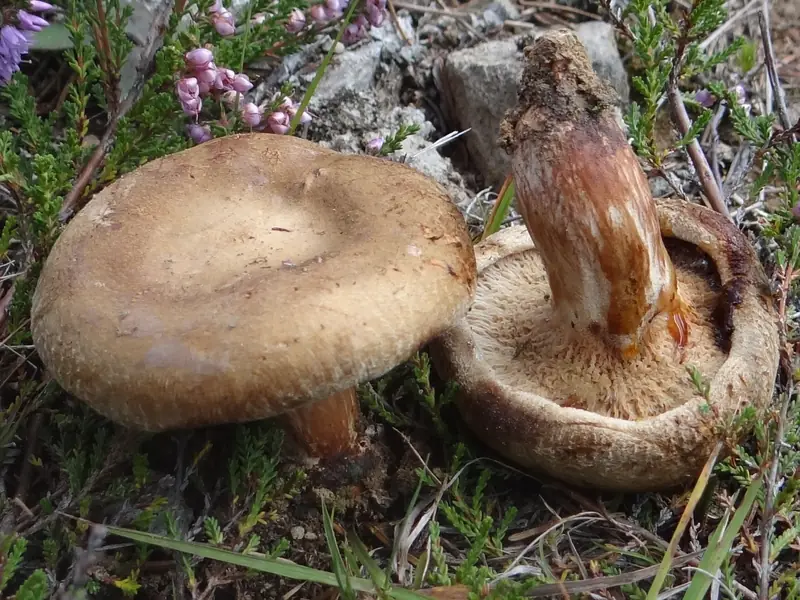
How to recognise it: brown roll-rim
- 1
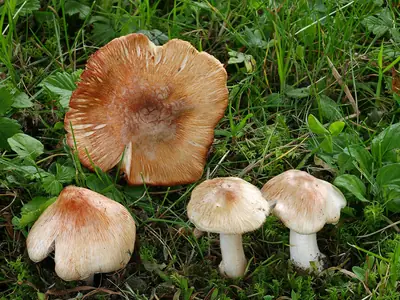
Strongly inrolled, grooved cap margin
- 2
Decurrent gills that turn brown when touched
- 3
Flesh turns rusty-brown when cut
- 4
No milk
Description
- Cap
- 4–12(20) cm, olive- to rusty-brown; margin long and strongly inrolled, striate (grooved); velvety when young, very slippery in rain; funnel-shaped with age.
- Gills
- Gills yellowish to ochre, crowded, thin, deeply decurrent down the stem, easily separating from the flesh; quickly turn brown when pressed.
- Stem
- 3–7 cm, stout, the colour of the cap or paler, solid; turns brown when damaged.
- Flesh
- Yellowish to pale ochre, rusty- or reddish-brown when cut. Exudes no milk.
- Smell and taste
- Smell faint, nondescript; taste slightly sourish (do not taste).
Where and when it grows
Very common in all types of forest, in parks, usually gregarious; often under birches and alders, also under pine, spruce and oak; prefers acidic soils.
Most often with: birch, alder, pine, spruce, oak
Look-alikes: what it can be mistaken for
Saffron milkcap Edible high risk of confusion
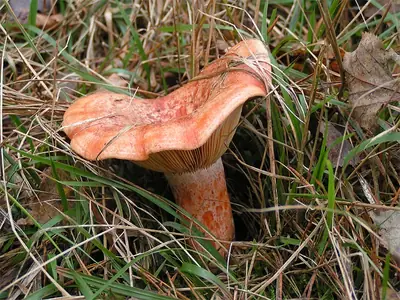
It is sometimes confused with the saffron milkcap (WSSE). The saffron milkcap has orange milk, a banded cap and turns green when damaged; the brown roll-rim has no milk, and its gills turn brown.
Step-by-step comparison: Saffron milkcap or brown roll-rim →
Foragers’ finds
All photosPhotos and identifications are added by users; we do not check them. Add your own find →
Protection and sale
- Species protection: the species is not protected.
- Sale: the species is not on the list of mushrooms approved for sale.
Brown roll-rim: common questions
Is the brown roll-rim edible?
Poisonous. POISONOUS, potentially fatal. In Poland, until the 1970s–80s, it was commonly collected and eaten as “olszówka” (boiled with the water discarded) and listed in field guides as edible – today it is recognised as poisonous. It can also poison people who previously ate it without symptoms (the immune reaction builds up with successive meals). Among those who died after eating it was the mycologist Julius Schäffer.
When does the brown roll-rim grow?
In Poland the fruiting bodies usually appear in: June, July, August, September, October, November. Habitat: Very common in all types of forest, in parks, usually gregarious; often under birches and alders, also under pine, spruce and oak; prefers acidic soils.
What can the brown roll-rim be mistaken for?
Saffron milkcap (edible): It is sometimes confused with the saffron milkcap (WSSE). The saffron milkcap has orange milk, a banded cap and turns green when damaged; the brown roll-rim has no milk, and its gills turn brown.
Sources
- Krowiak podwinięty – Wikipedia (PL)
- Paxillus involutus – Atlas grzybów Polski (grzyby.pl, M. Snowarski)
- Paxillus involutus – First Nature
- Bezpieczne grzybobranie – ulotka WSSE w Warszawie (publikacja Nadleśnictwa Nowa Dęba, Lasy Państwowe)
Last checked: 9 November 2026. Spotted a mistake? Write to us.