Gilled mushrooms
False saffron milkcap
Lactarius deterrimus · also known as: Spruce milkcap, Orange milkcap
EdibleApproved for sale
Edible, but clearly inferior to the saffron milkcap – it often leaves a bitterish aftertaste. Foragers collect it together with the saffron milkcap as “rydz”. Fruit bodies covered in mould by the parasite Hypomyces lateritius are inedible.
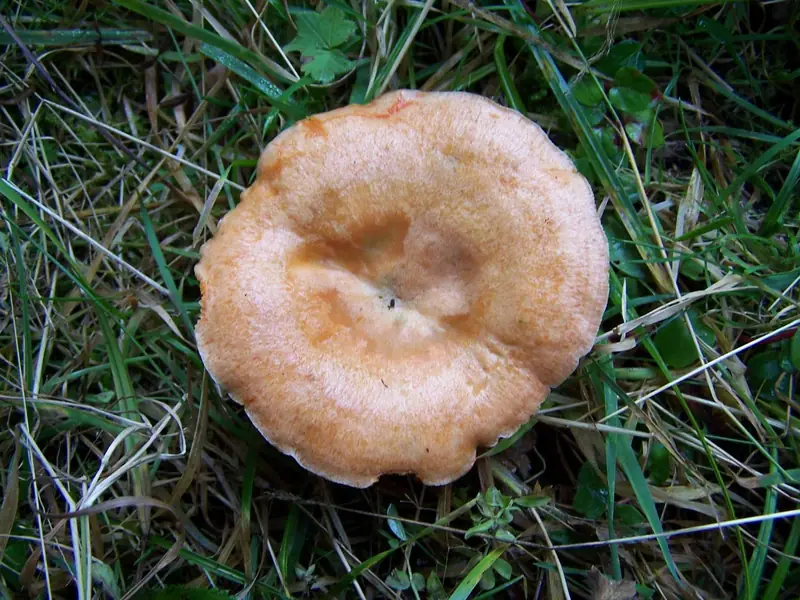
How to recognise it: false saffron milkcap
- 1
Orange milk that turns red in the air after a dozen or so minutes
- 2
Grows only under spruces
- 3
Stem without distinct pits
- 4
Green patches on the cap of older specimens
Description
- Cap
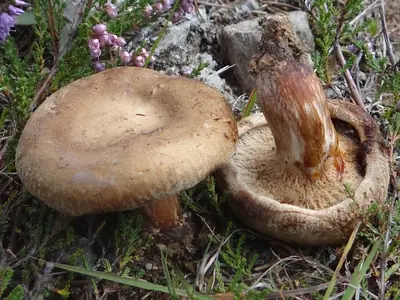
- 4–10 cm, orange to salmon, indistinctly zoned; older specimens and those after frost have green patches. Margin long inrolled, funnel-shaped with age.
- Gills
- Gills red-orange, brittle, fairly crowded, slightly decurrent; turn green when damaged.
- Stem
- 3–7 cm, the colour of the cap, without distinct pits (sometimes indistinct spots), soon hollow; when damaged discolours wine-red, then dark green.
- Flesh
- Cream, stained by the orange milk. Milk orange, turning wine-red after approx. 15–30 min in the air; the flesh slowly turns green.
- Smell and taste
- Smell pleasant, fruity; taste of young specimens slightly acrid or bitterish, older ones milder.
Where and when it grows
Coniferous and mixed forests, only under spruces; more common in the mountains and foothills, often in masses in young spruce plantations. On acidic and alkaline soils.
Most often with: spruce
Look-alikes: what it can be mistaken for
Saffron milkcap Edible low risk
The saffron milkcap grows under pines, has more distinct bands and pits on the stem, and its milk does not turn red. Both are edible – the mistake is harmless.
Woolly milkcap Poisonous medium risk
The poisonous look-alike of the “rydze”: hairy cap margin, grows under birch, milk white and burning hot.
Step-by-step comparison: False saffron milkcap or woolly milkcap →
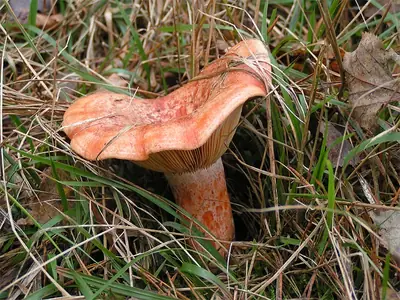
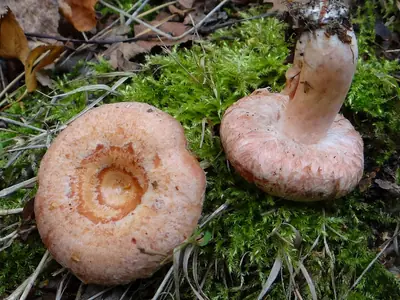
Foragers’ finds
All photosPhotos and identifications are added by users; we do not check them. Add your own find →
In the kitchen
Briefly fried or pickled in vinegar or oil. Not suitable for stewing, freezing (turns bitter after thawing) or drying (becomes tough).
Protection and sale
- Species protection: the species is not protected.
- Sale: the species is on the list of mushrooms approved for sale (it may be sold only with a mushroom inspector’s certificate). Listed in Annex 1 as “mleczaj świerkowy – Lactarius deterrimus”.
False saffron milkcap: common questions
Is the false saffron milkcap edible?
Edible. Edible, but clearly inferior to the saffron milkcap – it often leaves a bitterish aftertaste. Foragers collect it together with the saffron milkcap as “rydz”. Fruit bodies covered in mould by the parasite Hypomyces lateritius are inedible.
When does the false saffron milkcap grow?
In Poland the fruiting bodies usually appear in: August, September, October. Habitat: Coniferous and mixed forests, only under spruces; more common in the mountains and foothills, often in masses in young spruce plantations. On acidic and alkaline soils.
What can the false saffron milkcap be mistaken for?
Saffron milkcap (edible): The saffron milkcap grows under pines, has more distinct bands and pits on the stem, and its milk does not turn red. Both are edible – the mistake is harmless. Woolly milkcap (poisonous): The poisonous look-alike of the “rydze”: hairy cap margin, grows under birch, milk white and burning hot.
Sources
- Mleczaj świerkowy – Wikipedia (PL)
- Lactarius deterrimus – Atlas grzybów Polski (grzyby.pl, M. Snowarski)
- Lactarius deterrimus – First Nature
- Rozporządzenie Ministra Zdrowia w sprawie grzybów dopuszczonych do obrotu… – tekst jednolity Dz.U. 2026 poz. 258 (załącznik nr 1)
Last checked: 9 November 2026. Spotted a mistake? Write to us.