Boletes (pores under the cap)
Scarletina bolete
Neoboletus erythropus · also known as: Red-footed bolete, Dotted-stem bolete
Edible with care
Edible only after thorough cooking – raw or undercooked it causes gastrointestinal upset. Because of its red pores and strongly bluing flesh it is easily confused with other “colourful boletes”, including poisonous ones; pick only when the identification is certain.
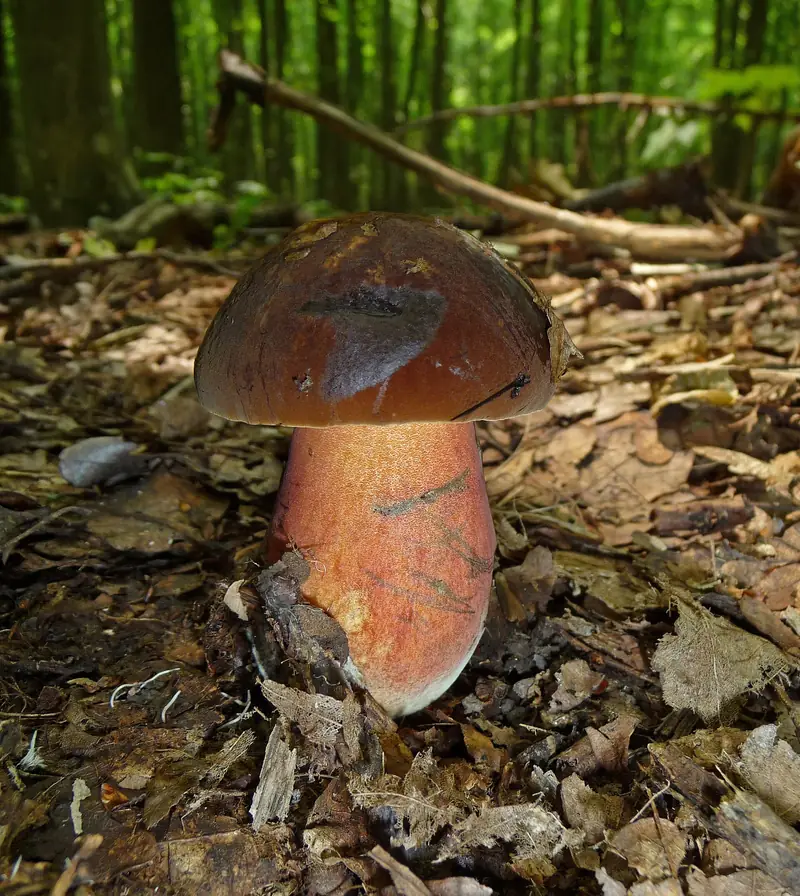
How to recognise it: scarletina bolete
- 1
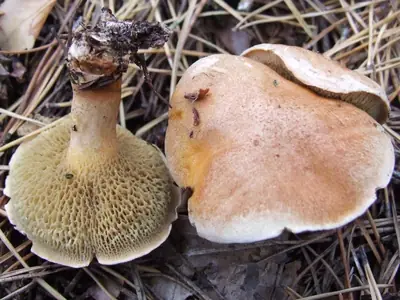
Brick-red pores
- 2
Yellow stem with red dots, WITHOUT a network
- 3
Yellow flesh turns navy blue instantly
- 4
Cap dark brown, suede-like
Description
- Cap
- 5–20 cm across, dark brown, chestnut-brown, with brick or olive tones with age; surface matt, suede-like, bald in old specimens.
- Tubes and pores
- Tubes yellow to olive; pores brick-red to orange-red; everything turns strongly blue immediately when pressed.
- Stem
- Yellow background densely covered with red dots or granules – no network; dark navy blue after light pressure.
- Flesh
- Yellow; turns intensely navy-blue immediately when cut.
- Smell and taste
- Smell faint, taste mild.
Where and when it grows
Broadleaf and coniferous forests, especially beech and spruce forests on acidic, poor soils; more common in southern Poland, in the foothills and mountains.
Most often with: beech, spruce, fir, hornbeam, oak, lime
Look-alikes: what it can be mistaken for
Devil's bolete Poisonous medium risk
The devil's bolete also has red pores and bluing flesh, but it has a light grey, silvery cap and a red network on the stem (the scarletina bolete has dots/granules, no network), whitish flesh that turns only slightly blue; it grows only on limestone in warm beech woods. It is poisonous and strictly protected.
Step-by-step comparison: Scarletina bolete or devil's bolete →Bay bolete Edible low risk
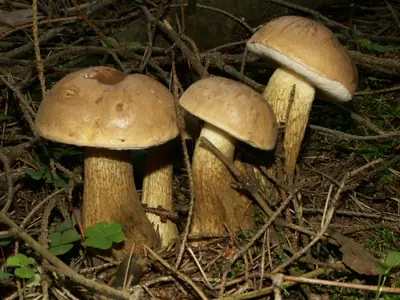
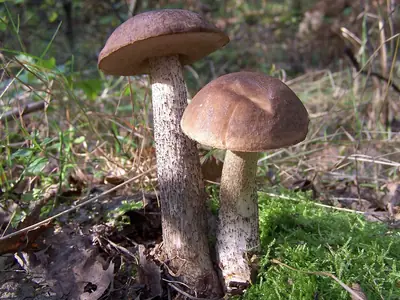
The bay bolete has a similarly dark cap and also turns blue, but it has yellow (not red) pores and a stem without red dots.
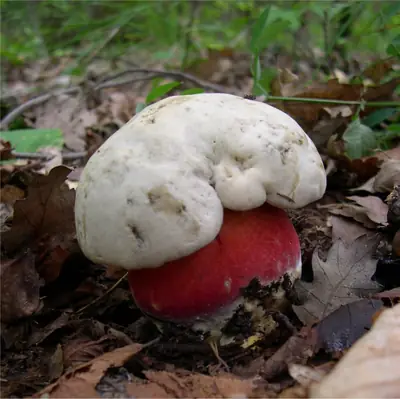
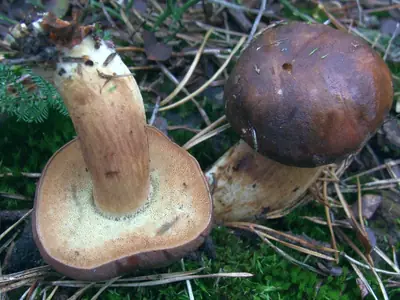
Foragers’ finds
All photosPhotos and identifications are added by users; we do not check them. Add your own find →
In the kitchen
Only well boiled, fried or stewed (formerly parboiling and discarding the water was recommended). The dark blue colour disappears during cooking. Picked traditionally mainly in southern Poland.
Watch out for toxins
Raw or undercooked it causes gastrointestinal upset; sources do not name a specific toxin.
Protection and sale
- Species protection: the species is not protected.
- Sale: the species is not on the list of mushrooms approved for sale.
Scarletina bolete: common questions
Is the scarletina bolete edible?
Edible with care. Edible only after thorough cooking – raw or undercooked it causes gastrointestinal upset. Because of its red pores and strongly bluing flesh it is easily confused with other “colourful boletes”, including poisonous ones; pick only when the identification is certain.
When does the scarletina bolete grow?
In Poland the fruiting bodies usually appear in: May, June, July, August, September, October. Habitat: Broadleaf and coniferous forests, especially beech and spruce forests on acidic, poor soils; more common in southern Poland, in the foothills and mountains.
What can the scarletina bolete be mistaken for?
Devil's bolete (poisonous): The devil's bolete also has red pores and bluing flesh, but it has a light grey, silvery cap and a red network on the stem (the scarletina bolete has dots/granules, no network), whitish flesh that turns only slightly blue; it grows only on limestone in warm beech woods. It is poisonous and strictly protected. Bay bolete (edible): The bay bolete has a similarly dark cap and also turns blue, but it has yellow (not red) pores and a stem without red dots.
Sources
- Wikipedia (pl): Krasnoborowik ceglastopory
- Atlas grzybów Polski – grzyby.pl (M. Snowarski)
- First Nature – fungi
Last checked: 9 November 2026. Spotted a mistake? Write to us.