Boletes (pores under the cap)
Devil's bolete
Rubroboletus satanas · also known as: Satan's bolete
Poisonous Strictly protected
Poisonous, especially raw or undercooked – severe gastrointestinal illness. Beware of names: the colloquial Polish “szatan” (“satan”) usually means the bitter bolete, not this species. Very rare in Poland and strictly protected – it must not be picked.
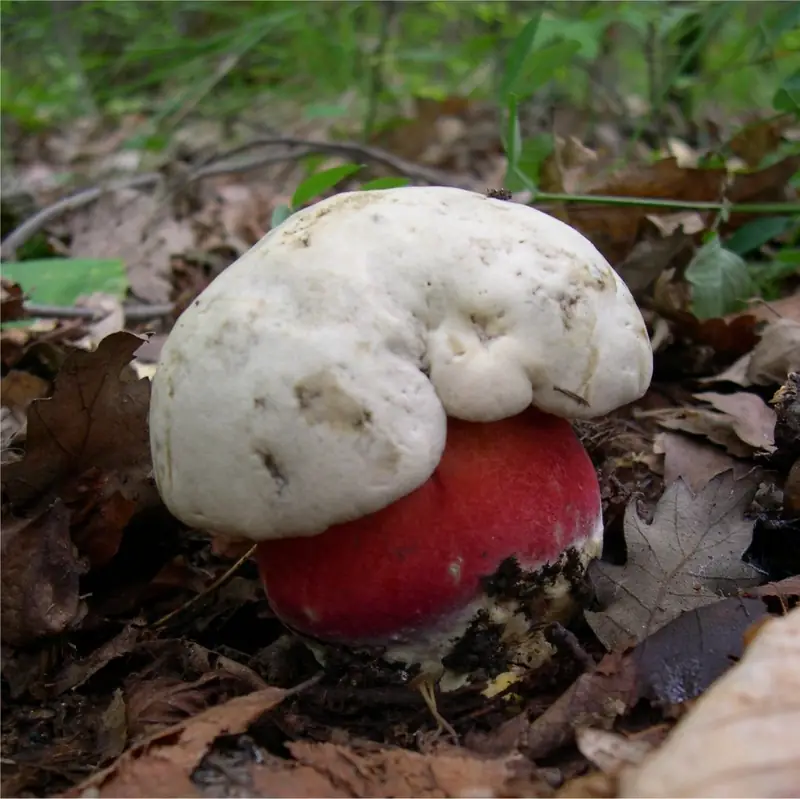
How to recognise it: devil's bolete
- 1
Light grey, chalk-white cap
- 2
Red pores
- 3
Bulbous stem, carmine below, with a reddish network
- 4
Only on limestone, very rare
Description
- Cap
- Large, 10–25(30) cm, light grey, silvery grey or whitish with olive patches, pinkish at the margin with age; surface smooth or finely suede-like.
- Tubes and pores
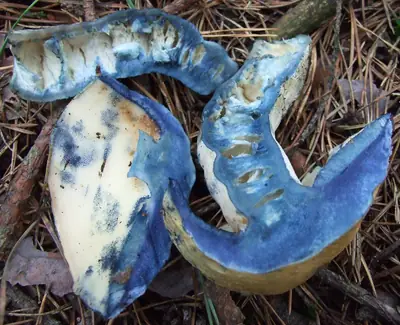
- Tubes yellowish, turn blue when damaged; pores orange-yellow in young specimens, then blood-red to carmine-red, olive in old ones.
- Stem
- Strongly bulbous, yellow at the top, carmine-red lower down, with a yellowish to reddish network in the upper part.
- Flesh
- Whitish to pale yellow, turns slowly and slightly blue when cut.
- Smell and taste
- Taste mild; old fruit bodies have an unpleasant smell reminiscent of carrion.
Where and when it grows
Warm, open broadleaf forests (beech and oak woods) on calcareous soils; only a few sites are known in Poland (Sudetes, Kraków-Częstochowa Upland, Ponidzie).
Most often with: beech, oak, hornbeam, lime
Look-alikes: what it can be mistaken for
Scarletina bolete Edible with care medium risk
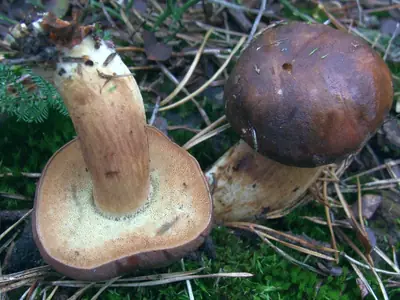
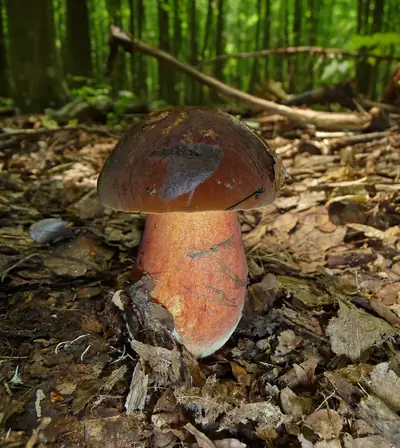
The scarletina bolete has a dark brown cap, a stem with red dots and no network, and yellow flesh that instantly turns navy blue. Similar “colourful boletes” not in this atlas: Rubroboletus rhodoxanthus (pinkish cap, distinct purple network) and Caloboletus radicans (rooting bolete; pale cap, but yellow pores and bitter flesh).
Step-by-step comparison: Scarletina bolete or devil's bolete →Bitter bolete Inedible low risk
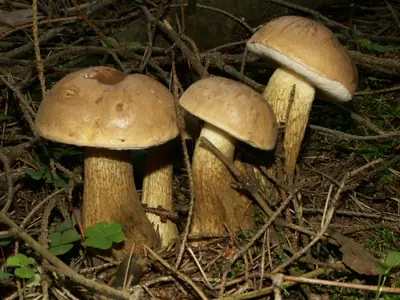
The colloquial Polish name “szatan” (“satan”) most often means the bitter bolete – a completely different mushroom: brown cap, pinkish pores, dark network and a very bitter taste, with no red.
Porcini Edible low risk
The devil's bolete (very rare, protected, poisonous) has a greyish-white cap, red pores, a carmine stem with a reddish network and flesh that turns blue – the porcini never has red pores.
Step-by-step comparison: Porcini or devil's bolete →Cornflower bolete Edible low risk
Other bluing boletes (e.g. the poisonous devil's bolete) have red pores and a solid stem; the cornflower bolete has white pores and a chambered stem. Not in this atlas: Gyroporus castaneus (chestnut bolete; rusty-brown cap, flesh does not turn blue) – also edible.
Step-by-step comparison: Cornflower bolete or devil's bolete →
Foragers’ finds
All photosPhotos and identifications are added by users; we do not check them. How points work →
Protection and sale
- Species protection: strictly protected. Strict protection (Annex 1, item 8 of the 2014 regulation, as Boletus satanas), with no exemption for agriculture and forestry. Protected since 2004. On the Polish Red List with status E (endangered).
- Sale: the species is not on the list of mushrooms approved for sale.
Devil's bolete: common questions
Is the devil's bolete edible?
Poisonous. Poisonous, especially raw or undercooked – severe gastrointestinal illness. Beware of names: the colloquial Polish “szatan” (“satan”) usually means the bitter bolete, not this species. Very rare in Poland and strictly protected – it must not be picked.
When does the devil's bolete grow?
In Poland the fruiting bodies usually appear in: July, August, September. Habitat: Warm, open broadleaf forests (beech and oak woods) on calcareous soils; only a few sites are known in Poland (Sudetes, Kraków-Częstochowa Upland, Ponidzie).
What can the devil's bolete be mistaken for?
Scarletina bolete (edible with care): The scarletina bolete has a dark brown cap, a stem with red dots and no network, and yellow flesh that instantly turns navy blue. Similar “colourful boletes” not in this atlas: Rubroboletus rhodoxanthus (pinkish cap, distinct purple network) and Caloboletus radicans (rooting bolete; pale cap, but yellow pores and bitter flesh). Bitter bolete (inedible): The colloquial Polish name “szatan” (“satan”) most often means the bitter bolete – a completely different mushroom: brown cap, pinkish pores, dark network and a very bitter taste, with no red. Porcini (edible): The devil's bolete (very rare, protected, poisonous) has a greyish-white cap, red pores, a carmine stem with a reddish network and flesh that turns blue – the porcini never has red pores. Cornflower bolete (edible): Other bluing boletes (e.g. the poisonous devil's bolete) have red pores and a solid stem; the cornflower bolete has white pores and a chambered stem. Not in this atlas: Gyroporus castaneus (chestnut bolete; rusty-brown cap, flesh does not turn blue) – also edible.
Is the devil's bolete a protected species?
Yes: strictly protected (regulation on the species protection of fungi, Dz.U. 2014 poz. 1408). Strict protection (Annex 1, item 8 of the 2014 regulation, as Boletus satanas), with no exemption for agriculture and forestry. Protected since 2004. On the Polish Red List with status E (endangered).
Sources
- Wikipedia (pl): Krwistoborowik szatański
- Atlas grzybów Polski – grzyby.pl (M. Snowarski)
- First Nature – fungi
- Rozporządzenie Ministra Środowiska z 9 października 2014 r. w sprawie ochrony gatunkowej grzybów (Dz.U. 2014 poz. 1408)
Last checked: 9 November 2026. Spotted a mistake? Write to us.