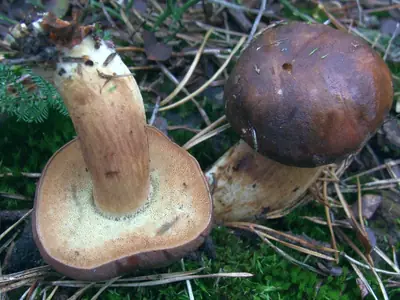
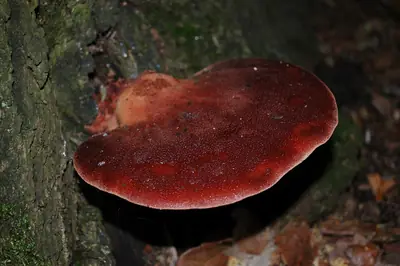
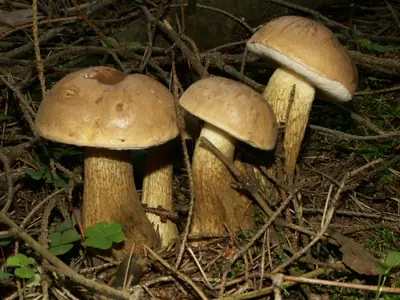
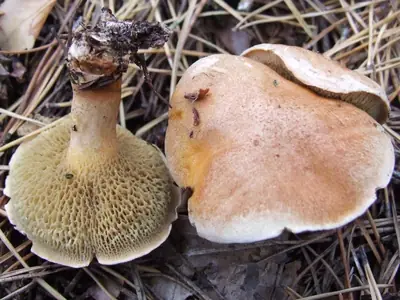
Boletes (pores under the cap)
Cornflower bolete
Gyroporus cyanescens · also known as: Bluing bolete
EdibleApproved for sale
Edible and tasty, but rare in Poland (Red List, category R – rare, potentially threatened). It is not legally protected, but it is worth sparing.
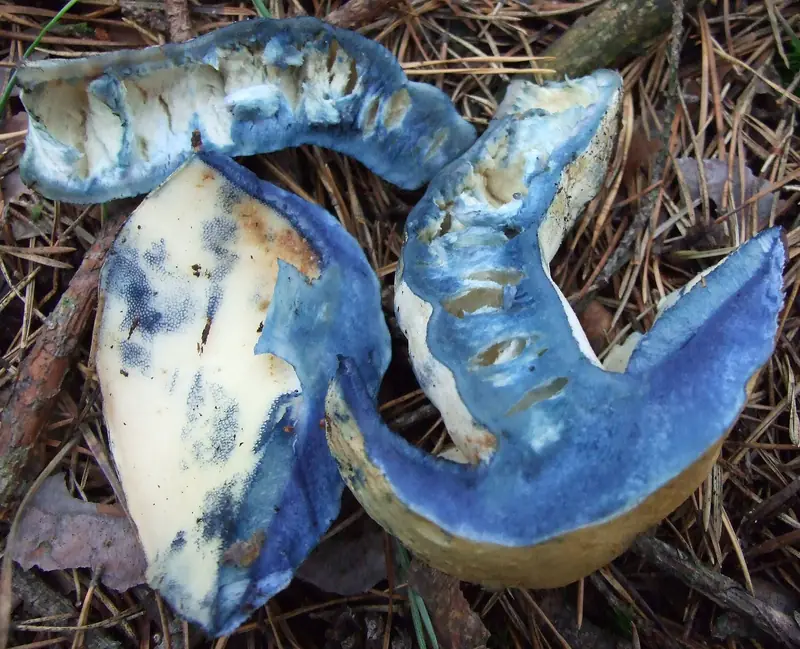
How to recognise it: cornflower bolete
- 1
Flesh turns cornflower-blue instantly
- 2
Stem brittle, chambered inside
- 3
Pale, felty cap
- 4
Only on sand
Description
- Cap
- 3.5–12 cm across, straw-yellow, cream to yellow-brown; surface dry, matt, felty-tufted; turns blue when pressed.
- Tubes and pores
- Tubes and pores white, then cream, turn blue when touched; spore print pale yellow.
- Stem
- Same colour as the cap, brittle, chambered inside (with hollow cavities); turns intensely blue when pressed.
- Flesh
- White or yellowish, turns intensely cornflower-blue immediately when cut.
- Smell and taste
- Smell and taste indistinct.
Where and when it grows
Only sandy soils: pine forests in the lowlands, less often broadleaf and mixed forests, e.g. mountain beech woods.
Most often with: pine, birch, oak, beech
Look-alikes: what it can be mistaken for
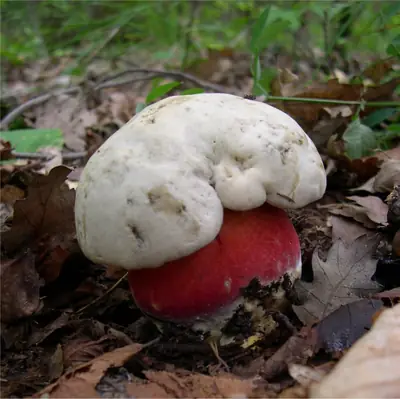
Devil's bolete Poisonous low risk
Other bluing boletes (e.g. the poisonous devil's bolete) have red pores and a solid stem; the cornflower bolete has white pores and a chambered stem. Not in this atlas: Gyroporus castaneus (chestnut bolete; rusty-brown cap, flesh does not turn blue) – also edible.
Step-by-step comparison: Cornflower bolete or devil's bolete →
Foragers’ finds
All photosPhotos and identifications are added by users; we do not check them. Add your own find →
In the kitchen
Soups, sauces, drying. The bluing does not affect the taste.
Protection and sale
- Species protection: the species is not protected.
- Sale: the species is on the list of mushrooms approved for sale (it may be sold only with a mushroom inspector’s certificate).
Cornflower bolete: common questions
Is the cornflower bolete edible?
Edible. Edible and tasty, but rare in Poland (Red List, category R – rare, potentially threatened). It is not legally protected, but it is worth sparing.
When does the cornflower bolete grow?
In Poland the fruiting bodies usually appear in: July, August, September, October, November. Habitat: Only sandy soils: pine forests in the lowlands, less often broadleaf and mixed forests, e.g. mountain beech woods.
What can the cornflower bolete be mistaken for?
Devil's bolete (poisonous): Other bluing boletes (e.g. the poisonous devil's bolete) have red pores and a solid stem; the cornflower bolete has white pores and a chambered stem. Not in this atlas: Gyroporus castaneus (chestnut bolete; rusty-brown cap, flesh does not turn blue) – also edible.
Sources
- Wikipedia (pl): Piaskowiec modrzak
- Atlas grzybów Polski – grzyby.pl (M. Snowarski)
- First Nature – fungi
Last checked: 9 November 2026. Spotted a mistake? Write to us.