Gilled mushrooms
Destroying angel
Amanita virosa · also known as: European destroying angel
Deadly poisonous
Deadly poisonous – the same amatoxins as in the death cap. Rare in Poland (Red List: V). The whole fruit body is white, so it is sometimes taken for a young field mushroom. Also similar are the deadly poisonous fool's mushroom (Amanita verna) and the white form of the death cap.
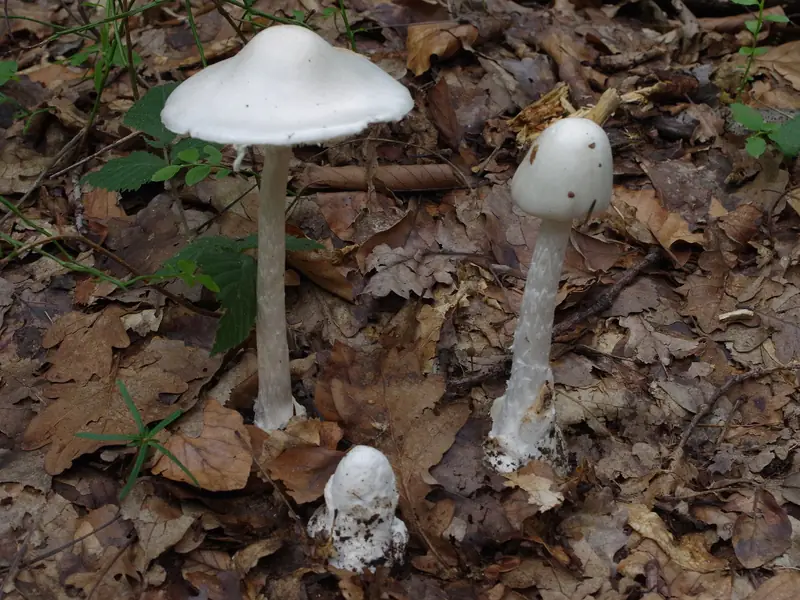
How to recognise it: destroying angel
- 1
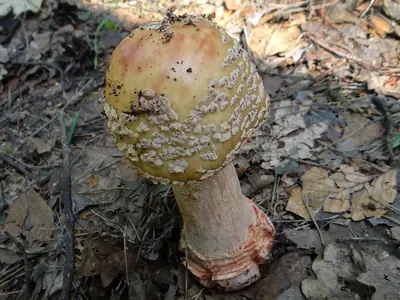
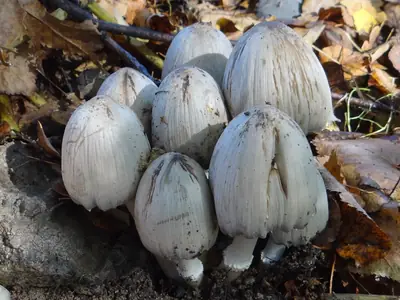
Whole fruit body white, cap often conical and irregular
- 2
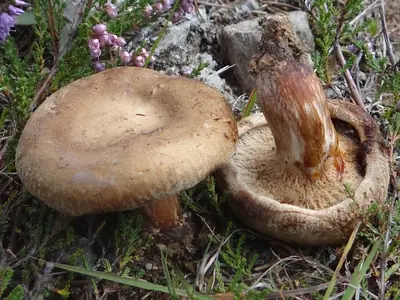
White gills throughout the life of the fruit body
- 3
Scaly stem and a volva at the bulbous base
- 4
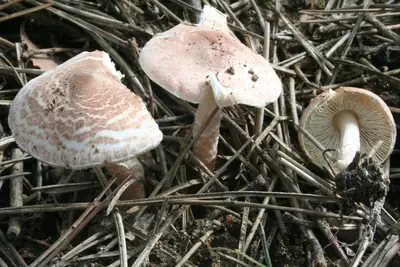
Fragile ring, white spore print
Description
- Cap
- 4–10 cm, egg-shaped at first, then conical-bell-shaped, often irregular; pure white, pale cream at the top, yellowing with age; smooth, silky.
- Gills
- Gills white, crowded, free, with floccose edges.
- Stem
- 7–15 cm, white, distinctly fibrillose-scaly; a delicate, quickly vanishing ring just below the gills; bulbous base with a membranous volva.
- Flesh
- White, does not change colour. All parts turn bright yellow immediately with KOH (a laboratory feature).
- Smell and taste
- Smell faint, unpleasant, stuffy. Never taste.
Where and when it grows
Mainly (mountain) coniferous forests under spruces and pines, less often broadleaf under beeches and birches, also bogs; on poor, moist, acidic, sandy soils.
Most often with: spruce, pine, beech, birch, fir
Look-alikes: what it can be mistaken for
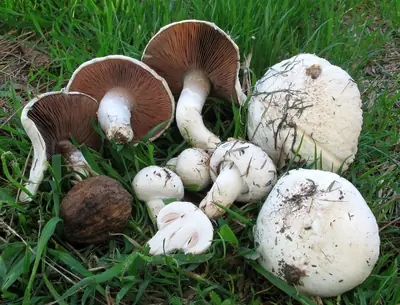
Field mushroom Edible high risk of confusion
Very young field mushrooms have pale gills. Field mushroom gills soon turn pink, then brown; they have a chocolate-brown spore print and no volva. Do not pick closed “field mushrooms” in the forest.
Step-by-step comparison: Field mushroom or destroying angel →Death cap Deadly poisonous low risk
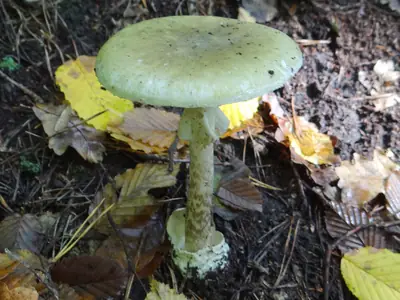
The white form of the death cap (var. alba) is equally deadly poisonous; telling the two apart makes no difference to safety.
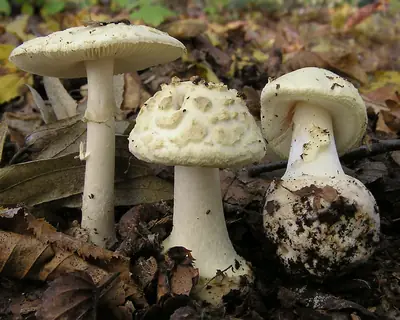
False death cap Poisonous medium risk
The white form of the false death cap (var. alba) usually has patches on the cap, a smell of raw potatoes and a globose bulb with a rim.
Foragers’ finds
All photosPhotos and identifications are added by users; we do not check them. Add your own find →
Protection and sale
- Species protection: the species is not protected.
- Sale: the species is not on the list of mushrooms approved for sale.
Destroying angel: common questions
Is the destroying angel edible?
Deadly poisonous. Deadly poisonous – the same amatoxins as in the death cap. Rare in Poland (Red List: V). The whole fruit body is white, so it is sometimes taken for a young field mushroom. Also similar are the deadly poisonous fool's mushroom (Amanita verna) and the white form of the death cap.
When does the destroying angel grow?
In Poland the fruiting bodies usually appear in: July, August, September, October. Habitat: Mainly (mountain) coniferous forests under spruces and pines, less often broadleaf under beeches and birches, also bogs; on poor, moist, acidic, sandy soils.
What can the destroying angel be mistaken for?
Field mushroom (edible): Very young field mushrooms have pale gills. Field mushroom gills soon turn pink, then brown; they have a chocolate-brown spore print and no volva. Do not pick closed “field mushrooms” in the forest. Death cap (deadly poisonous): The white form of the death cap (var. alba) is equally deadly poisonous; telling the two apart makes no difference to safety. False death cap (poisonous): The white form of the false death cap (var. alba) usually has patches on the cap, a smell of raw potatoes and a globose bulb with a rim.
Sources
- Wikipedia (pl): Muchomor jadowity
- grzyby.pl (M. Snowarski): Amanita virosa
- First Nature: Amanita virosa, Destroying Angel
- Medycyna Praktyczna (mp.pl): Zatrucie grzybami
Last checked: 9 November 2026. Spotted a mistake? Write to us.