Gilled mushrooms
False death cap
Amanita citrina · also known as: Citron amanita
Poisonous
Polish sources list it as inedible or mildly poisonous (bufotenine, unpleasant taste); First Nature states that it contains small amounts of α-amanitin. We classify it as poisonous. The main danger is confusion with the deadly poisonous death cap and destroying angel – especially specimens whose patches have been washed off by rain.
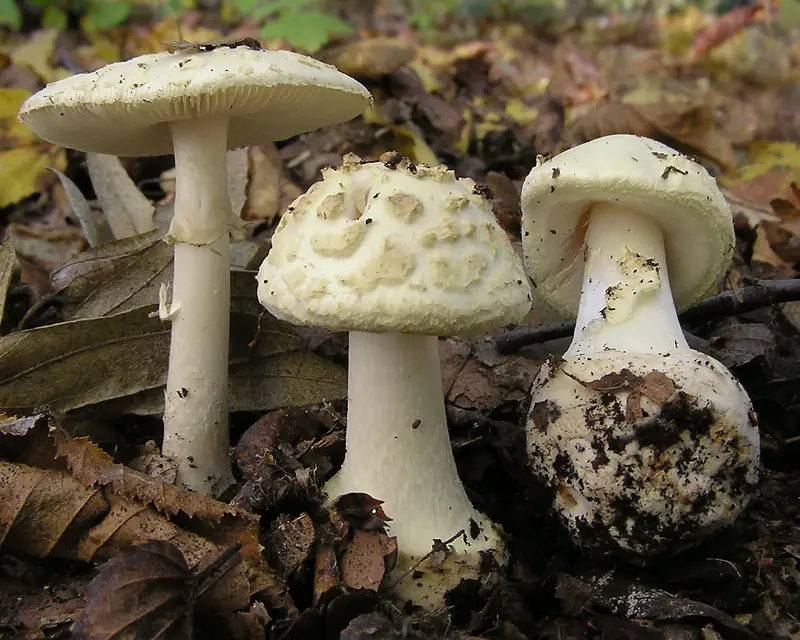
How to recognise it: false death cap
- 1
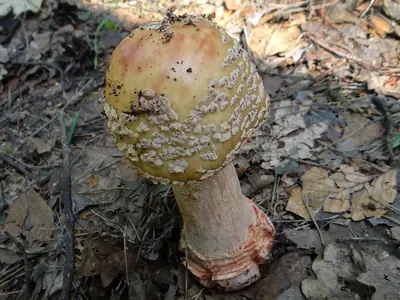
Lemon-yellow cap with large patches
- 2
Large globose bulb with a sharp rim at the base
- 3
Smell of raw potatoes
- 4
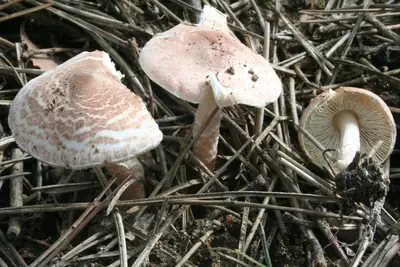
White gills and a hanging ring
Description
- Cap
- 4–10 cm, lemon-yellow to pale yellow (a white form, var. alba, also exists), with a few large, felty, whitish to brownish patches; margin not striate.
- Gills
- Gills white to yellowish-white, crowded, free.
- Stem
- 7–15 cm, whitish to yellowish, slender; a persistent, hanging ring; a very large, globose bulb with a sharply defined rim (volva fused to the bulb).
- Flesh
- White, brittle, does not change colour.
- Smell and taste
- A distinct smell of raw potatoes (weaker in older specimens).
Where and when it grows
Very common, often in masses, in coniferous, broadleaf and mixed forests, especially on acidic, sandy soils; more often under conifers.
Most often with: pine, spruce, beech
Look-alikes: what it can be mistaken for
Death cap Deadly poisonous high risk of confusion
The death cap has a greenish cap with radial fibrils, usually without patches, a tall, free-standing, sac-like volva (not fused to the bulb) and a sweetish, sickly smell.
Destroying angel Deadly poisonous high risk of confusion
The white form of the false death cap is very similar to the deadly poisonous destroying angel; the destroying angel has a distinctly scaly stem, a fragile ring and a loose, membranous volva.
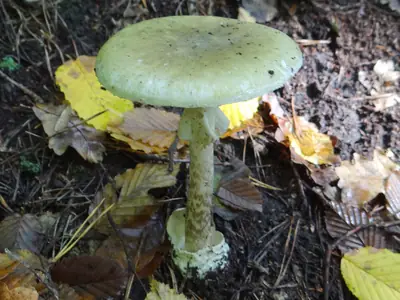
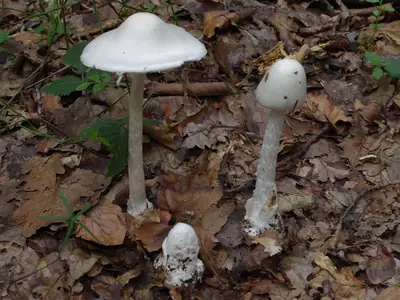
Foragers’ finds
All photosPhotos and identifications are added by users; we do not check them. Add your own find →
Protection and sale
- Species protection: the species is not protected.
- Sale: the species is not on the list of mushrooms approved for sale.
False death cap: common questions
Is the false death cap edible?
Poisonous. Polish sources list it as inedible or mildly poisonous (bufotenine, unpleasant taste); First Nature states that it contains small amounts of α-amanitin. We classify it as poisonous. The main danger is confusion with the deadly poisonous death cap and destroying angel – especially specimens whose patches have been washed off by rain.
When does the false death cap grow?
In Poland the fruiting bodies usually appear in: July, August, September, October, November. Habitat: Very common, often in masses, in coniferous, broadleaf and mixed forests, especially on acidic, sandy soils; more often under conifers.
What can the false death cap be mistaken for?
Death cap (deadly poisonous): The death cap has a greenish cap with radial fibrils, usually without patches, a tall, free-standing, sac-like volva (not fused to the bulb) and a sweetish, sickly smell. Destroying angel (deadly poisonous): The white form of the false death cap is very similar to the deadly poisonous destroying angel; the destroying angel has a distinctly scaly stem, a fragile ring and a loose, membranous volva.
Sources
- Wikipedia (pl): Muchomor cytrynowy
- grzyby.pl (M. Snowarski): Amanita citrina
- First Nature: Amanita citrina, False Deathcap
Last checked: 9 November 2026. Spotted a mistake? Write to us.