Boletes (pores under the cap)
Hazel bolete
Leccinellum pseudoscabrum · also known as: Hornbeam bolete, Hornbeam scaber stalk
EdibleApproved for sale
Edible, but less valued than the brown birch bolete.
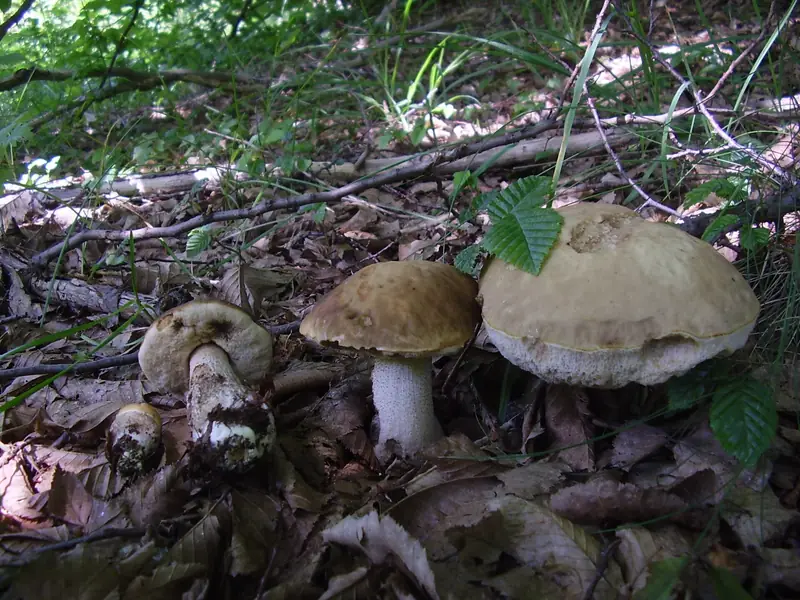
How to recognise it: hazel bolete
- 1
Grows under hornbeams
- 2
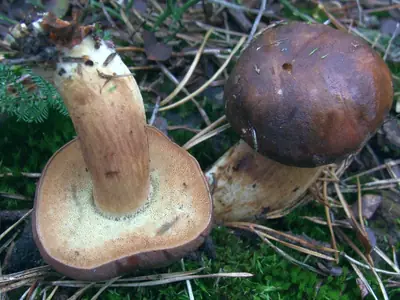
Wrinkled cap, cracked in dry weather
- 3
Flesh turns pink, then black
- 4
Stem with dark scales
Description
- Cap
- 4–14 cm across, from ochre through various shades of brown to almost black; surface wrinkled, uneven, cracking into patches in dry weather.
- Tubes and pores
- Tubes long, whitish, then yellowish to olive; turn grey and black when pressed.
- Stem
- Whitish or yellowish, rough with brown to blackish scales; turns black where pressed.
- Flesh
- Whitish; when cut turns pink, then grey-violet, finally black.
- Smell and taste
- Taste and smell pleasant, mushroomy.
Where and when it grows
Warm, moist oak-hornbeam forests (oak-hornbeam, lime-hornbeam), always under hornbeams, less often hazel.
Most often with: hornbeam, hazel
Look-alikes: what it can be mistaken for
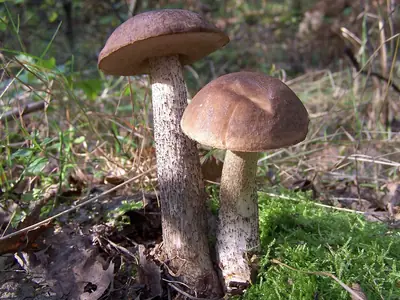
Brown birch bolete Edible low risk
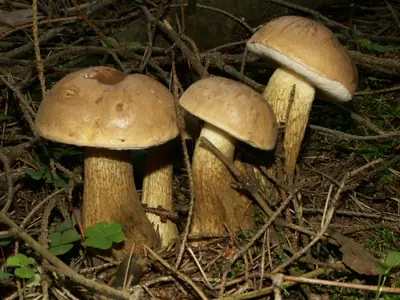
The brown birch bolete grows only under birches, has a smooth cap, and its flesh does not turn black. Edible.
Foragers’ finds
All photosPhotos and identifications are added by users; we do not check them. Add your own find →
In the kitchen
Like other scaber stalks: frying, stewing, soups, drying; darkens during cooking.
Protection and sale
- Species protection: the species is not protected.
- Sale: the species is on the list of mushrooms approved for sale (it may be sold only with a mushroom inspector’s certificate).
Hazel bolete: common questions
Is the hazel bolete edible?
Edible. Edible, but less valued than the brown birch bolete.
When does the hazel bolete grow?
In Poland the fruiting bodies usually appear in: June, July, August, September, October. Habitat: Warm, moist oak-hornbeam forests (oak-hornbeam, lime-hornbeam), always under hornbeams, less often hazel.
What can the hazel bolete be mistaken for?
Brown birch bolete (edible): The brown birch bolete grows only under birches, has a smooth cap, and its flesh does not turn black. Edible.
Sources
Last checked: 9 November 2026. Spotted a mistake? Write to us.