Boletes (pores under the cap)
Red aspen bolete
Leccinum aurantiacum · also known as: Orange oak bolete, Red-capped scaber stalk, Orange bolete
EdibleApproved for sale
Edible and tasty. Polish foragers also use the name “red bolete” (“czerwony koźlarz”) for several closely related edible species (orange birch, pine, oak and spruce scaber stalks).
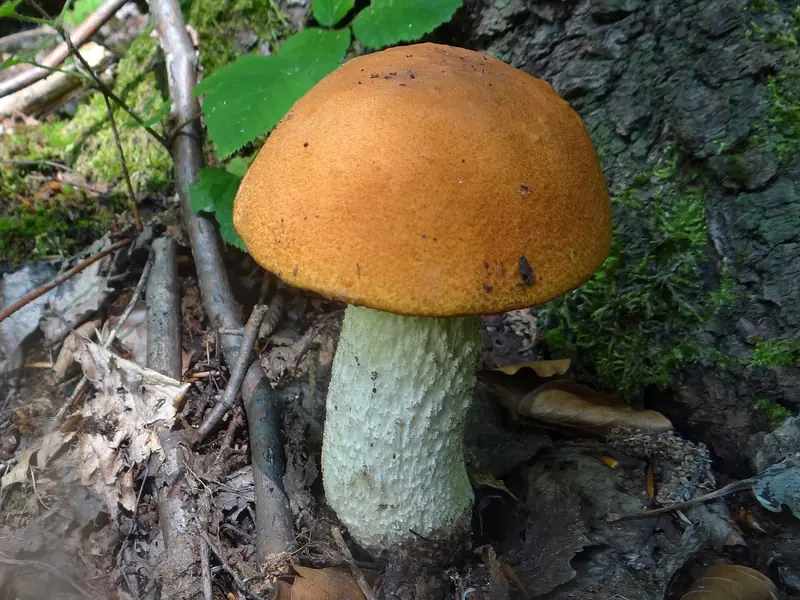
How to recognise it: red aspen bolete
- 1
Orange-red cap with overhanging cuticle
- 2
Whitish stem with scales (white → rusty)
- 3
Flesh darkens when cut
- 4
Grows with aspens
Description
- Cap
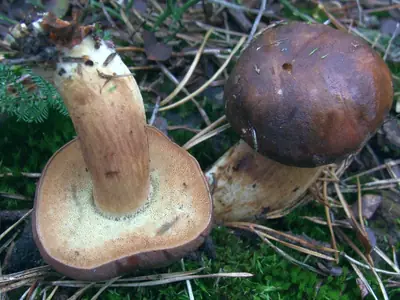
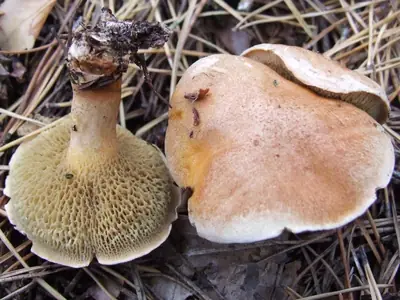
- 3–15(20) cm across, orange-red to brick-red; the cap cuticle overhangs the tubes at the margin as a thin membrane.
- Tubes and pores
- Tubes greyish with an olive tinge; pores fine, whitish, then grey-ochre to olive.
- Stem
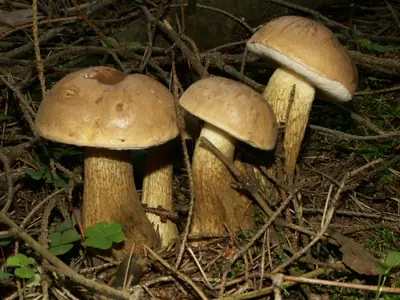
- Whitish, covered with scales: white at first, with age orange, rusty to blackish; long remaining white at the apex. The background at the base is sometimes bluish.
- Flesh
- White, thick, firm; darkens when cut. In older specimens fibrous in the stem, soft in the cap.
- Smell and taste
- Taste mild, smell indistinct.
Where and when it grows
Forests and scrub, always near aspen (according to Polish sources); fairly common.
Most often with: aspen, poplar
Look-alikes: what it can be mistaken for
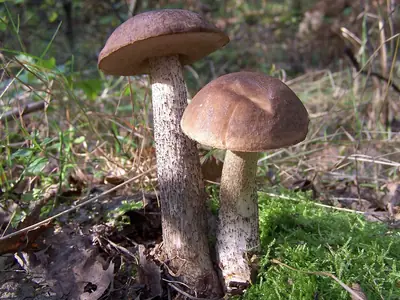
Brown birch bolete Edible low risk
The brown birch bolete has a brown cap and black scales on the stem, and grows under birch. Edible. Not in this atlas: Leccinum versipelle (orange birch bolete; under birches, scales black from youth) – edible.
Foragers’ finds
All photosPhotos and identifications are added by users; we do not check them. Add your own find →
In the kitchen
Stewing, frying, drying, pickling (keeps a pale colour in vinegar). Turns black during cooking – adding vinegar prevents this. Can be parboiled and frozen.
Protection and sale
- Species protection: the species is not protected.
- Sale: the species is on the list of mushrooms approved for sale (it may be sold only with a mushroom inspector’s certificate). On the Ministry of Health (MZ) list as “koźlarz czerwony (all varieties) – Leccinum rufum”.
Red aspen bolete: common questions
Is the red aspen bolete edible?
Edible. Edible and tasty. Polish foragers also use the name “red bolete” (“czerwony koźlarz”) for several closely related edible species (orange birch, pine, oak and spruce scaber stalks).
When does the red aspen bolete grow?
In Poland the fruiting bodies usually appear in: June, July, August, September, October. Habitat: Forests and scrub, always near aspen (according to Polish sources); fairly common.
What can the red aspen bolete be mistaken for?
Brown birch bolete (edible): The brown birch bolete has a brown cap and black scales on the stem, and grows under birch. Edible. Not in this atlas: Leccinum versipelle (orange birch bolete; under birches, scales black from youth) – edible.
Sources
Last checked: 9 November 2026. Spotted a mistake? Write to us.