
Comparison
Sooty head or tiger tricholoma? How to tell them apart
Sooty head is an edible mushroom, while the tiger tricholoma is a poisonous mushroom. Compare the two mushrooms point by point.
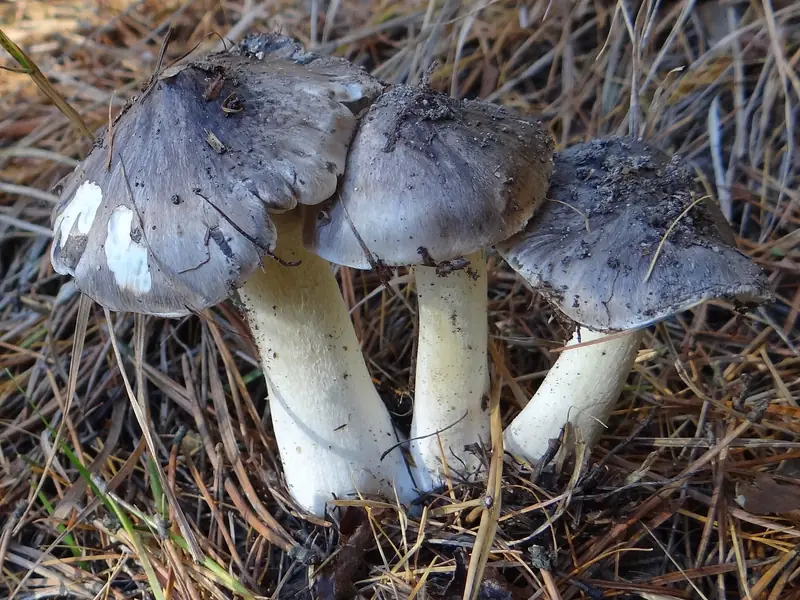
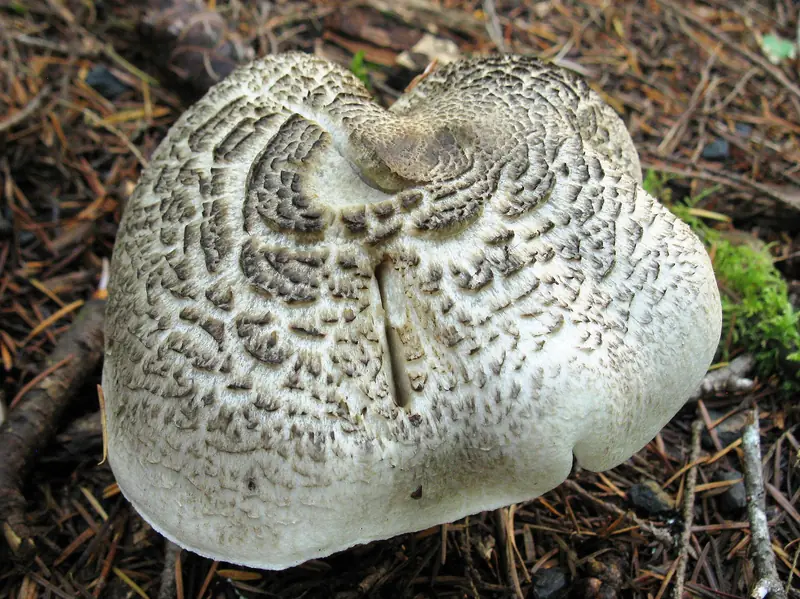
The tiger tricholoma has a pale cap covered with concentrically arranged dark scales (not fibrils), a massive stem, and grows on calcareous soils under beeches, spruces and firs – not in acidic pine forests. It causes severe gastrointestinal poisoning.
The edible sooty head has a cap with radial black fibrils (not concentric scales), is more delicate, and grows in late autumn in acidic pine forests.
Feature by feature
| Feature | Sooty head | Tiger tricholoma |
|---|---|---|
| Edibility | Edible | Poisonous |
| Cap | 3–10(12) cm, grey to dark grey, often with an olive, yellowish or violet tinge and distinct, black, radially innate fibrils; with a blunt umbo, margin wavy; slightly slippery when wet. | (3)6–10(15) cm, fleshy, long convex with a flat umbo; whitish to ash-grey, covered with concentrically arranged, grey-brown to black-grey scales; margin long inrolled. |
| Under the cap | Gills white, then greyish or yellowish, moderately crowded, emarginate (notched with a tooth). | Gills white, often with a greenish tinge, then pale yellowish (never grey), emarginate (notched with a tooth); in young specimens with water droplets on the edges. |
| Stem | 5–10 cm, white with a yellowish or greyish tinge, solid, firm, fibrillose; no ring. | 5–12 cm, stout and massive, white, ochre-tinged at the base, often thickened; in young specimens droplets of liquid near the apex; no ring. |
| Flesh | White, greyish under the cap cuticle; does not change colour. | White, does not change colour when cut. |
| Smell and taste | Smell mealy (faint); taste mild, sweetish-nutty. | Smell faint, pleasant or mealy; taste insignificant. Do not taste. |
| Habitat | Pine forests with lichens or mosses on sandy soils, also mixed forests; gregarious, often together with the yellow knight. | Only on calcareous or alkaline soils, in broadleaf forests (beech and oak woods) and coniferous forests (under spruces and firs), singly or in small groups. Fairly rare in Poland (locally common on limestone). |
| Season | October, November, December | August, September, October |
How to recognise it: sooty head
- Grey cap with black, radial fibrils (not scales)
- White to greyish gills, notched with a tooth
- Mild taste and mealy smell
- Late autumn, pine forests on sand
How to recognise it: tiger tricholoma
- Large, massive fruit body with a grey cap in concentric dark scales
- Gills white to yellowish with a greenish tinge, never grey
- Water droplets on the gills and stem apex in young specimens
- Only on calcareous soils
Safety rule
Never eat a mushroom identified only from a website, a photo or an app. Show any doubtful specimen to a certified mushroom inspector at the sanepid (state sanitary inspection); in season the advice points are free. Do not give wild-picked mushrooms to children.
The golden rules of foraging →Frequently asked questions
Sooty head or tiger tricholoma: how can you tell them apart?
The tiger tricholoma has a pale cap covered with concentrically arranged dark scales (not fibrils), a massive stem, and grows on calcareous soils under beeches, spruces and firs – not in acidic pine forests. It causes severe gastrointestinal poisoning. The edible sooty head has a cap with radial black fibrils (not concentric scales), is more delicate, and grows in late autumn in acidic pine forests.
Tiger tricholoma: what to do if you have eaten it?
Call 112 at once or go to A&E (SOR), and take any leftover mushrooms with you. No substance named in the sources; gastrointestinal syndrome: colicky abdominal pain, vomiting, diarrhoea, 0.5–3 h after eating; in extreme cases collapse.
Sources
- Wikipedia (pl): Gąska niekształtna
- grzyby.pl (M. Snowarski): Tricholoma portentosum
- First Nature: Tricholoma portentosum, Coalman
- Wikipedia (pl): Gąska tygrysia
- grzyby.pl (M. Snowarski): Tricholoma pardinum
- First Nature: Tricholoma pardinum, Leopard Knight
Last checked: 9 November 2026. Spotted a mistake? Write to us.