
Tooth fungi (spines)
Hedgehog mushroom
Hydnum repandum · also known as: Wood hedgehog, Sweet tooth
EdibleApproved for sale
Edible; older fruit bodies are bitterish and better discarded. From above it is deceptively similar to the chanterelle – but under the cap it has spines, not ridges. The similar Hydnum rufescens (terracotta hedgehog) is also edible.
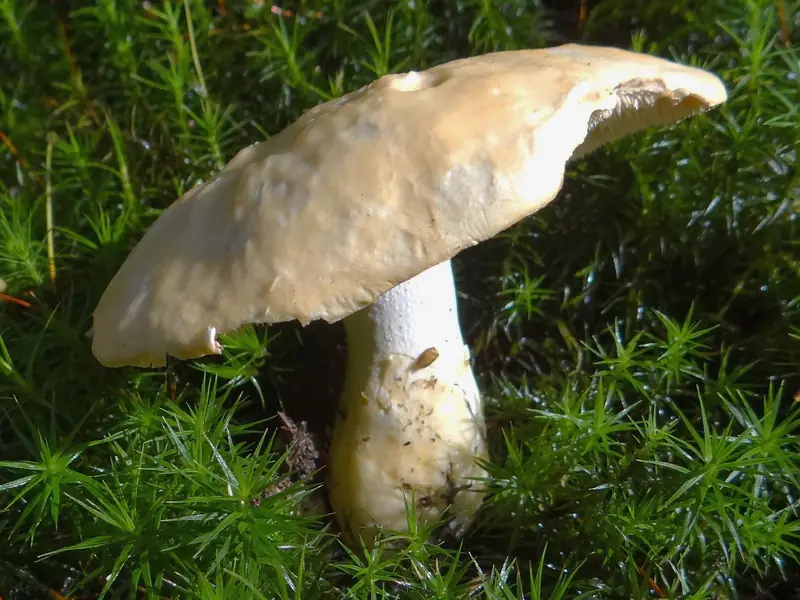
How to recognise it: hedgehog mushroom
- 1
Cap cream to pale orange, like a chanterelle
- 2
Brittle spines under the cap instead of gills or ridges
- 3
Spines slightly decurrent down the stem
- 4
Brittle, white flesh
Description
- Cap
- 4–15 cm, whitish, cream to pale orange, dry, smooth or suede-like, irregular in shape, margin inrolled; brittle, fruit bodies often fused together.
- Spines
- Crowded, brittle spines up to 6 mm, whitish to pale orange, slightly decurrent down the stem.
- Stem
- Up to 7 cm × 1.5–4 cm, often off-centre, solid, firm, whitish to cream.
- Flesh
- White, brittle; does not change colour.
- Smell and taste
- Smell and taste of young specimens pleasant; older ones bitter and sourish. Spore print white.
Where and when it grows
A mycorrhizal fungus of broadleaf, coniferous and mixed forests, most often with spruce and beech; prefers calcium-rich (alkaline, clayey) soils; often in large groups.
Most often with: spruce, beech
Look-alikes: what it can be mistaken for
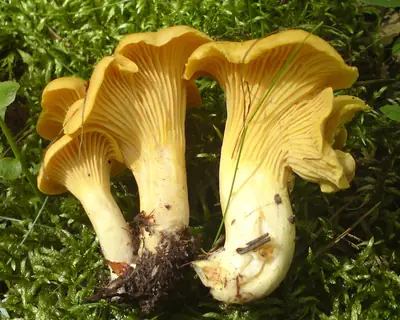
Chanterelle Edible low risk
The chanterelle has a similar cap colour, but underneath it has ridges running down the stem, not spines; both species are edible.
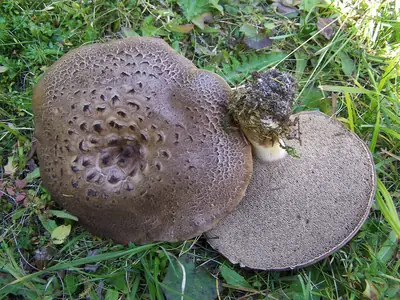
Shingled hedgehog Edible low risk
The shingled hedgehog also has spines, but its cap is brown with coarse, dark scales.
Foragers’ finds
All photosPhotos and identifications are added by users; we do not check them. Add your own find →
In the kitchen
Pick young fruit bodies free of maggots; suitable for drying, preserves, soups and risotto.
Protection and sale
- Species protection: the species is not protected.
- Sale: the species is on the list of mushrooms approved for sale (it may be sold only with a mushroom inspector’s certificate).
Hedgehog mushroom: common questions
Is the hedgehog mushroom edible?
Edible. Edible; older fruit bodies are bitterish and better discarded. From above it is deceptively similar to the chanterelle – but under the cap it has spines, not ridges. The similar Hydnum rufescens (terracotta hedgehog) is also edible.
When does the hedgehog mushroom grow?
In Poland the fruiting bodies usually appear in: July, August, September, October, November. Habitat: A mycorrhizal fungus of broadleaf, coniferous and mixed forests, most often with spruce and beech; prefers calcium-rich (alkaline, clayey) soils; often in large groups.
What can the hedgehog mushroom be mistaken for?
Chanterelle (edible): The chanterelle has a similar cap colour, but underneath it has ridges running down the stem, not spines; both species are edible. Shingled hedgehog (edible): The shingled hedgehog also has spines, but its cap is brown with coarse, dark scales.
Sources
- Wikipedia (pl): Kolczak obłączasty
- grzyby.pl (atlas M. Snowarskiego): Hydnum repandum
- First Nature: Hydnum repandum
- Rozporządzenie Ministra Zdrowia w sprawie grzybów dopuszczonych do obrotu… – tekst jednolity Dz.U. 2026 poz. 258
Last checked: 9 November 2026. Spotted a mistake? Write to us.