Leaves
Stinging nettle
Urtica dioica L. · common nettle, nettle · Polish: Pokrzywa zwyczajna
Edible
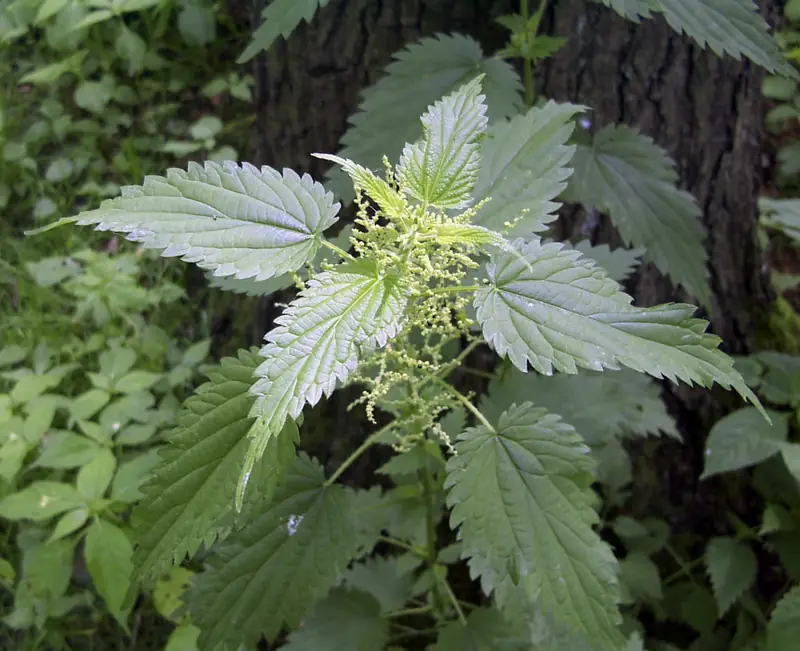
How to identify it
- Stems and leaves covered in stinging hairs.
- Square (four-angled) stem.
- Leaves opposite, coarsely (sometimes doubly) toothed.
- Flowers inconspicuous, green, in drooping clusters; flowers from June to October.
Where it grows
Damp woodland and scrub, and very often ruderal sites near buildings (a species that thrives alongside people).
In the kitchen and the home medicine cabinet
For food, young plants 15–20 cm tall are gathered from early spring to May; later, if at all, only the young leaves from the shoot tips. Traditionally: nettle soup, added to scrambled eggs and fillings, nettles cooked like spinach, juice from fresh plants, dried for tea. For drying, the leaves are gathered before flowering (May–September). Wear gloves when picking.
Caution Do not pick beside busy roads or on fertilised fields. Nettles accumulate nitrates, which are considered potentially harmful to the consumer. Cystoliths form in older leaves — people with kidney disease should take care. Picking plants is prohibited in national parks and nature reserves (Nature Conservation Act (ustawa o ochronie przyrody), art. 15 ust. 1 pkt 13).
Frequently asked questions
When is Stinging nettle in season?
In Poland, usually in March, April, May.
Sources
- Wikipedia: Pokrzywa zwyczajna
- Nadleśnictwo Wipsowo (Lasy Państwowe): Do lasu jak do apteki (14.05.2020)
- Opačić et al., Frontiers in Plant Science 2024 – stinging nettle, nitrate accumulation
- KPODR (D. Metera, 2021): wyciąg z przepisów o zbiorze roślin dziko rosnących – m.in. ustawa o ochronie przyrody art. 15
Last checked: 9 November 2026. Spotted a mistake? Write to us.