Leaves
Common sorrel
Rumex acetosa L. · sorrel, garden sorrel · Polish: Szczaw zwyczajny
Edible
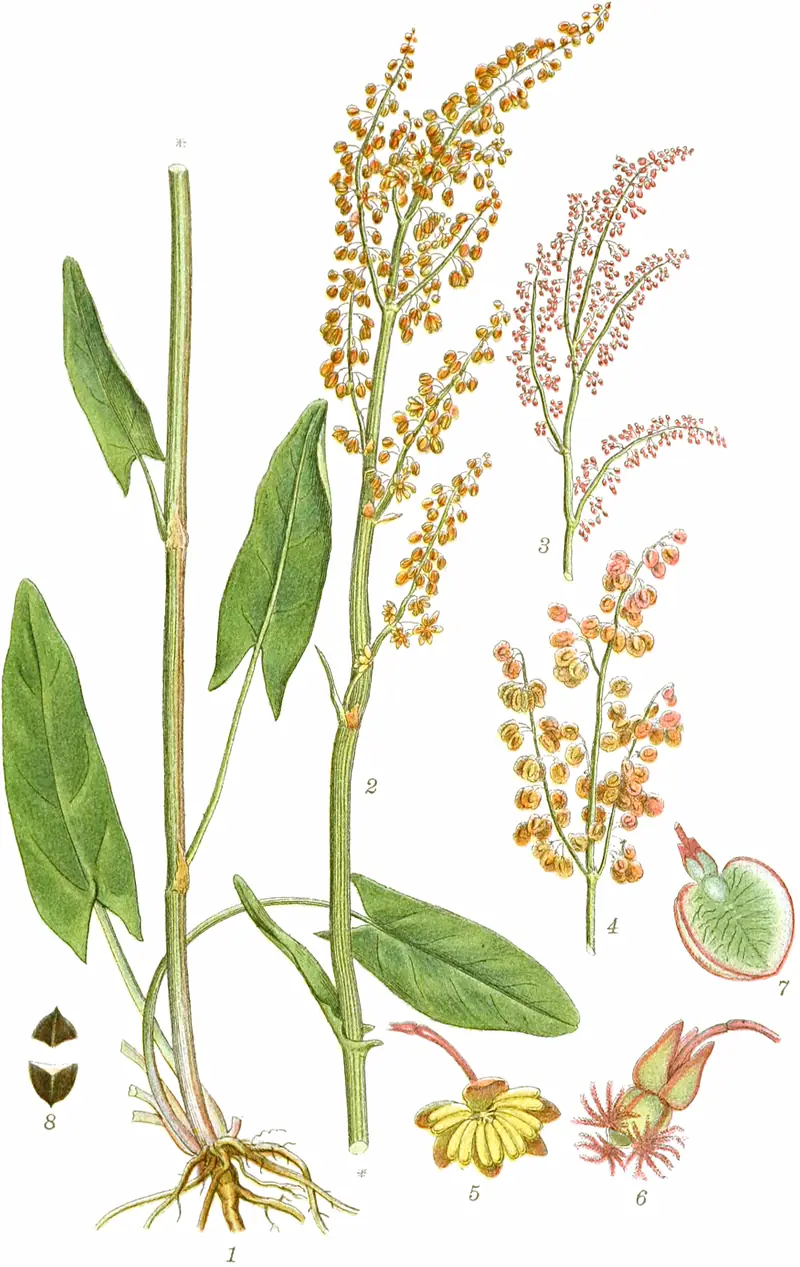
How to identify it
- Basal leaves on long stalks, ovate-oblong; upper leaves stalkless.
- Sour-tasting leaves (oxalic acid).
- Small reddish flowers in loose, narrow panicles; flowers in May–June.
- Male and female flowers on separate plants (dioecious).
Where it grows
Meadows, clearings and roadsides on fertile, nitrogen-rich soils; common in Poland, also as a ruderal weed.
In the kitchen and the home medicine cabinet
Young leaves for sorrel soup, sauces and salads; sorrel is also pasteurised in jars. It is mainly the young leaves that are eaten. Cooking and adding calcium (e.g. dairy products) reduce the effect of oxalic acid.
Caution Sorrel contains a lot of oxalic acid. It is not given to children under 2 years of age; people with kidney stones or other kidney diseases, and those at risk of calcium deficiency, should limit how much they eat. Among wild sorrels, avoid any that taste bitter.
Frequently asked questions
When is Common sorrel in season?
In Poland, usually in April, May, June, July, August, September, October, November.
Sources
- Wikipedia: Szczaw zwyczajny
- mp.pl (Medycyna Praktyczna): Szczaw – czy jest zdrowy i bezpieczny (02.07.2025)
Last checked: 9 November 2026. Spotted a mistake? Write to us.