Fruit
Sea buckthorn
Hippophaë rhamnoides L. · sea-buckthorn, sallow thorn · Polish: Rokitnik zwyczajny
Edible Partially protected
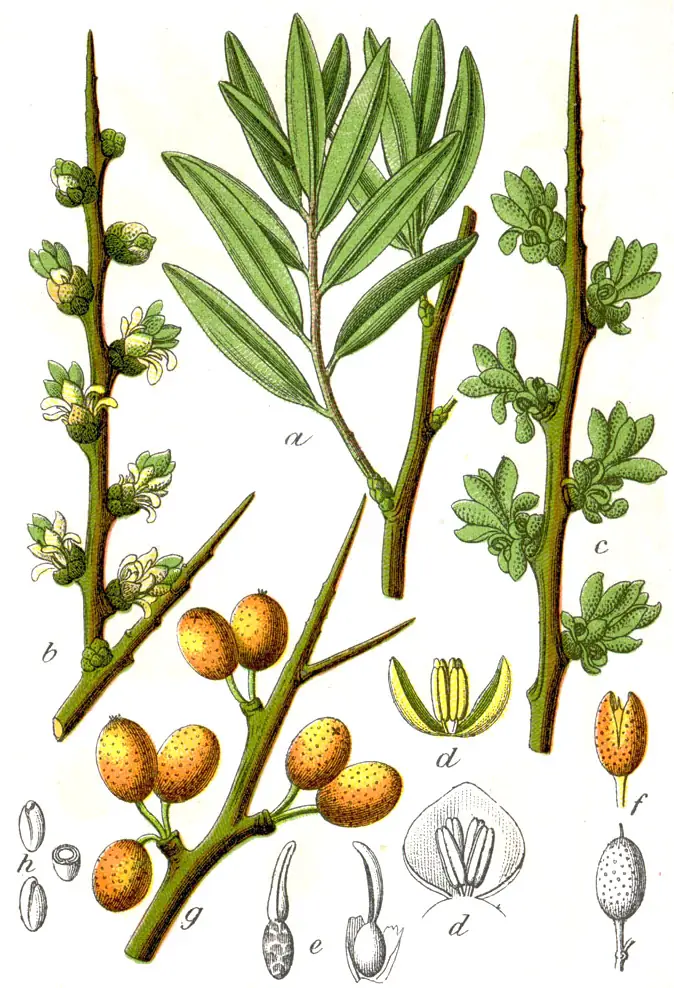
How to identify it
- Thorny shrub; thorns at the tips of the shoots and growing from the side buds.
- Leaves silvery underneath with a brownish tinge.
- Berries orange to red, held tightly against the twigs.
- Male and female flowers on separate plants — only female shrubs bear fruit.
Where it grows
In Poland it grows naturally only on the Baltic coast (dunes, cliffs); often grown as an ornamental and fruit plant.
In the kitchen and the home medicine cabinet
Berries from garden plants: juices (instead of lemon juice for souring dishes), jams, purées, kissel, jellies, wines, nalewki and liqueurs; oil from the berries and seeds. Do not pick too late, because overripe berries have a rancid taste. Shrubs in a garden can be picked without restriction.
Caution Wild sea buckthorn is partially protected (regulation of 9.10.2014, Annex 2, item 230). Harvesting is allowed only to those with a permit: ‘picking of fruit, without damaging the shrubs, outside dune and cliff habitats’ (Annex 3). On the coast, do not pick the berries or twigs; use sea buckthorn from a garden or plantation. Do not pick the berries beside roads or in towns.
Frequently asked questions
When is Sea buckthorn in season?
In Poland, usually in August, September, October.
Is Sea buckthorn a protected species?
Yes, it is partially protected under the Polish regulation on the protection of plant species (rozporządzenie w sprawie ochrony gatunkowej roślin, Dz.U. 2014 poz. 1409).
Sources
- Rozporządzenie Ministra Środowiska z 9 października 2014 r. w sprawie ochrony gatunkowej roślin (Dz.U. 2014 poz. 1409)
- Wikipedia: Rokitnik zwyczajny
Last checked: 9 November 2026. Spotted a mistake? Write to us.