Boletes (pores under the cap)
Red-cracking bolete
Xerocomellus chrysenteron
EdibleApproved for sale
Edible, of moderate value; taste sourish, opinions divided. Older fruit bodies decay and go mouldy quickly (Hypomyces chrysospermus, bolete mould) – mouldy ones are not fit to eat.
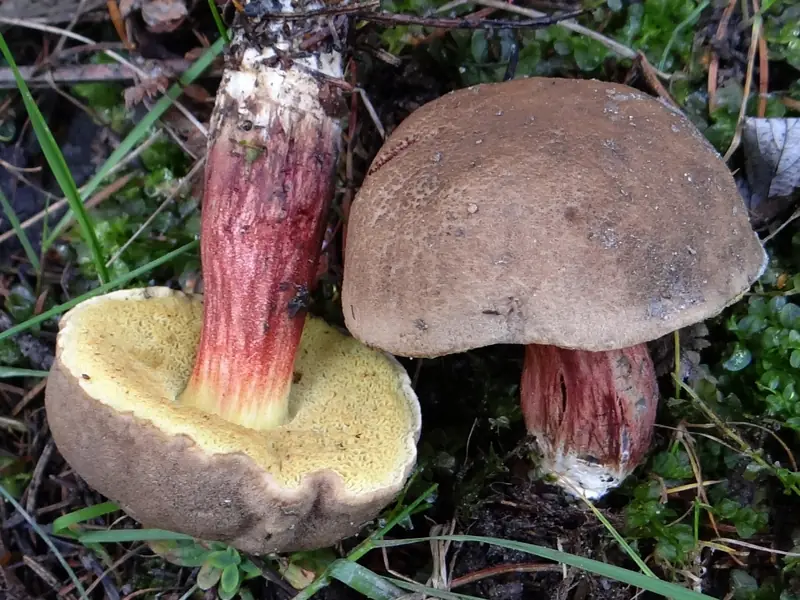
How to recognise it: red-cracking bolete
- 1
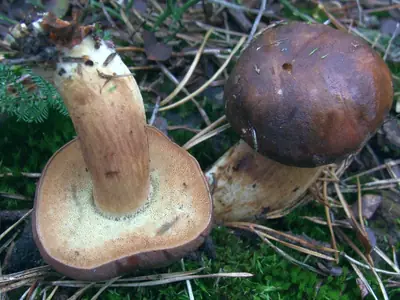
Cracked cap with reddish flesh in the cracks
- 2
Red-streaked stem
- 3
Yellow-green pores that turn blue
- 4
Soft flesh that spoils quickly
Description
- Cap
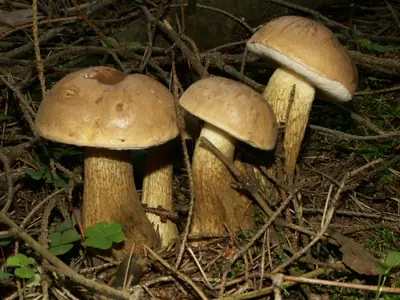
- 3–10 cm across, brown to dark brown, often with an olive tinge; dry, velvety, cracks into patches in dry weather, with reddish flesh visible in the cracks.
- Tubes and pores
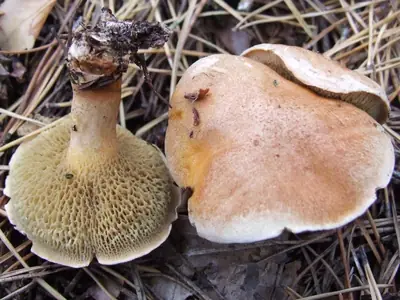
- Tubes and pores pale yellow, then greenish-yellow to olive; pores fairly large, angular, turn blue when pressed.
- Stem
- Slender, yellowish at the top, with red streaks lower down, no network.
- Flesh
- Yellowish, soft and watery; in the cap turns blue when damaged, then red; in the stem of older specimens brownish-red.
- Smell and taste
- Smell faint, taste slightly sour.
Where and when it grows
Very common in coniferous and broadleaf forests and in parks; sometimes in masses.
Most often with: beech, pine, oak
Look-alikes: what it can be mistaken for
Suede bolete Edible low risk
The suede bolete has a paler, olive-yellow cap without red in the cracks, brighter golden-yellow pores that do not turn blue, and no sour taste. Both are edible.
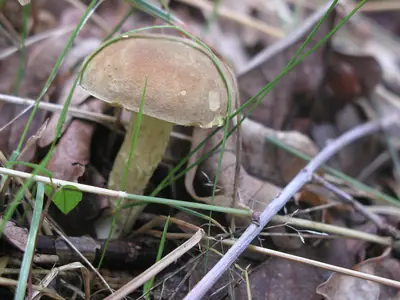
Foragers’ finds
All photosPhotos and identifications are added by users; we do not check them. Add your own find →
In the kitchen
Young fruit bodies: pickled, in soup, stewed in a thick sauce (“na gęsto”), dried. Pick only young, firm ones; pores with a white coating of mould disqualify the fruit body.
Protection and sale
- Species protection: the species is not protected.
- Sale: the species is on the list of mushrooms approved for sale (it may be sold only with a mushroom inspector’s certificate).
Red-cracking bolete: common questions
Is the red-cracking bolete edible?
Edible. Edible, of moderate value; taste sourish, opinions divided. Older fruit bodies decay and go mouldy quickly (Hypomyces chrysospermus, bolete mould) – mouldy ones are not fit to eat.
When does the red-cracking bolete grow?
In Poland the fruiting bodies usually appear in: June, July, August, September, October, November. Habitat: Very common in coniferous and broadleaf forests and in parks; sometimes in masses.
What can the red-cracking bolete be mistaken for?
Suede bolete (edible): The suede bolete has a paler, olive-yellow cap without red in the cracks, brighter golden-yellow pores that do not turn blue, and no sour taste. Both are edible.
Sources
- Wikipedia (pl): Suchogrzybek złotopory
- Atlas grzybów Polski – grzyby.pl (M. Snowarski)
- First Nature – fungi
Last checked: 9 November 2026. Spotted a mistake? Write to us.