Boletes (pores under the cap)
Suede bolete
Xerocomus subtomentosus · also known as: Yellow-cracking bolete, Brown and yellow bolete
EdibleApproved for sale
Edible and tasty, valued more highly than the red-cracking bolete (it is not sour and its flesh is firmer). Polish foragers call several similar boletes “zajączki” (“little hares”).
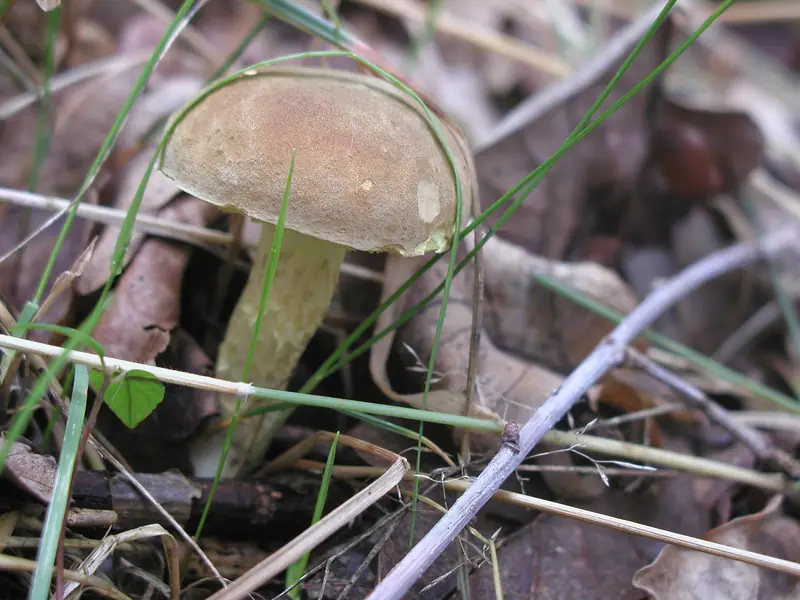
How to recognise it: suede bolete
- 1
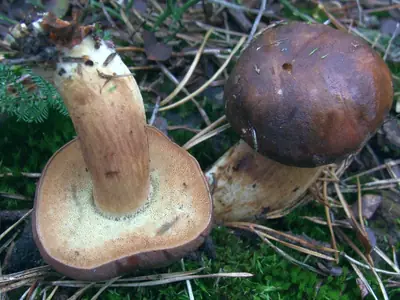
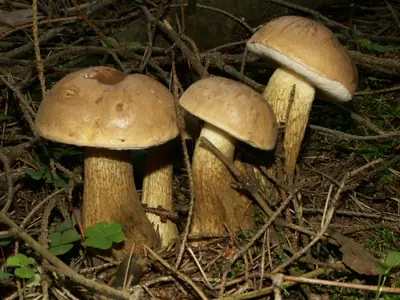
Olive-yellow, suede-like cap
- 2
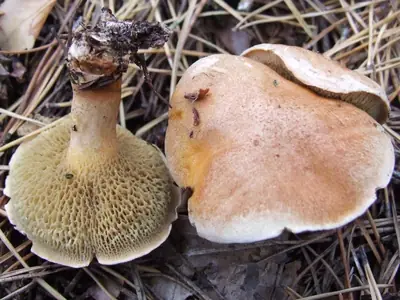
Large, golden-yellow pores
- 3
Stem without red zones
- 4
White mycelium at the stem base
Description
- Cap
- 3–10(15) cm across, olive-yellow, yellow-ochre to grey-brown; surface suede-like, matt, never slippery; does not turn red in the cracks.
- Tubes and pores
- Tubes and pores bright golden yellow, greenish-yellow with age; pores large, angular, usually do not change colour when pressed.
- Stem
- Slender, yellow to yellow-brown with rusty lengthwise fibrils; white mycelium at the base.
- Flesh
- Whitish to cream-yellow; in the cap may turn slightly blue when pressed, pinkish in the lower stem.
- Smell and taste
- Taste mild; smell at the stem base sometimes unpleasant (iodoform-like).
Where and when it grows
Coniferous and broadleaf forests, scrub, parks; usually on acidic soils, often among bilberries. Common, but usually solitary.
Most often with: oak, hornbeam, beech, pine, spruce
Look-alikes: what it can be mistaken for
Red-cracking bolete Edible low risk
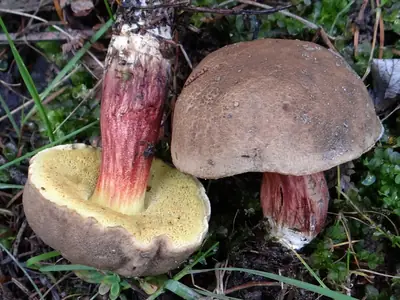
The red-cracking bolete has reddish flesh in the cap cracks, a red-streaked stem, pores that turn blue and a sourish taste. Both are edible. Not in this atlas: Xerocomus ferrugineus (yellow mycelium at the stem base).
Foragers’ finds
All photosPhotos and identifications are added by users; we do not check them. Add your own find →
In the kitchen
Frying, stewing, soups, drying; young firm caps are suitable for pickling in vinegar. Often maggoty.
Protection and sale
- Species protection: the species is not protected.
- Sale: the species is on the list of mushrooms approved for sale (it may be sold only with a mushroom inspector’s certificate).
Suede bolete: common questions
Is the suede bolete edible?
Edible. Edible and tasty, valued more highly than the red-cracking bolete (it is not sour and its flesh is firmer). Polish foragers call several similar boletes “zajączki” (“little hares”).
When does the suede bolete grow?
In Poland the fruiting bodies usually appear in: June, July, August, September, October. Habitat: Coniferous and broadleaf forests, scrub, parks; usually on acidic soils, often among bilberries. Common, but usually solitary.
What can the suede bolete be mistaken for?
Red-cracking bolete (edible): The red-cracking bolete has reddish flesh in the cap cracks, a red-streaked stem, pores that turn blue and a sourish taste. Both are edible. Not in this atlas: Xerocomus ferrugineus (yellow mycelium at the stem base).
Sources
- Wikipedia (pl): Podgrzybek zajączek
- Atlas grzybów Polski – grzyby.pl (M. Snowarski)
- First Nature – fungi
Last checked: 9 November 2026. Spotted a mistake? Write to us.