Boletes (pores under the cap)
Slippery jack
Suillus luteus · also known as: Sticky bun, Pine bolete
EdibleApproved for sale
Tasty, edible after cooking. In a few people Suillus species cause vomiting and diarrhoea – the first time, eat only a small amount.
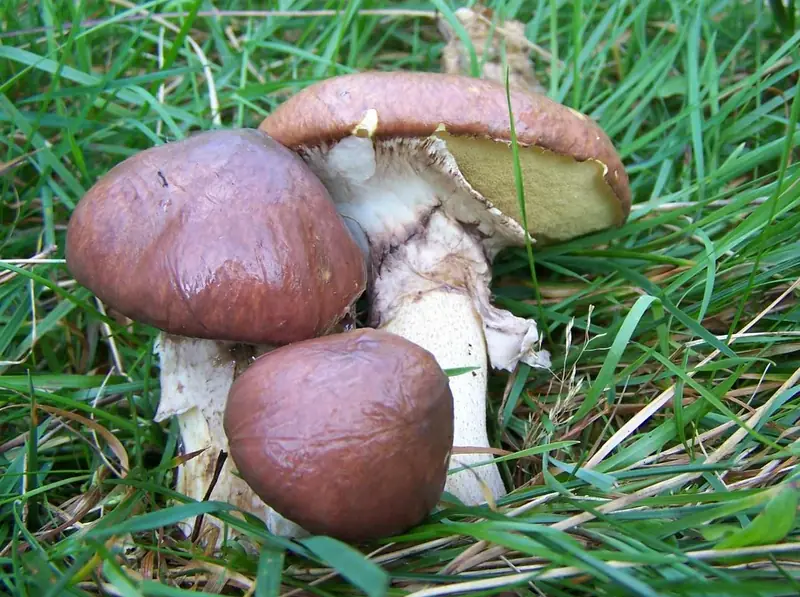
How to recognise it: slippery jack
- 1
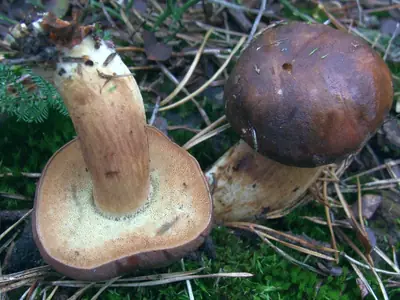
Slimy, chocolate-brown cap
- 2
Ring on the stem (whitish → violet-tinged)
- 3
Fine yellow pores
- 4
Under pines
Description
- Cap
- 4–12(15) cm across, chocolate- to yellow-brown; very slimy, silky and shiny when dry, with radial fibrils; the cuticle peels off easily.
- Tubes and pores
- Tubes lemon-yellow; pores fine, roundish; in young specimens covered by a white membranous veil.
- Stem
- Yellowish, with a distinct, hanging ring – whitish, then violet-tinged; brown granules above the ring.
- Flesh
- Whitish-yellow, brownish in the lower stem; does not change colour.
- Smell and taste
- Smell and taste pleasant.
Where and when it grows
Under pines (mainly Scots pine), very often in young pine plantations.
Most often with: pine
Look-alikes: what it can be mistaken for
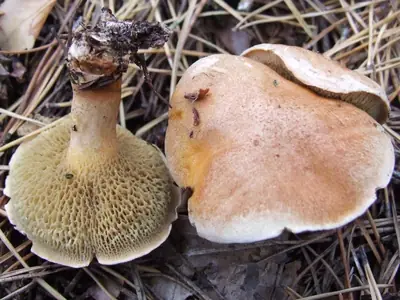
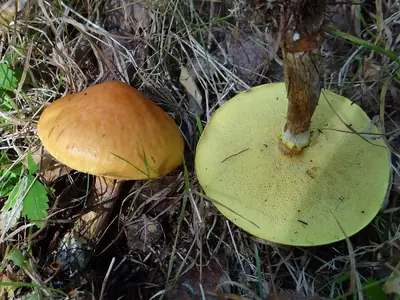
Larch bolete Edible low risk
The larch bolete has a golden-yellow to orange cap and grows only under larches. Edible. Not in this atlas: Suillus granulatus (weeping bolete) – no ring, paler cap, edible.
Foragers’ finds
All photosPhotos and identifications are added by users; we do not check them. Add your own find →
In the kitchen
Stewing, frying, pickling, soups. Removing the slimy cuticle is not necessary, but it makes cleaning easier and improves the look of the dish (according to First Nature it also reduces the risk of indigestion).
Protection and sale
- Species protection: the species is not protected.
- Sale: the species is on the list of mushrooms approved for sale (it may be sold only with a mushroom inspector’s certificate).
Slippery jack: common questions
Is the slippery jack edible?
Edible. Tasty, edible after cooking. In a few people Suillus species cause vomiting and diarrhoea – the first time, eat only a small amount.
When does the slippery jack grow?
In Poland the fruiting bodies usually appear in: May, June, July, August, September, October, November. Habitat: Under pines (mainly Scots pine), very often in young pine plantations.
What can the slippery jack be mistaken for?
Larch bolete (edible): The larch bolete has a golden-yellow to orange cap and grows only under larches. Edible. Not in this atlas: Suillus granulatus (weeping bolete) – no ring, paler cap, edible.
Sources
Last checked: 9 November 2026. Spotted a mistake? Write to us.