Boletes (pores under the cap)
Larch bolete
Suillus grevillei · also known as: Greville's bolete, Tamarack jack
EdibleApproved for sale
A good edible mushroom, often collected. As with other Suillus species, indigestion is possible in a few people – the first time, eat only a little.
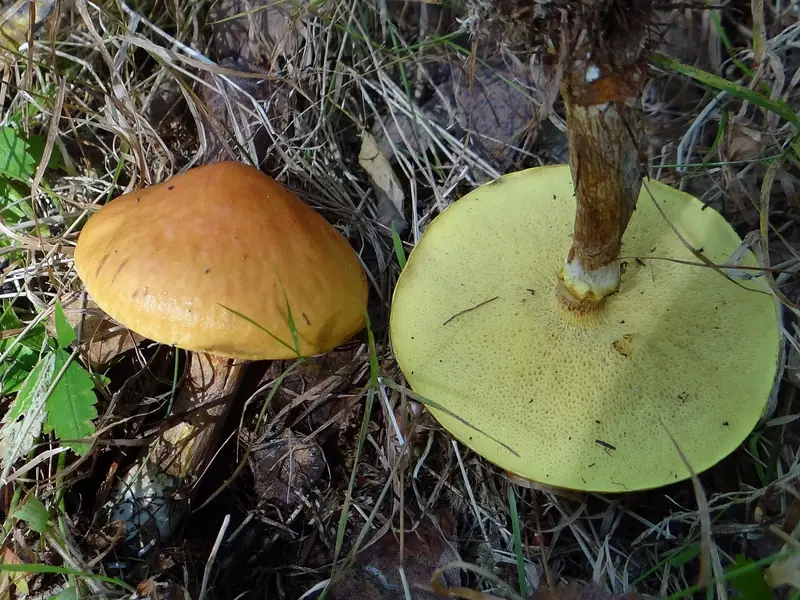
How to recognise it: larch bolete
- 1
Bright yellow, slimy cap
- 2
Ring on the stem
- 3
Only under larch
- 4
Yellow pores
Description
- Cap
- 4–15 cm across, golden-yellow to golden-orange, with a touch of red or brown; slimy, shiny.
- Tubes and pores
- Tubes yellow, then olive-yellow; pores fine, angular with age, pinkish-brown when pressed, then darkening; in young specimens covered by a yellowish-white veil.
- Stem
- Yellowish to orange-brown, with a slimy ring (only a trace in old specimens), above it rusty granules or a network.
- Flesh
- Yellow, soft; when cut turns dirty pink in places.
- Smell and taste
- Taste and smell faint, indistinct.
Where and when it grows
Only under larches – in forests, parks and gardens with larch; common, especially in the mountains.
Most often with: larch
Look-alikes: what it can be mistaken for
Slippery jack Edible low risk
The slippery jack has a brown cap and a violet-tinged ring, and grows under pine. Edible. Note: also growing under larch is Suillus tridentinus (rough, fibrillose-scaly cap) – STRICTLY protected, do not pick; and Suillus viscidus (grey pores).
Velvet bolete Edible low risk
The larch bolete has a slimy, bright yellow cap and a ring, and grows under larch.
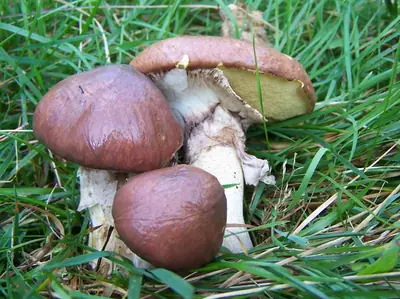
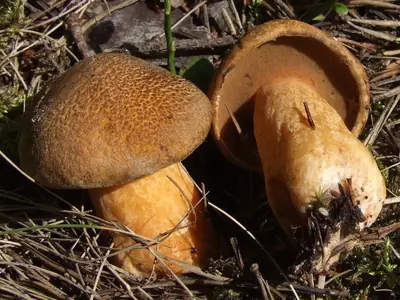
Foragers’ finds
All photosPhotos and identifications are added by users; we do not check them. Add your own find →
In the kitchen
Frying, stewing, soups, pickling. Peel older fruit bodies as far as possible; First Nature recommends removing the cuticle and the tubes.
Protection and sale
- Species protection: the species is not protected.
- Sale: the species is on the list of mushrooms approved for sale (it may be sold only with a mushroom inspector’s certificate).
Larch bolete: common questions
Is the larch bolete edible?
Edible. A good edible mushroom, often collected. As with other Suillus species, indigestion is possible in a few people – the first time, eat only a little.
When does the larch bolete grow?
In Poland the fruiting bodies usually appear in: July, August, September, October. Habitat: Only under larches – in forests, parks and gardens with larch; common, especially in the mountains.
What can the larch bolete be mistaken for?
Slippery jack (edible): The slippery jack has a brown cap and a violet-tinged ring, and grows under pine. Edible. Note: also growing under larch is Suillus tridentinus (rough, fibrillose-scaly cap) – STRICTLY protected, do not pick; and Suillus viscidus (grey pores). Velvet bolete (edible): The larch bolete has a slimy, bright yellow cap and a ring, and grows under larch.
Sources
Last checked: 9 November 2026. Spotted a mistake? Write to us.