Boletes (pores under the cap)
Velvet bolete
Suillus variegatus · also known as: Variegated bolete
EdibleApproved for sale
Edible, of moderate value (distinctive smell; according to First Nature it can taste metallic after cooking). As with other Suillus species, indigestion is possible in sensitive people.
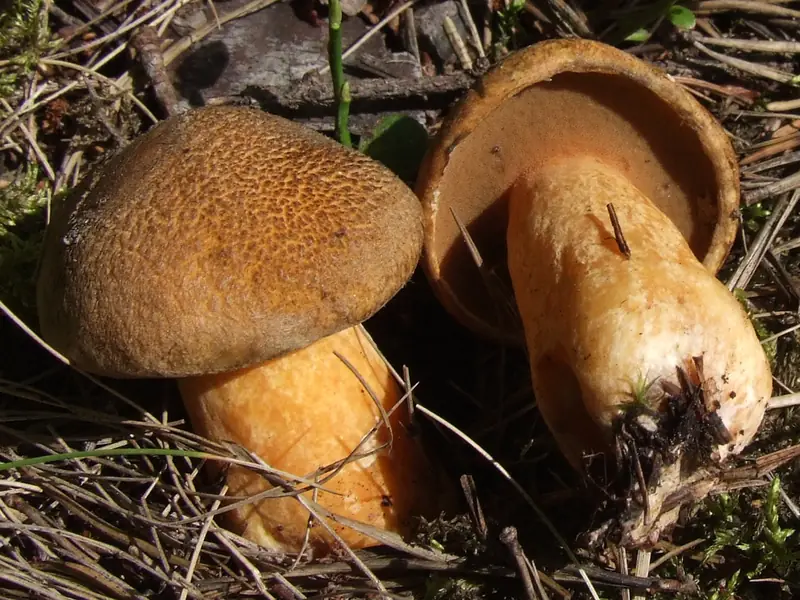
How to recognise it: velvet bolete
- 1
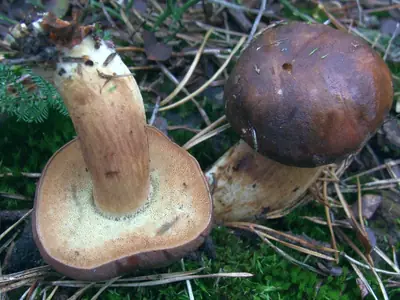
Dry, felty-tufted cap
- 2
Buff-olive, fine pores
- 3
No ring
- 4
Flesh turns faintly blue
Description
- Cap
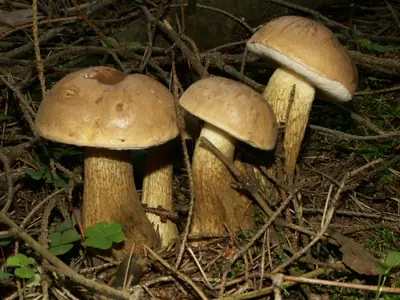
- 5–14 cm across, yellow-brown, straw-coloured to ochre; surface dry, felty, with fine tufts (speckled); the cuticle is hard to peel.
- Tubes and pores
- Tubes short, sand-yellow, then buff-olive; pores fine; turn faintly blue when broken.
- Stem
- Cylindrical, yellow to yellow-brown, smooth, without a ring.
- Flesh
- Pale yellow to light orange, firm; turns faintly blue, especially above the tubes.
- Smell and taste
- Taste mild, smell distinctive (reminiscent of pine needles).
Where and when it grows
Pine forests on poor, sandy soils, heaths, also damp places and under dwarf mountain pine.
Most often with: pine, dwarf mountain pine
Look-alikes: what it can be mistaken for
Bovine bolete Edible low risk
The bovine bolete has large, angular pores and a sticky, rubbery cap. Edible. Not in this atlas: Chalciporus piperatus (peppery bolete) – smaller, copper-red, hot (burning) taste.
Larch bolete Edible low risk
The larch bolete has a slimy, bright yellow cap and a ring, and grows under larch.
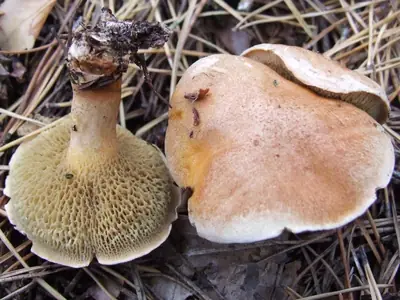
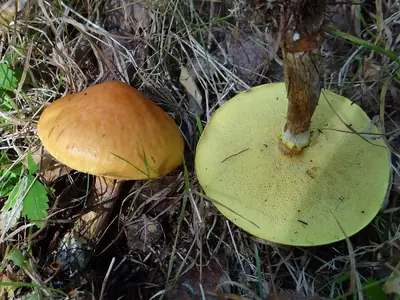
Foragers’ finds
All photosPhotos and identifications are added by users; we do not check them. Add your own find →
In the kitchen
Pickling; dried in slices, soaked and stewed for ≥30 min in sour cream it makes an aromatic sauce. Peeling the cuticle and thorough cooking are recommended.
Protection and sale
- Species protection: the species is not protected.
- Sale: the species is on the list of mushrooms approved for sale (it may be sold only with a mushroom inspector’s certificate).
Velvet bolete: common questions
Is the velvet bolete edible?
Edible. Edible, of moderate value (distinctive smell; according to First Nature it can taste metallic after cooking). As with other Suillus species, indigestion is possible in sensitive people.
When does the velvet bolete grow?
In Poland the fruiting bodies usually appear in: July, August, September, October. Habitat: Pine forests on poor, sandy soils, heaths, also damp places and under dwarf mountain pine.
What can the velvet bolete be mistaken for?
Bovine bolete (edible): The bovine bolete has large, angular pores and a sticky, rubbery cap. Edible. Not in this atlas: Chalciporus piperatus (peppery bolete) – smaller, copper-red, hot (burning) taste. Larch bolete (edible): The larch bolete has a slimy, bright yellow cap and a ring, and grows under larch.
Sources
Last checked: 9 November 2026. Spotted a mistake? Write to us.