Gilled mushrooms
Honey fungus
Armillaria mellea · also known as: Honey mushroom, Bootlace fungus
Edible with careApproved for sale
Edible only after processing: raw or undercooked it can cause poisoning. Before further preparation, parboil for approx. 5 minutes and discard the water (do not inhale the steam). Some people tolerate it poorly – the British First Nature advises against collecting it at all. In everyday usage “opieńka” means the whole species complex (including Armillaria ostoyae on conifers); all are treated as edible under the same conditions.
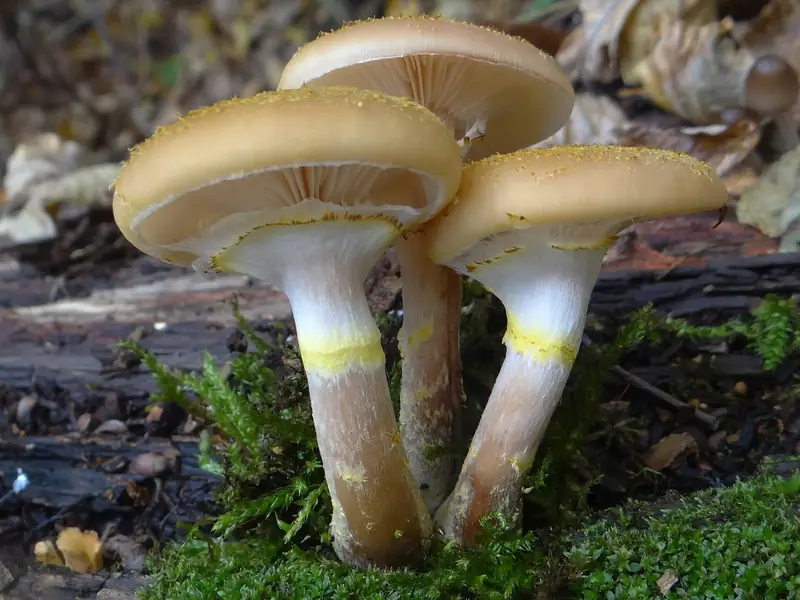
How to recognise it: honey fungus
- 1
Large clusters on wood or tree roots
- 2
Membranous ring on the stem
- 3
White spore print
- 4
Honey-brown cap with fine dark scales in the centre
- 5
Do not eat raw – always parboil
Description
- Cap
- 3–13 cm across, honey-yellow to olive- or reddish-brown, darker in the centre, with fine dark scales (disappearing with age); margin striate in young specimens.
- Gills
- Gills whitish, later beige-pinkish and yellowish with brown spots, crowded, adnate to slightly decurrent.
- Stem
- Long (5–20 cm), slender, darker towards the base, stems in a cluster fused together; a distinct, persistent, membranous ring, whitish to yellowish.
- Flesh
- Whitish to pale flesh-coloured, does not change colour when cut; fibrous in the stem of older specimens.
- Smell and taste
- Smell faint, pleasant; taste when raw mild, then astringent, sourish. Spore print white to cream.
Where and when it grows
Grows gregariously, in large clusters on trunks, stumps and roots of broadleaf trees (oak, hornbeam, beech, fruit trees) in forests, parks and orchards; a parasite causing root rot. Armillaria mellea in the strict sense is fairly rare in Poland; Armillaria ostoyae on conifers is more common.
Most often with: oak, hornbeam, beech, apple, aspen
Look-alikes: what it can be mistaken for
Funeral bell Deadly poisonous high risk of confusion
Deadly poisonous (amatoxins), also grows gregariously on wood. The funeral bell is smaller (cap 1.5–5 cm), has a rusty-brown spore print, rusty gills and silvery-white fibrils on the stem below a fragile ring. The honey fungus has a white spore print and whitish/beige gills.
Step-by-step comparison: Honey fungus or funeral bell →Sulphur tuft Poisonous high risk of confusion
Poisonous, grows in similar clusters on stumps. The sulphur tuft has a sulphur-yellow cap, sulphur-yellow, then greenish and purple-black gills, a dark (purple-brown) spore print, no membranous ring and a very bitter taste.
Step-by-step comparison: Honey fungus or sulphur tuft →Sheathed woodtuft Edible low risk
Edible, but easily confused with the funeral bell. The sheathed woodtuft has a rusty-brown spore print, cinnamon gills and a cap that dries from the centre (two-toned); the honey fungus has a white spore print.
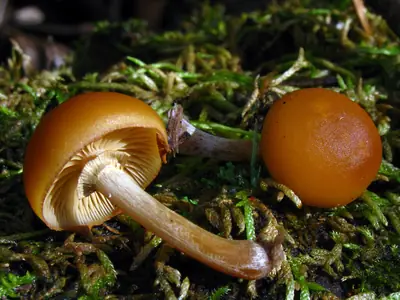
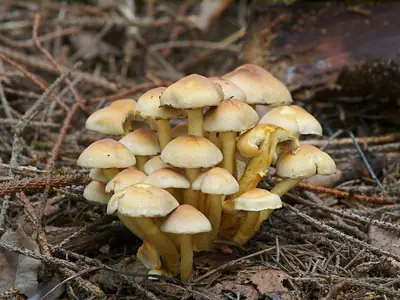
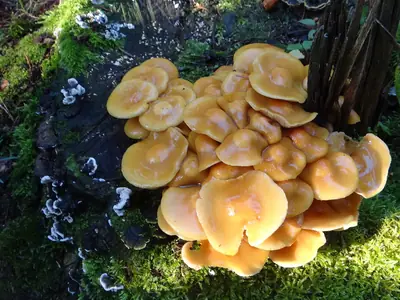
Foragers’ finds
All photosPhotos and identifications are added by users; we do not check them. Add your own find →
In the kitchen
Mainly young caps are collected (the stems are fibrous). Always parboil first for approx. 5 minutes and discard the water, and only then cook further.
Watch out for toxins
Not a poisonous mushroom in the sense of containing potent toxins, but raw or undercooked it causes gastrointestinal illness; the steam from parboiling can cause headache.
Protection and sale
- Species protection: the species is not protected. Armillaria ectypa (marsh honey fungus) is strictly protected – it is a different, rare species of peat bogs.
- Sale: the species is on the list of mushrooms approved for sale (it may be sold only with a mushroom inspector’s certificate).
Honey fungus: common questions
Is the honey fungus edible?
Edible with care. Edible only after processing: raw or undercooked it can cause poisoning. Before further preparation, parboil for approx. 5 minutes and discard the water (do not inhale the steam). Some people tolerate it poorly – the British First Nature advises against collecting it at all. In everyday usage “opieńka” means the whole species complex (including Armillaria ostoyae on conifers); all are treated as edible under the same conditions.
When does the honey fungus grow?
In Poland the fruiting bodies usually appear in: August, September, October, November. Habitat: Grows gregariously, in large clusters on trunks, stumps and roots of broadleaf trees (oak, hornbeam, beech, fruit trees) in forests, parks and orchards; a parasite causing root rot. Armillaria mellea in the strict sense is fairly rare in Poland; Armillaria ostoyae on conifers is more common.
What can the honey fungus be mistaken for?
Funeral bell (deadly poisonous): Deadly poisonous (amatoxins), also grows gregariously on wood. The funeral bell is smaller (cap 1.5–5 cm), has a rusty-brown spore print, rusty gills and silvery-white fibrils on the stem below a fragile ring. The honey fungus has a white spore print and whitish/beige gills. Sulphur tuft (poisonous): Poisonous, grows in similar clusters on stumps. The sulphur tuft has a sulphur-yellow cap, sulphur-yellow, then greenish and purple-black gills, a dark (purple-brown) spore print, no membranous ring and a very bitter taste. Sheathed woodtuft (edible): Edible, but easily confused with the funeral bell. The sheathed woodtuft has a rusty-brown spore print, cinnamon gills and a cap that dries from the centre (two-toned); the honey fungus has a white spore print.
Sources
- Wikipedia (pl): Opieńka miodowa
- grzyby.pl (atlas M. Snowarskiego): Armillaria mellea
- First Nature: Armillaria mellea
- Rozporządzenie Ministra Zdrowia w sprawie grzybów dopuszczonych do obrotu… – tekst jednolity Dz.U. 2026 poz. 258
Last checked: 9 November 2026. Spotted a mistake? Write to us.